Beach bags: types, materials and how to choose
Good beach bags carry towels, sunscreen, water, and small essentials without trapping sand or making cleanup difficult. Choose mesh for drainage, structured washable material for easy rinsing, or a roomy canvas tote for versatile everyday use. Protect valuables separately.
Which type of beach bag should you choose?
A person carrying a book and towel to a hotel pool needs very little. A parent moving four towels, spare clothing, snacks, and toys across a parking lot needs far more. Start with the contents and the walk, not the look of the bag.
A good beach bag gives you three things. It opens easily, it copes with sand and damp gear, and its handles stay comfortable at the load you plan to carry.
A fully open top is convenient on a beach chair but less reassuring in a crowded promenade. A zipped tote offers containment but may collect grit in the zipper track.
| Type | Best use | Main advantage | Main drawback |
|---|---|---|---|
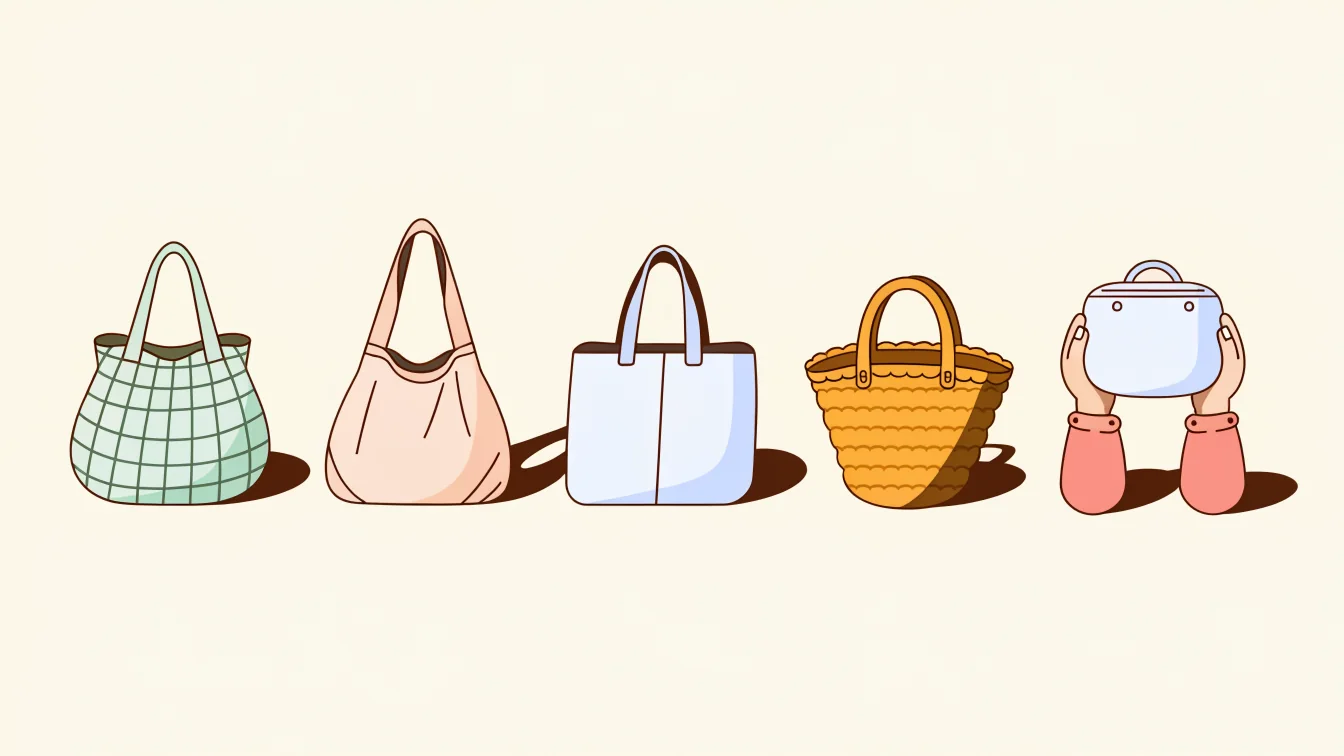
| Mesh tote | Wet towels, toys, sandals | Sand and water can escape | Small items and grit can pass through |
| Canvas tote | Towel, book, clothes, light supplies | Versatile beyond the beach | Absorbs moisture; may hold sand |
| Structured washable tote | Family supplies, poolside trips | Easy access and rinse-down cleaning | Bulkier to store, sometimes heavier |
| Straw or woven tote | Dry leisure items | Light, ventilated, casual appearance | Weave can snag and shed debris |
| Coated-fabric zip tote | Transit and mixed weather | Easier containment of loose items | Coatings and seams vary |
| Backpack | Longer walk to shore | Hands-free carry | Harder to retrieve items while worn |
| Insulated beach bag | Chilled drinks and snacks | Keeps food and drinks cooler for longer | Heavier and harder to clean |
No category is automatically waterproof, hygienic, or sandproof. Read the specific product's material and care page before assuming it suits saltwater, sunscreen spills, or machine washing.
How big should a beach bag be?
There is no universal volume for a beach bag. A large towel is bulky but light; multiple full water bottles add concentrated weight. Decide how many people will share the bag, whether separate coolers are carried, and whether you have a long walk to the sand.
| Beach outing | Practical capacity planning | Check before buying |
|---|---|---|
| Solo pool visit | Small tote for towel, water, book, keys | Does a towel fit without crushing it? |
| Solo beach afternoon | Medium tote for towel, layer, sunscreen, snacks | Is there a separate phone pocket? |
| Two people sharing | Large tote or two small bags | Are the handles comfortable when loaded? |
| Family with children | Large structured tote plus toy mesh bag | Can everyone carry their share? |
| Beach sports day | Backpack or long tote | Are equipment shapes and straps compatible? |
| Travel beach day | Foldable tote packed inside luggage | Does the bag dry before repacking? |
Consider real dimensions instead of trusting labels like "large" or "XL." Compare the listed length, width and height, and check the empty weight, which matters before you add full bottles.
One maker's guide, the Lands' End canvas tote size guide, shows what size names can mean in inches. Treat it as an example of one maker's sizing, not an industry standard.
| Maker's size | Width x depth x height (inches) | Handle drop (inches) | Maker's stated capacity |
|---|---|---|---|
| Small | 13 1/2 x 5 1/2 x 9 | 4 1/2 | Approximately 1/2 of a paper grocery bag's worth |
| Medium | 17 x 6 x 13 1/2 | 9 | 1 paper grocery bag's worth |
| Large | 22 1/2 x 9 1/2 x 17 | 14 | Up to two paper grocery bags' worth |
| Extra Large | 26 x 10 1/4 x 17 3/8 | 9 1/4 | Three paper grocery bags' worth |
On that maker's scale, the outing table's medium tote sits around the Medium row and a family's structured tote starts around the Large row.
For a solo outing, an enormous tote can encourage overpacking. For a family, too-small bags create loose extra items that are easy to forget during cleanup. A practical setup may use one general tote and a separate mesh bag for sandy toys.
Mesh bags: best for letting sand escape
Mesh can be a smart choice for sandy toys, flip-flops, or damp towels. Openings let loose grit and water escape rather than collecting at the base. That advantage becomes a disadvantage for tiny items, sunscreen caps, keys, or snacks that are not separately contained.
Look at the actual mesh opening size and how it joins the base. A thick binding or coated bottom can add strength, but also creates a place where wet sand accumulates. Inspect the handles and corners because a large mesh tote may be loaded far beyond what its airy appearance suggests.
Mesh works best as a second bag, not the only bag. Put sandy toys and water shoes in mesh, and keep wallet, keys and phone in a small closed pouch. The main tote then stays cleaner and unpacks faster at home.
Mesh is not the best choice for items that must remain dry or out of sight. If you need privacy on public transit, carry a separate closed bag or place opaque pouches inside.
Canvas bags: useful beyond the beach
Canvas totes suit anyone who wants one bag for the beach, grocery errands, and casual travel. They have a familiar open shape and can fold more easily than rigid molded totes, depending on their construction.
Canvas is absorbent, so expect moisture and sand to require more attention. A wet canvas bag should be dried fully before closed storage.
Care varies by fabric finish, lining, print, and handle material. Some bags are hand-clean only; do not assume every canvas tote belongs in a washing machine.
Check the bottom gusset, handle stitching, and whether the opening closes. A flat, unstructured tote may be fine for one towel but awkward for several water bottles. A gusset allows it to stand wider, while an internal pocket reduces rummaging for keys.
A darker color or a print hides sand and sunscreen marks between washes, but no color removes the need for cleaning. A beach bag is supposed to be useful, not audition for a spotless shelf.
Structured washable totes: easy to rinse, harder to pack
Structured molded totes (usually EVA foam or a similar washable plastic) have a stable base, wide mouth and a surface you can hose off. That makes them practical for family trips and pool days. The trade-offs are storage bulk and empty weight.
Check the maker's listed material, empty weight and any stated weight limit. A bag's weight limit is not a recommendation to carry that much weight on your shoulder.
For a molded tote, check the handle attachment. Does it stand upright when only partly packed, and is the base stable on uneven ground? A rigid wide base may sit well on a deck but feel awkward between crowded beach chairs.
Check whether accessories and insert pouches are removable for cleaning. A bag that rinses clean does not mean a fabric-lined accessory can be treated the same way.
Straw and woven beach bags
Woven bags offer ventilation and a relaxed appearance, but their weave can catch on clothing or towels. Check rough fibers along the top edge and handle attachments. Coins, keys and hair ties fall straight through an open weave unless the bag has a lining or you add a pouch.
A bag that looks appealing in a photograph can become awkward when loaded with drinks, sunscreen, and two damp towels. Check the base depth and handle drop. If it has a lining, determine whether the lining is removable or can be wiped.
Dry storage is especially important for natural fibers. Do not stuff damp swimwear into a woven tote and leave it closed in a vehicle. Separate the wet items and let the bag dry thoroughly before putting it away.
Coated and wipe-clean fabric totes
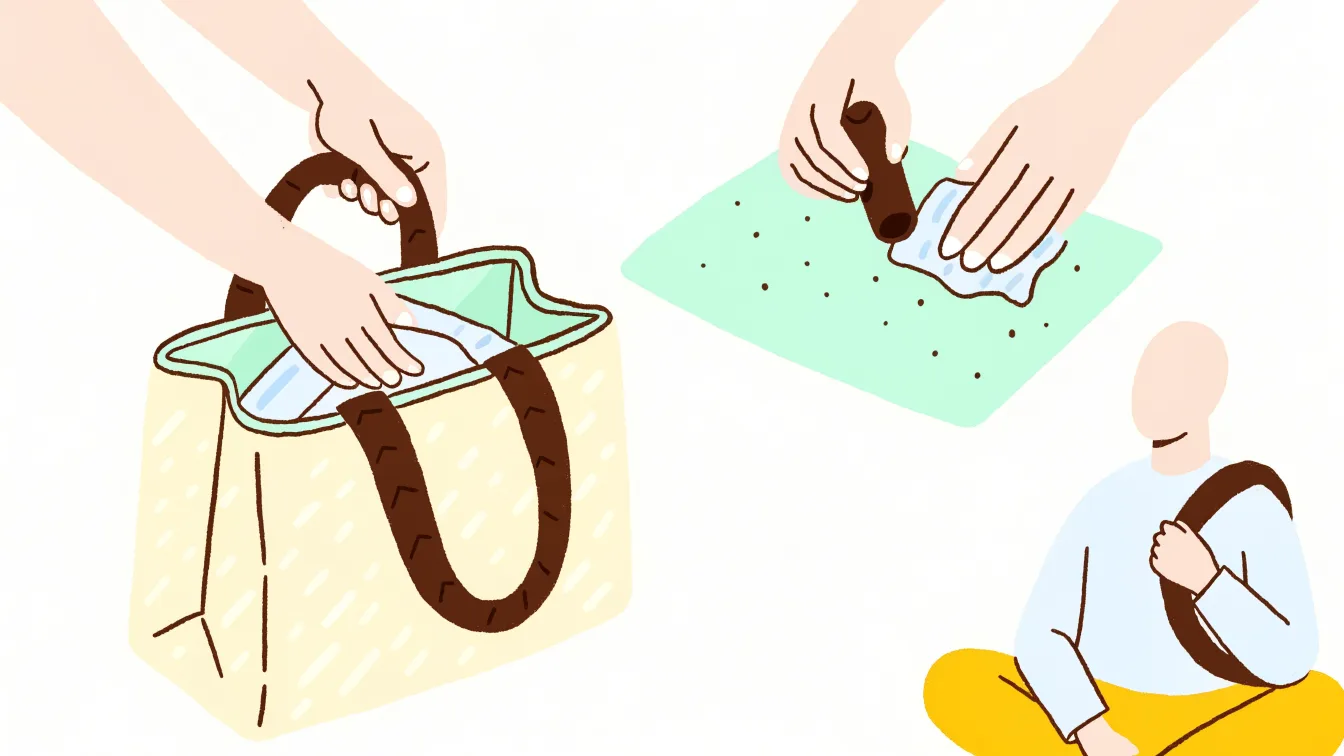
A coated fabric, such as PVC, TPU or laminated nylon, wipes clean of sunscreen and sand more easily than plain canvas. That finish does not make the bag waterproof. Water can still get in through the seams, the zipper or an open top.
Check the seams and the zipper track before you buy. Then find out whether the coating is on the outside, the inside or both, since that decides which surface wipes clean. Sand still collects in a zipper track, so rinse it after beach days.
A coated tote is usually heavier than plain canvas and folds less flat. That matters if it has to travel inside luggage.
Features worth checking before buying
A closure that matches the outing
Open tops maximize access but allow contents to spill if the bag tips. Zippers help contain smaller objects during transit, although the track can collect sand. Magnetic closures are convenient for quick access but should not be mistaken for secure sealing.
If you carry many small items, use a zipped interior pouch rather than insisting the entire tote must close. That approach lets you choose the most convenient main bag without scattering essentials.
Handles that suit your shoulders
A short handle might be fine for carrying the bag beside your body, but frustrating over a thick cover-up or jacket. Examine handle length, width, attachment points, and how the bag rests against you. Wide rigid handles can be uncomfortable even if the load rating is high.
For a long walk, a backpack or split loads may be more manageable than one enormous shoulder tote. Put full bottles near the center rather than letting them pull one corner downward.
A bottom that tolerates sand and moisture
A firm base can keep the bag upright, while a mesh or perforated base may shed grit. A soft canvas base folds neatly but can collect moisture. Match this choice to the place you normally set your bag: sand, grass, pool deck, or rocks.
A place for valuables
Keep keys, wallet, and phone in a small secured pouch. A bright removable pouch is easier to locate inside a large tote. Do not assume an outside open pocket protects a device from water or accidental loss.
Packing a beach bag for one person or a family
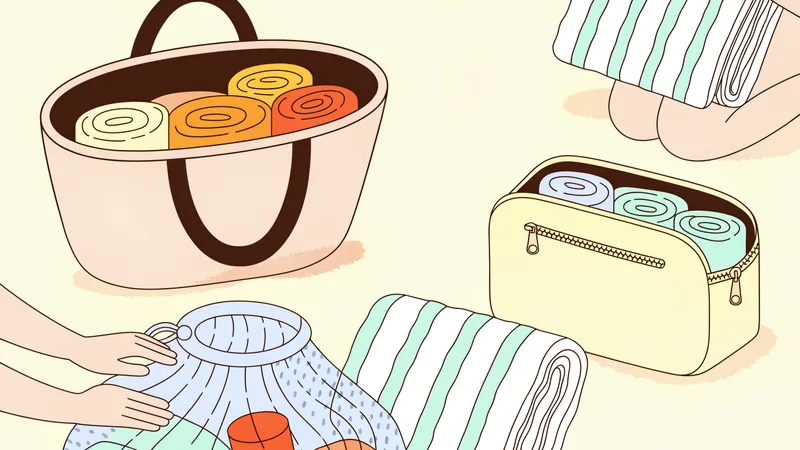
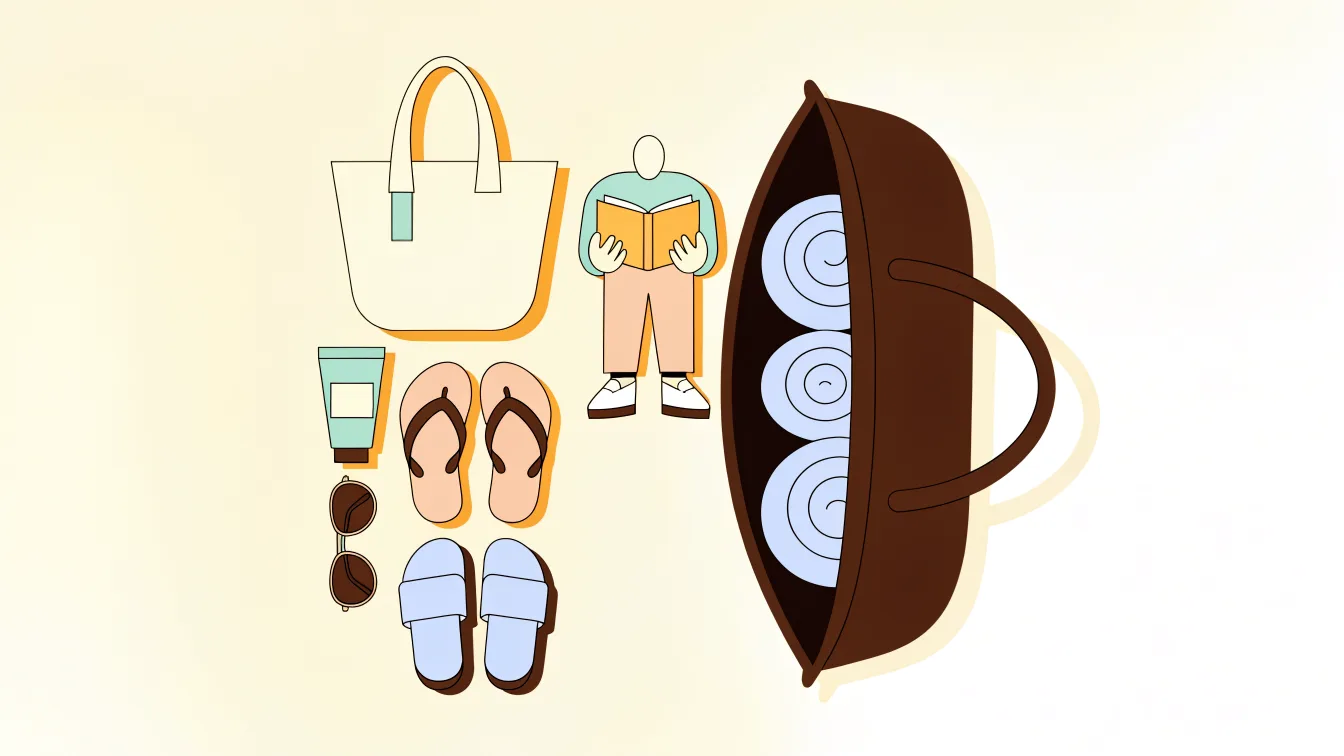
Keep the items you need first near the top. Put heavy bottles low, then towels and clothing, with smaller pouches in accessible spots. Do not bury sunscreen under wet gear.
For a day with children, split the load. Use a main tote for dry personal items, a mesh sack for toys, and an insulated container for food or drinks. This division can be easier to clean than one oversized bag containing everything.
| Packing zone | Suggested items | Keep separate from |
|---|---|---|
| Bottom | Bottles, sturdy wrapped equipment | Fragile glasses or electronics |
| Main compartment | Towels, cover-ups, dry spare clothes | Wet or sandy toys |
| Zipped pouch | Keys, cards, small valuables | Loose sunscreen caps |
| Mesh side bag | Toys, sandals, damp gear | Documents and devices |
| Insulated container | Food and chilled drinks | Non-food beach items |
A beach bag does not replace sun protection. CDC recommends shade, protective clothing, and sunscreen when outdoors. Pack the items you will actually use, including sun-protective clothing and an appropriate sunscreen.
For food, use food-safe storage and follow FoodSafety.gov's temperature guidance rather than assuming an ordinary tote keeps food chilled.
Are waterproof beach bags necessary?
Usually not for every beach outing. A normal beach bag primarily carries items and handles sand, while a small waterproof pouch can provide a separate layer for valuables. Many washable or coated totes are not designed to be submerged.
If your bag might be splashed in a boat or exposed to heavy rain, compare its published protective construction and closure. A bag's ability to be rinsed clean does not establish that water cannot enter it.
For boat outings or equipment that cannot get wet, use a product with documented protection suited to the exposure. See waterproof bags for how ratings and closures differ.
How to clean a beach bag
Empty the bag outdoors or over a suitable surface to remove loose sand. Shake the bag gently, paying attention to seams, pockets, and the base. Follow the manufacturer's cleaning instructions for the actual fabric or coating.
A molded plastic tote labeled washable does not give permission to use the same method on canvas, leather trim, or straw.
Separate any removable insert pouches. Treat leaked sunscreen or sugary spills promptly according to the care label. Do not scrub a protective coating with a harsh brush simply because the outside looks rugged.
Let every compartment dry before storage. A large tote may look dry on the outside while moisture remains behind a pocket lining. Leave it open in a shaded, ventilated area.
What to avoid when choosing a beach bag
Avoid buying by capacity alone. A huge bag that is heavy empty, awkward to carry, or difficult to store may be less useful than two smaller bags. Check whether the stated dimensions include protruding handles or the widest part of the base.
Open mesh does not secure small valuables, and a snap or magnet will not keep out sand or rain. An insulated-looking lining will not keep food safe without ice packs and proper handling.
If you plan to travel with the bag, remember it may need to fit inside luggage on the way out. A rigid tote can consume considerable trunk or hotel-room space even when empty. A foldable tote is easier to transport but may offer less structure on the beach.
Choosing for common beach situations
For solo beach afternoons, prioritize easy access, low empty weight, and a small secure pouch. A medium canvas or lightweight coated tote often offers enough flexibility.
For families, a structured tote can organize towels and bottles, while a separate mesh bag handles toys. Keep comfort in mind when several people contribute items to one bag.
For hotel pools, a compact washable tote may be enough. You may not need the very large capacity intended for a long walk across sand.
For road trips, choose a bag that is easy to rinse and dries promptly. A separate wet-items pouch reduces cleanup after swimming.
For flights to a beach destination, choose a packable tote that stows flat inside your luggage. If you want to carry a rigid tote on board, check it against your airline's carry-on or personal-item size limits before you fly. Limits vary by airline and route.
When you are ready to compare named bags by dimensions, weight and material, see the beach bag roundup.
FAQ
What is the best material for a beach bag?
That depends on the job. Mesh lets water and sand pass through; washable molded material simplifies rinsing; canvas works for mixed everyday use; straw gives a lightweight woven look. Match the material to your cleaning routine, carry distance, and whether contents need privacy or dryness.
Are mesh beach bags better for sand?
Mesh can be particularly useful for sandy toys and water shoes because loose grit can pass through the openings. It is less suitable for coins, keys, and other small items. Pair a mesh bag with a closed main tote.
What size beach bag do I need for a family?
Start with the actual towel count, spare clothes, water bottles, and children's gear. One large tote may hold the dry basics, but a second bag for toys and wet items often keeps things more manageable. Compare product measurements and carrying comfort, not only terms like family-size.
Can I machine-wash a beach bag?
Only if the manufacturer allows it. Mesh, canvas, EVA, coated fabric, and woven straw can require different care, and some bags are rinse-clean or wipe-clean rather than machine washable. Check the original care instructions and dry the bag fully before storing it.
Do I need a zipper on a beach tote?
A zipper is useful for transit, crowded settings, and keeping smaller contents contained, while an open top makes towels and bottles easier to reach. If you prefer an open tote, store cards, keys, and a phone in a separate zipped pouch. A zipper alone is not waterproofing.
Related guides
- Best beach bags: named bags compared by specs
- Best packable and foldable bags: totes that pack inside luggage
- Best reusable shopping bags: versatile everyday carry
- Tote bags: shape and closure choices
- Bag care: cleaning basics
- Waterproof bags and dry bags: keeping valuables dry
Guides in this section
2 guides sit under this page.