Travel accessories: what is worth carrying
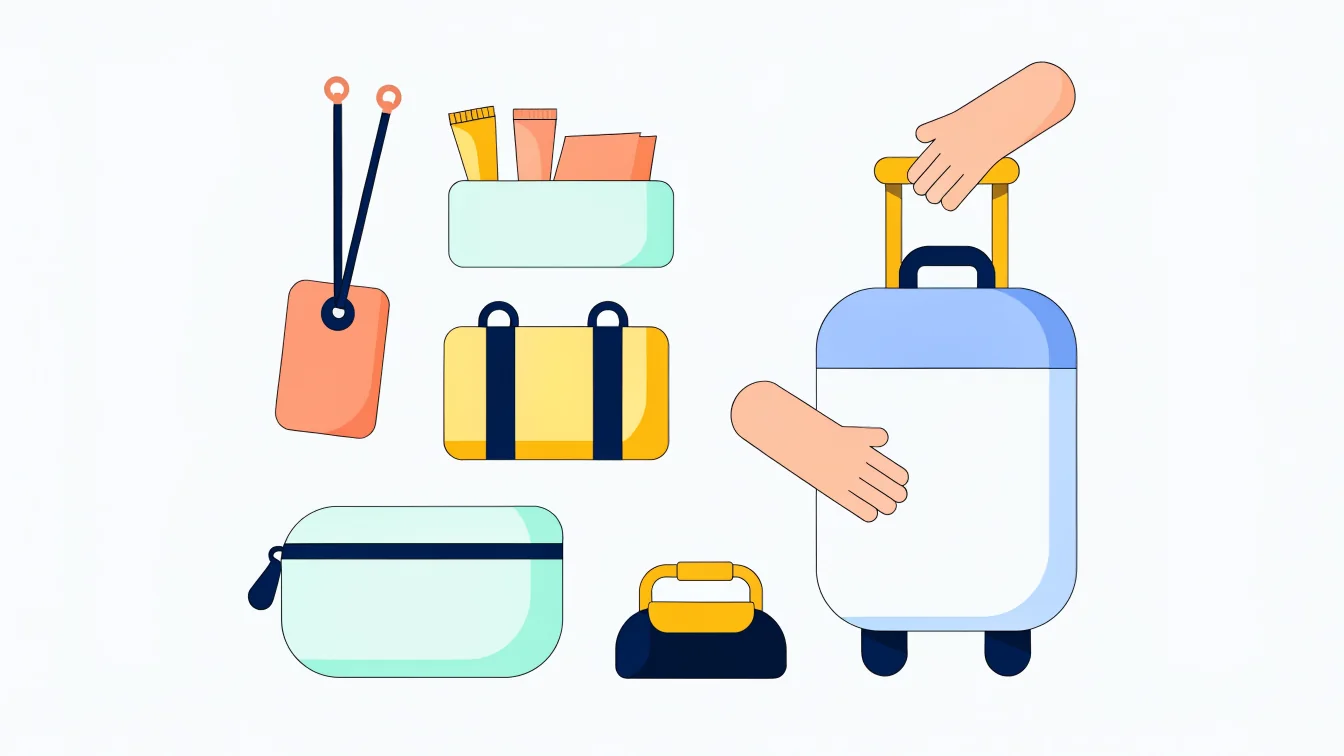
The most useful travel accessories solve a problem you will actually face: finding essentials, separating clothing, identifying luggage or avoiding an overweight bag. Pack organizers and tags before novelty gadgets. Choose extras for your route, baggage allowance and accommodation, not from a universal checklist.
What counts as a travel accessory
A travel accessory is anything that goes inside or onto your luggage rather than the luggage itself. Most fall into three groups, and each solves a different kind of problem.
- Organizers: packing cubes, pouches, toiletry kits and tech cases that keep contents sorted.
- Identification and security: tags, locks, trackers and security pouches that mark the bag or protect what matters.
- Trip tools: luggage scales, plug adapters and packable day bags, each handling one specific job on the road.
A suitcase with built-in dividers or a laptop sleeve already covers some of these jobs. Check what your bag does before adding anything to it.
Choose travel accessories for the problem, not the gadget
Accessory shopping gets easier when each item must solve a named inconvenience. A traveler whose bag has a built-in laptop section may not need a second tech sleeve.
Someone staying in a hostel with shared facilities may benefit from a hanging toiletry kit. A person who checks a large bag may get more value from a luggage scale than a commuter with one backpack.
| Accessory | Useful when | Can often skip when | Main thing to check |
|---|---|---|---|
| Packing cubes | Clothes need separation | One small compartment is enough | Size mix and empty weight |
| Toiletry pouch | Multiple personal-care products | Minimal kit fits an existing pocket | Leak management and cleaning |
| Luggage tag | Checking or storing bags | A clear existing label works | Durable attachment, privacy |
| Luggage scale | Packed bag nears weight limit | No weighed baggage is planned | Readable display and range |
| Small combination lock | Hostel lockers, zipper restraint on checked bags | No secure anchoring point | TSA-recognized or not; how the code resets |
| Travel wallet | Several documents and cards | Standard wallet already works | Access and organization |
| Tech organizer | Chargers and adapters multiply | One cable and charger only | Pocket layout and volume |
| Packable day bag | Day trips away from luggage | Main bag is suitable | Folded bulk and comfort |
The key question is whether a tool saves more trouble than the space it takes. If you cannot explain what problem it solves, leave it out for the first trip. You can refine the kit after discovering what you genuinely miss.
How to choose: size, weight, materials and features
Measure the space an accessory must occupy before deciding it fits. For a cube, compare its packed footprint with the compartment where it will sit.
Check empty weight as well as capacity. Drop any accessory whose job another item already does.
Read material descriptions by component: body, lining, mesh, coating and hardware. Ask whether the stated cleaning method applies to the whole accessory or only its surface.
Choose features through a packing rehearsal. Pull out the document, charger or clothing bundle you will need first and notice what has to move.
Packing-cube set sizes and what each accessory weighs
One maker states that its three-piece set contains extra-small, small and medium cubes. It publishes the following exterior dimensions and individual weights.
| Example accessory | Published size | Published empty weight | Source |
|---|---|---|---|
| Extra-small cube | 7.5 × 4.5 × 2.5 in | 45 g | Maker's set specifications |
| Small cube | 10 × 7 × 3 in | 71 g | Maker's set specifications |
| Medium cube | 14 × 10 × 3 in | 113 g | Maker's set specifications |
| Dial luggage scale | 4 × 3 × 1.5 in | 0.40 lb | Another maker's scale specifications |
| Roll-top dry organizer | 8 L | 83 g | A third maker's specifications |
These are examples of different accessories, not a recommendation to carry all of them. Figures are shown in the units each maker uses. A three-cube set like this adds about 229 g before any clothing goes in.
Weigh the complete packed kit after choosing the pieces.
Packing cubes, pouches and compression bags
Packing cubes divide clothing by type or person, making a suitcase easier to unpack. REI’s packing-light guide recommends cubes, stuff sacks or compression bags as ways to keep items organized.
Compression changes volume, not the scale reading. REI warns against adding weight by packing more into the freed space.
A reasonable small set is one medium cube for tops, one for bottoms and one small pouch for underwear and socks. REI says travelers with a travel backpack may find stuff sacks fit better than rectangular cubes. The same logic can apply to a duffel, while a suitcase takes cubes neatly.
Look for zipper openings that allow flat packing and a material you can clean. If you use compression, test the bag when zipped and packed rather than assuming it will still fit a tight carry-on space.
Compression panels can increase pressure on seams and make delicate garments crease. For a detailed comparison, see packing cubes and compression packing cubes.
Locks, tags and trackers: different jobs
A luggage tag identifies the bag. Choose one that survives baggage handling and shows a name and a phone number or email, not your home address. A lock is a deterrent and a zipper restraint, not proof that a bag cannot be opened or stolen.
A tracker may help locate a misplaced item when its network, battery and conditions allow it, but it does not guarantee recovery.
TSA says TSA-recognized locks can reduce the likelihood of damage to a lock or bag if a physical inspection is required. That does not make any lock universally accepted, and a lock does not exempt a bag from inspection.
Check the airline’s rules and the requirements at your destination. This guidance was checked November 19, 2026.
On a trip with trains, hostels and checked bags, use a tag on the bag and keep valuables on you.
For specific picks, see luggage locks, tags and trackers.
Which travel wallet or security pouch should you carry?
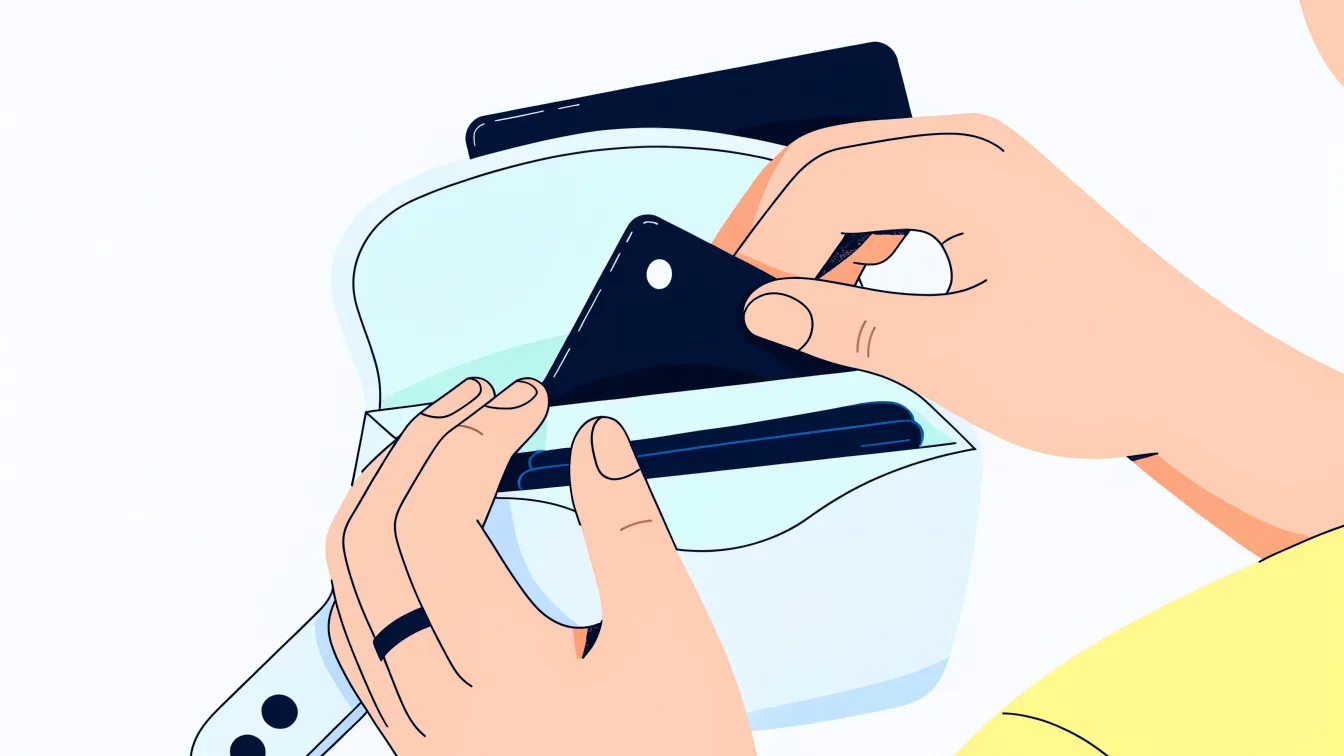
A travel wallet can keep passport, boarding passes and cards in one place. A slim pouch worn close to the body may help keep documents less exposed in crowded spaces.
Neither accessory makes theft impossible. Overly complicated organizers can be frustrating when a document is needed quickly.
Choose a pouch that holds a passport flat without folding it. A neck pouch or money belt sits under clothing and is slower to reach, so keep the day's cash and one card elsewhere.
If the organizer has card slots, count the cards you really travel with. Put the passport and boarding pass in the easiest pocket and rarely used papers at the back.
Avoid storing all backup information in one removable pouch. If possible, separate everyday spending cards from backup payment methods.
Treat an RFID-shielding claim as one narrow feature, not a guarantee against theft; a pickpocket's hands matter more than radio signals.
Neck pouches versus waist pouches
Try a neck pouch with the clothing you expect to wear. Check where it rests when sitting and whether the strap bothers you beneath a collar.
For a waist pouch, check its position under the waistband and alongside your bag's belt. Practice reaching it discreetly before relying on it during a journey.
REI's accessory guidance describes a security pouch as one worn under your clothes. Pick the one you can reach without showing it; neither removes the need to watch your belongings.
Battery rules when adding a tracker
The FAA says to check with the airline before traveling with baggage-location trackers. A checked-bag tracker must meet the battery thresholds stated on that page.
Those thresholds are 0.3 grams of lithium for lithium-metal batteries or 2.7 Wh for lithium-ion batteries. Check the actual device specification rather than assuming every small tracker qualifies.
The same FAA page covers bags with built-in batteries separately from add-on trackers. Consult the operating airline, especially for international travel; checked November 19, 2026.
Luggage scales, adapters and power organization
A luggage scale is useful when your checked bag approaches an airline’s weight allowance. Check that its range covers your heaviest bag and that the display holds the reading after you set the bag down.
Weigh with a consistent lifting method and allow a margin for measurement differences. Recheck your carrier’s allowance, which can vary by fare, route or status.
Power adapters require more care than their size suggests. REI notes that an adapter changes plug compatibility, while certain appliances may also need voltage conversion.
Read the input label on each device. Never assume that changing the plug shape makes equipment safe to use on a different voltage.
A small tech organizer can prevent chargers from scattering through the bag. Choose enough loops or pockets for the cables you actually carry; see tech organizers and cable pouches.
Avoid putting loose metal objects where they can scrape screens or device connectors. Airline requirements for batteries and power banks can vary, so check the carrier and current security guidance before flying.
Compare scale capacity with the airline's allowance
One maker states that its dial luggage scale weighs bags up to 75 pounds. That is the instrument's capacity, not permission to check a bag at that weight.
For comparison, Delta lists a standard 50-pound limit per piece for Delta Main, Delta Comfort and Delta Premium Select. This example was checked November 19, 2026.
Use the allowance on your own booking; other fares and airlines differ.
A home reading is not the airline's reading, so leave a margin. Weigh again after shopping, before the flight home.
What to leave at home
Accessories become clutter when they repeat what your luggage already does. A suitcase with a laundry divider does not need a laundry bag.
A second passport wallet can make critical documents harder to find. An oversized toiletry kit invites you to fill it.
A quick filter is to ask three questions:
- Will this solve a problem on this specific trip?
- Can an item I already own do the same job?
- Can I carry it comfortably at the end of a long day?
Pack documents, medications, weather-appropriate clothing and the luggage itself first. No gadget should push out an essential.
Build a small kit for each kind of trip
| Trip | Good starting accessories | Usually secondary |
|---|---|---|
| Weekend with carry-on | Small toiletry pouch, one packing cube | Luggage scale |
| Checked-bag vacation | Luggage tag, scale, packing organizers | Multiple travel wallets |
| Frequent hotel changes | Hanging kit, compact day bag, labeled pouches | Rigid oversized cases |
| Business trip | Cable organizer, document pouch | Large laundry system |
| Hostel or shared accommodation | Appropriate lock, small document pouch, toiletry kit | Decorative travel gadgets |
Treat this as a planning table, not a mandatory list. Start with your airline's size and weight limits and add only the organizers that fit.
After the trip, note which travel accessories stayed unused and which were genuinely helpful. That personal inventory is more useful than buying a complete matching collection at once.
Care in brief
Empty packing cubes and pouches after each trip, then let them air-dry open before you store them. Wipe a toiletry pouch's lining before any spill has time to set.
Before washing any organizer or pouch, follow its care label. Replace a combination lock whose code no longer resets reliably, before it locks you out of your own bag.
Before a trip with checked bags, check the luggage scale's battery and confirm it reads zero with nothing hanging from it. For bag-specific cleaning, see the bag care hub.
FAQ
Are packing cubes worth carrying?
Packing cubes are helpful when you want to group clothing or share luggage. They make items easier to find, but do not reduce how much the packed bag weighs.
REI’s packing guidance supports their use for organization. Choose a few appropriately sized cubes rather than filling the suitcase with empty organizers.
Do luggage locks stop theft?
A luggage lock can restrain zipper pulls and discourage casual opening, but it cannot guarantee security. TSA says TSA-recognized locks can reduce the chance of lock or bag damage if a physical inspection is required.
Screening may still require access. Keep passport, cards and valuables on you rather than in a checked bag, and check destination and carrier rules.
Should I buy a luggage scale?
A luggage scale is worthwhile when checked-bag weight limits are close to the amount you regularly pack. It is less valuable on trips where you take only a small personal item. Choose a scale with an adequate range and a readable display, then check your airline allowance.
Do I need a travel adapter and a voltage converter?
They do different jobs. An adapter changes the plug shape; a voltage converter may be required for devices that cannot accept the local power supply. Read the electrical input label on each device and confirm your destination requirements before using it.
How many travel organizers should I pack?
Start with one organizer each for clothing, toiletries and electronics, and add more only if something still gets lost. A few purposeful pouches are easier to manage than a collection of tiny compartments. Test the arrangement at home and remove any organizer that adds weight without solving a packing problem.
Related guides
Guides in this section
1 guides sit under this page.
Guides
Sources
- rei.com/learn/expert-advice/travel-accessories.html
- rei.com/learn/expert-advice/traveling-light.html
- tsa.gov/travel/security-screening/claims
- eaglecreek.com/products/pack-it-reveal-cube-set-xssm
- travelonbags.com/shop/travel-electronics/luggage-scales/stop-and-lock-luggage-scale-wit…
- matadorequipment.com/products/flatpak-dry-bag-8l-v2-black
- faa.gov/hazmat/packsafe/baggage-with-lithium-batteries
- delta.com/us/en/baggage/overview