Motorcycle bags: saddlebags, tank bags and tail bags
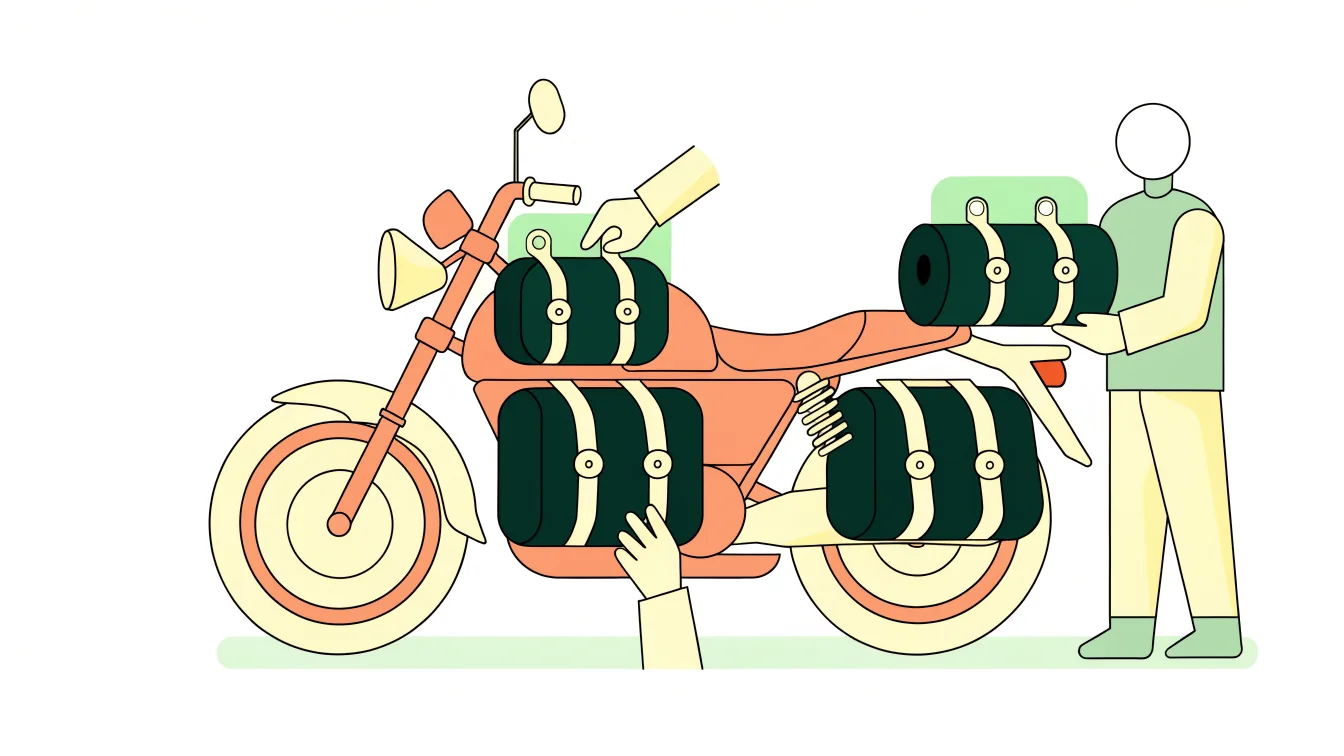
Motorcycle bags should be chosen by bike compatibility, secure attachment and load placement before capacity or appearance. Tank bags keep small essentials accessible at stops; tail bags carry flexible luggage; saddlebags suit larger loads when the motorcycle has suitable supports.
Choose motorcycle bags by where they mount
Motorcycle luggage has fewer forgiving attachment points than an ordinary shoulder bag. Heat from exhaust components, vibration, wind loading and moving suspension all matter.
Any strap that can reach a chain or wheel is a problem. A bag that fits while parked may rub a tire under full suspension compression.
| Bag type | Location | Useful for | Fit challenge | Main compromise |
|---|---|---|---|---|
| Tank bag | Above fuel tank | Wallet, map, glasses, small gear | Tank shape, handlebar sweep, refueling | Limited volume |
| Tail bag | Passenger seat or rear rack | Overnight items, clothing | Secure anchoring and seat clearance | Rear weight and passenger access |
| Soft saddlebags | Either side of rear | Touring gear | Exhaust, wheel and side supports | Wider profile |
| Hard panniers | Side racks | Touring and lockable storage | Motorcycle-specific frame | Added mass and width |
| Top case | Rear rack | Helmet-sized or daily items | Rack load rating | High rearward mass |
| Small tool roll | Mounting point varies | Compact service kit | Retention and heat exposure | Small capacity |
| Rider backpack | Rider | Off-bike convenience | Fit with protective gear | Body load in a fall |
Treat a luggage catalog's model selector as the first filter. An attractive bag can still be incompatible with a particular exhaust position, tank cap or seat. Hard luggage usually needs mounting hardware that is specific to the motorcycle, while some soft bags still need spacers or side supports.
Tank bags: useful for the items you need often
A tank bag works well for small things accessed while stationary: sunglasses, toll items, charging cable, gloves and documents. Its biggest advantage is organization near the rider.
Its biggest weakness is interference. A bag can obstruct handlebars at full lock, block instrument visibility or make refueling awkward.
Ring-mounted versus strap-mounted
A ring-mounted tank bag attaches to a compatible fitting at the tank opening. SW-MOTECH's overview explains that its PRO system uses magnetic guidance and mechanical locking.
It also cautions that the tank-ring family, top ring and bag must match. This is not simply a question of the opening's diameter.
Strap-mounted bags avoid some ring-compatibility issues but require careful routing and contact protection. Keep straps away from controls, steering components and hot surfaces.
Follow the individual bag instructions for securing excess webbing. A loose tail of strap can become a hazard at speed.
An expanding tank bag offers flexibility. The SW-MOTECH PRO Sport lists a 12–17 L capacity range.
Expansion raises the bag and can change your sightline. Do the steering and instrument-view checks with the bag full, not just empty.
Checking a tank bag at home
With the motorcycle securely stationary, mount the empty bag, then add the normal contents. Turn the handlebars fully both ways. Check that switches, cables, levers and the fuel cap remain usable.
Sit on the bike with the jacket and protective gear you wear. If the bag impedes a natural riding position, choose a shorter or differently shaped design.
Tail bags: flexible overnight storage
A tail bag usually sits behind the rider, on the passenger seat or a purpose-made rear rack. This position can be practical for clothing and other gear that is not frequently accessed.
Soft tail bags can have roll closures, side access or a removable inner dry bag. Choose a loading pattern that keeps the contents stable when the motorcycle accelerates and brakes.
As a sizing reference, one maker's 20 L tail drypack notes that some motorcycle models need a separate fit kit, and the same design comes in 30 L.
These are examples of different capacities, not universal fitting guarantees. A large bag that blocks rear lighting or overhangs the seat may be unsuitable regardless of its storage convenience.
Why mounting hardware matters
A secure strap needs a manufacturer-approved anchor and a route that cannot loosen into a moving part. Do not attach luggage to turn signals, plastic trim or unknown lightweight brackets without the motorcycle maker's approval.
After tightening, tug the loaded bag gently in several directions. If it slides, rocks excessively or can move into the wheel, stop and correct the installation.
Bike-specific hardware can be necessary even with a soft luggage system. Kriega's mounting-kit catalog illustrates the range of fitment solutions. A model-year change can alter the useful mounting points.
Saddlebags: capacity comes with spacing questions
Saddlebags place luggage on both sides of the motorcycle. That can create more packing room without building a tall tower on the tail.
The critical check is whether either bag or strap could contact the exhaust, tire, chain, brake components or suspension travel. Heat shields and side supports must match the motorcycle and luggage system.
Hard panniers rely on rigid side racks and latch systems. They suit frequent touring stops, but their width needs extra care in traffic and around obstacles. Soft saddlebags usually weigh less as a system, offer less impact protection and may need waterproof liners.
Balance the load, not merely the volume
Packing one side with tools and the other with clothing produces uneven weight even if both bags appear full. Distribute dense objects thoughtfully within the motorcycle maker's total payload, axle and luggage-support limits.
Place heavier items as low and as close to the motorcycle's center as the approved setup allows. Avoid overloading the top case with heavy equipment because of its elevated and rearward position.
No universal volume target or load percentage is appropriate for every motorcycle. Check the owner's manual for gross vehicle weight, luggage and passenger constraints. A luggage bag's fabric strength rating does not override those limits.
Waterproof versus weather-resistant motorcycle luggage

A waterproof claim requires attention to closures, seams and the conditions of use. Roll-top drypacks can protect contents in rain when closed exactly as directed.
A bag with a water-resistant outer layer may still leak through zippers or stitching during prolonged exposure. Some tank bags have separate rain covers; a cover can shift in wind if fitted poorly.
| Design | Practical benefit | Watch out for |
|---|---|---|
| Roll-top dry bag | Closure can seal against rain | Incorrect folds or punctures |
| Rain cover | Adds protection to an existing bag | Wind lift and uncovered underside |
| Coated fabric | Limits surface wetting | Seams and zippers may leak |
| Hard case with seal | Structured storage | Seals and latches require upkeep |
| Inner waterproof pouch | Backup for papers and electronics | Less convenient access |
Read the precise weather claim on the manufacturer's page. It is not safe to interpret a “waterproof” marketing label as protection against every depth, pressure or duration of immersion.
Protect electronics twice if damage would be costly. The waterproof bags guide explains closures, and water-resistant versus waterproof covers label terminology.
A pre-ride luggage safety check
- Confirm that every mounting part is approved for the motorcycle model and model year.
- Read both the motorcycle and luggage maker's payload restrictions; use the stricter applicable limit.
- Mount the empty bag exactly as directed and inspect attachment points.
- Add the intended load, secure all closures and recheck fasteners.
- Verify clearance from the exhaust, wheels, chain and moving suspension.
- Turn the handlebars fully left and right, testing the tank bag in its loaded state.
- Confirm the rear lights, indicators, license plate and mirrors are unobstructed.
- Sit on the bike in normal riding gear to check comfort and control access.
- Secure loose webbing and check that nothing can flap into a wheel.
- After a short low-speed ride, stop and inspect the mounting points again.
Do not rely on this checklist instead of the manufacturer's fitting instructions. If a kit requires mechanical work beyond your competence, have a qualified motorcycle technician install it. The consequence of a loose luggage mount is more serious than an inconvenient zipper.
Pack for the trip you are actually taking
For a day ride, favor a small tank or tail bag with only the required essentials. For a short overnight trip, a modest tail drypack may hold a spare layer, footwear and toiletries. Touring with passengers may call for mounted panniers, but the passenger's space and bike payload must remain priorities.
| Trip | Candidate setup | Critical consideration |
|---|---|---|
| Short errand | Compact tank bag | Steering and refueling clearance |
| Day ride | Tank bag plus small tail bag | Access and secure straps |
| Weekend solo | Tail drypack with optional small tank bag | Load distribution and seat space |
| Longer road tour | Approved panniers plus top or tail luggage | Payload, wind exposure and width |
| Off-road travel | Bike-specific supported soft luggage | Movement, rubbing and abrasion |
| Two-up travel | Approved luggage with passenger space preserved | Passenger fit and total payload |
Carry frequently needed objects where they can be reached safely after stopping. Avoid arranging a bag so you feel tempted to search for small items while moving. Luggage should make the trip simpler, not invite mid-ride archaeology.
Materials, wear and repairs
Check buckles, seam reinforcements, webbing, attachment loops and hard mounting points. Repeated vibration can loosen screws and abrade fabric where it contacts paint or metal. Inspect the bike's finish near the mounts.
Remove grit before reattaching luggage and follow the maker's cleaning instructions. Dry wet bags completely before putting them away.
Do not assume a damaged buckle or strap can be safely replaced with an unrelated part. Mounting systems are often designed as assemblies, and a substitute may change how loads are retained. For a torn load-bearing attachment, ask the manufacturer or a suitable repair professional whether the bag can be restored safely.
The right choice for most riders
Choose motorcycle bags with the smallest mounting system that handles the real load. A compact tank bag makes sense for small daily items when it clears the controls.
A secure tail drypack is a natural option for solo weekend clothing. Approved saddlebags are useful for bigger touring loads and easier separation of equipment.
Fit, load placement and clearance are never optional. For readers choosing between carrying styles, compare duffel bags, travel bags and waterproof bags. Those guides help with packing and materials, but the motorcycle-specific installation remains the deciding factor.

FAQ
Are universal motorcycle saddlebags really universal?
No bag can be assumed to fit every motorcycle safely. Exhaust placement, suspension travel, passenger pegs, rear lighting and mounting points differ.
Even soft luggage may need bike-specific supports or fitment hardware. Read the manufacturer's compatibility chart for your exact model year and inspect all clearances with the bags loaded.
Can a motorcycle tank bag scratch the paint?
Contact, grit and repeated motion can mark finished surfaces. A correctly fitted ring-mounted bag may reduce direct contact, but compatibility and installation still matter.
Clean contact surfaces and follow the exact maker's care guidance. Check the motorcycle maker's advice before adding any adhesive film or pad to the tank; some can mark the finish.
Should heavy items go in the top case?
Avoid concentrating dense gear high and far behind the rider. The motorcycle's owner's manual, rack instructions and case mounting limits determine the allowable setup.
Where permitted, heavier items generally belong low and securely positioned. Keep the load balanced and never exceed the relevant motorcycle or accessory ratings.
Are roll-top motorcycle bags fully submersible?
Not necessarily. Waterproof performance depends on the product's test conditions, the closure and its condition.
A roll-top designed for rain can leak if submerged or incorrectly fastened. Follow the maker's rolling instructions and use an additional protective pouch for important electronics, documents and other water-sensitive objects.
Can I mount luggage myself?
Simple bags may be straightforward when the manufacturer supplies clear instructions and the bike has suitable points. More complicated hard-rack or tank-ring installations can require mechanical expertise.
SW-MOTECH notes that fitting certain components requires technical understanding. When unsure, use a qualified motorcycle technician.