Shoe bags: types and when you need one
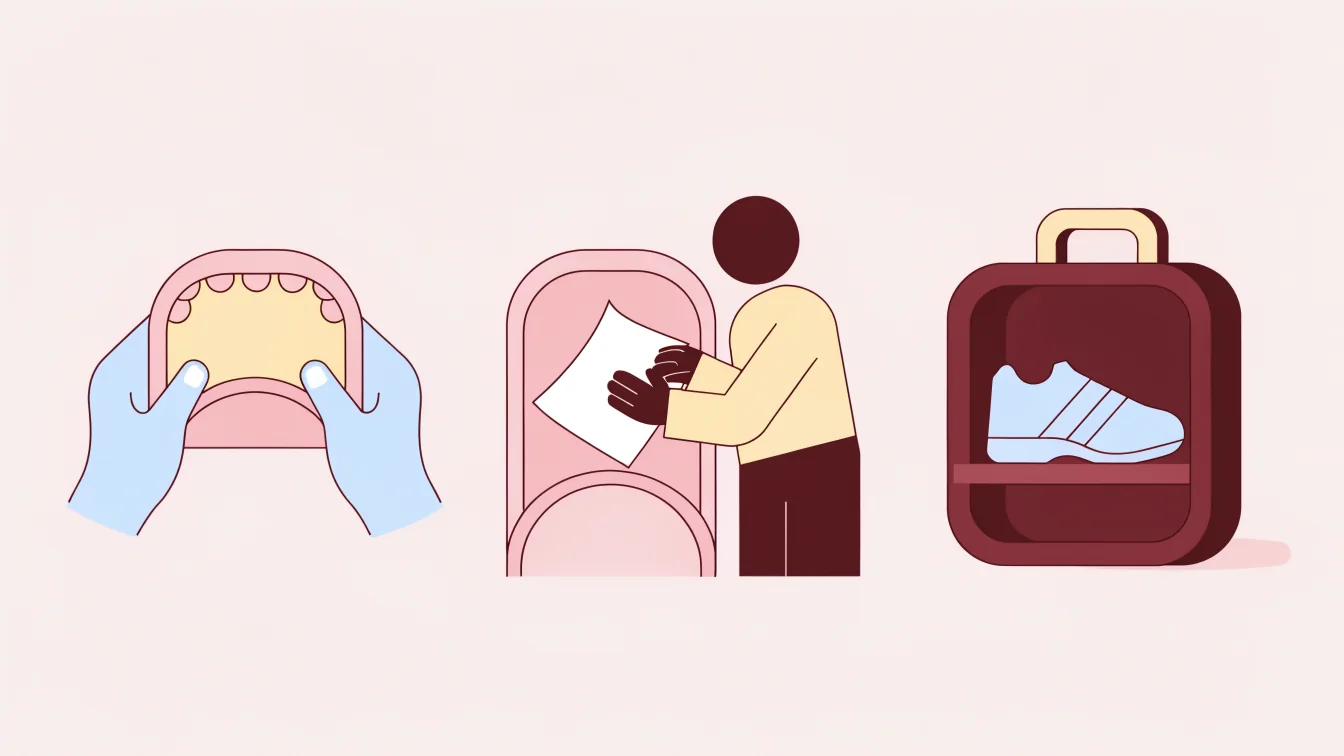
Shoe bags keep footwear separate from clothes, toiletries and other packed items. Choose a breathable fabric pouch for dry shoes, a wipe-clean organizer for dirty travel footwear, or a structured case when shape matters. Measure the shoes together before sizing the bag.
Types of shoe bags and what each does
| Type | Best use | Main benefit | Watch out for |
|---|---|---|---|
| Thin drawstring pouch | Clean or lightly worn travel shoes | Light and packable | Minimal protection from pressure |
| Zippered fabric pouch | Daily gym and travel use | Enclosed, organized storage | Damp shoes may stay damp |
| Mesh shoe bag | Dry shoes needing airflow | Better ventilation | Dirt can escape through mesh |
| Wipe-clean lined bag | Muddy or sandy footwear | Easier inside cleanup | Not necessarily leakproof |
| Structured shoe case | Dress footwear or delicate uppers | Shape and crush resistance | Uses more luggage space |
| Separate shoe compartments | Regular sports routines | Keeps shoes out of main kit | Uses up main-compartment space |
| Storage shoe bag (closet or under-bed) | Off-season and dress shoes at home | Dust cover, keeps pairs together | Shoes must go in dry |
A thin pouch is enough when the main goal is keeping soles away from clean shirts. It adds no rigid bulk to the suitcase. It also gives polished shoes no protection from heavy items pressing down.
Structured cases work better for items that crease or deform easily. They require enough space to avoid crushing the toe box. A rigid case does not suit every suitcase; its structure can cost more space than it saves.
How to measure a pair of shoes
Shoe size numbers do not describe the outside length and height of every model. A bulky running shoe, tall ankle boot and slim dress shoe with the same labeled size can occupy different volumes. Measure the actual pair you will pack.
- Place both shoes in the orientation you intend to pack them.
- Measure the longest combined dimension, including toes and heels.
- Measure the maximum width of the packed pair.
- Check the height at the thickest sole or tallest collar.
- Compare those measurements with the bag's usable interior space.
- Leave some clearance so the zipper does not squeeze the footwear.
If shoes fit only when pressed forcefully against a zipper, choose a larger pouch or a different packing orientation. Some pairs nest heel-to-toe; others pack better side by side. Avoid bending stiff shoes simply to satisfy a compact bag size.
| Footwear | Typical packing issue | Bag feature to seek |
|---|---|---|
| Slim flats | Easy to lose among clothes | Compact zipped pouch |
| Running shoes | Bulky soles and uppers | Wide opening and room for both shoes |
| Leather dress shoes | Scuffs and pressure | Soft divider or structured case |
| Sandals | Straps and sandy surfaces | Wipe-clean liner |
| Hiking shoes | Dirt and heavy tread | Durable separate enclosure |
| Boots | Height and long shape | Tall case or separate luggage position |
These are matching rules, not dimensions. If a bag claims to fit “up to size 13,” check whether the maker gives interior dimensions in inches. A size number alone is not a fit guarantee.
Sizes from three makers' specifications
These examples show different constructions, not standardized footwear sizes. The measurements below retain each maker's labeling.
| Construction example | Published size | How the maker labels it | Fit implication |
|---|---|---|---|
| Mesh-panel zipped sack | 16 × 11 inches | External dimensions; no third dimension supplied | Ask about filled depth before packing bulky soles. Maker specification |
| Individual polyester sleeves | 16.5 × 8.5 × 0.25 inches | Exterior dimensions | The 0.25-inch listed depth is too slim to read as shoe height. Maker specification |
| Divided fleece enclosure | 9 × 12 × 3 inches | Listed size; interior/exterior not distinguished | Confirm the usable opening and fit with your footwear. Maker specification |
One maker states that its mesh sack fits a pair up to US men's size 13. Another states "up to men's size 13" for individual sleeves, without naming a sizing system. These are their fit claims, not proof that every shoe with that label fits.
Use the table to shortlist a format, then measure the actual footwear. A tall heel, flared running sole or stiff boot collar can decide the fit. Extra length does not make up for a bag that is too narrow.
Check how the opening narrows near the zipper or drawstring. A shoe can fit the body yet be awkward to insert. Try the intended packing orientation without bending a stiff toe box.
Before buying online, check whether the listed dimensions describe flat fabric, the filled shape or clear interior space. If the page does not say, ask the maker.
Material comparison
The named materials below come from the linked specifications. The inspection questions are practical selection advice, not laboratory rankings. Fiber, weave, lining and closure should be assessed together.
| Material or construction | Published example | Useful question |
|---|---|---|
| Polyester with mesh | One maker specifies recycled 300D polyester and mesh | Will the ventilation openings expose nearby clothing to loose debris? Source |
| Polyester sleeves | One maker lists polyester and individual drawstring bags | Does each shoe slide in without scraping hardware against its neighbor? Source |
| Soft fleece | One maker describes fleece and a divided compartment | Can the lining be cleaned after contact with the intended footwear? Source |
Do not use a recycled-content claim as a cleaning instruction. It says nothing about whether a particular coating tolerates a washing machine. Check the care label on the pouch itself, including any removable divider.
Check the inside with the bag turned open. Rough seams, exposed zipper backs or loose fasteners can defeat a soft-looking exterior. Put the footwear's most delicate surface against the smoothest protected area.
Shoe bags for travel
Most travelers need separation, not engineering. A soft pouch at the bottom of the suitcase handles one pair, as long as heavier items are not stacked on polished shoes. Place dense footwear where it will not crush fragile toiletries or deform softer bags.
For a quick overnight trip, packing one spare pair may not justify a large standalone shoe case. A small pouch can help keep the luggage interior clean. For multiple pairs, consider whether two slim pouches fit more efficiently than one deep organizer.
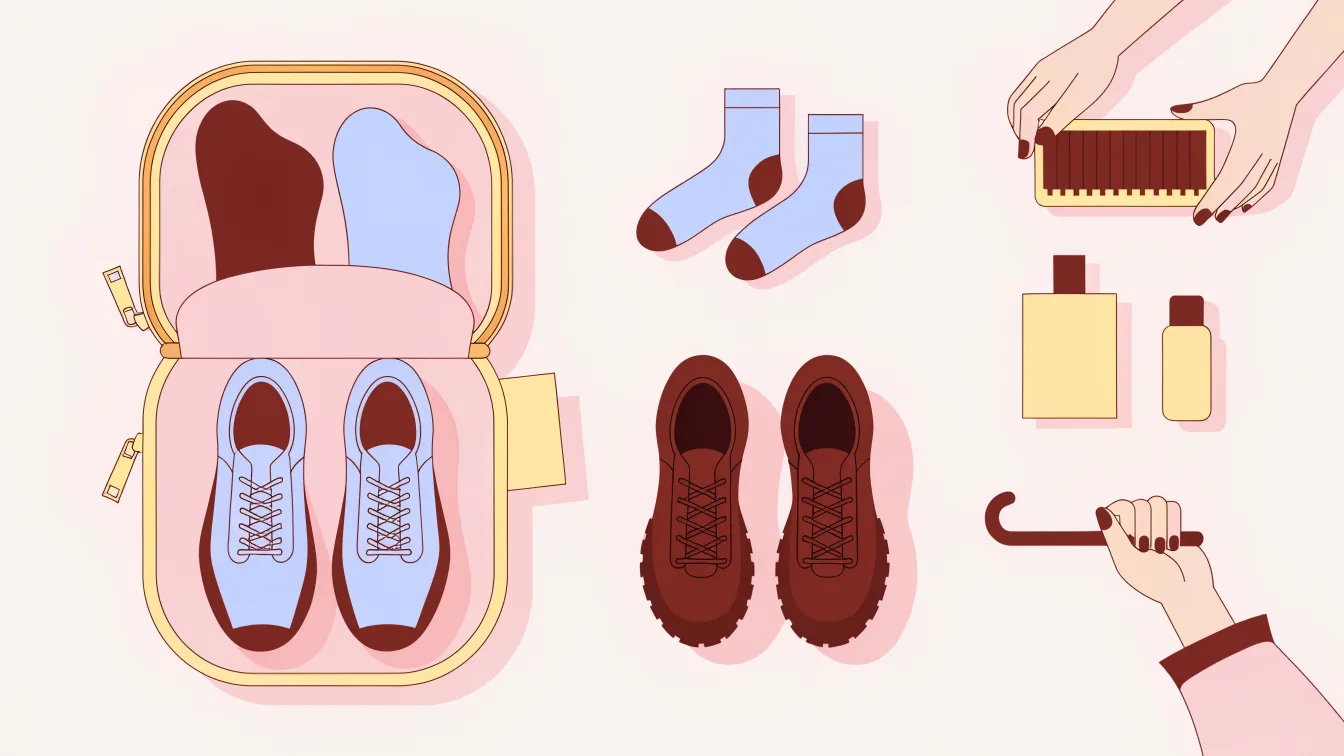
Dirty shoes should be brushed off before packing. If they are wet, allow time for drying rather than sealing them for days.
For formal footwear, use individual soft covers or dividers when surfaces may rub. Protect sharp buckles and hard heels from delicate leather or fabric. Pack polish or conditioner in its own sealed container.
For where shoes go in the suitcase, see packing guides.
Shoe bags for the gym

Gym use creates a different problem: shoes may be warm and damp after exercise. A mesh bag helps air circulation, but does not prevent dirty soles from touching other contents if there is no internal lining. A closed compartment separates shoes better during transport, while potentially slowing drying.
The practical answer is often temporary containment for the trip home, followed by unpacking. Remove footwear from the bag promptly and dry the enclosure according to its care label. Do not rely on perfumed inserts to replace cleaning.
One footwear maker advises against leaving damp shoes in a gym bag or closed cupboard, and says to keep them somewhere dry and ventilated. Maker care guidance
A dedicated shoe tunnel in a gym duffel is convenient but eats main-compartment volume when full. Make sure your shoes fit the tunnel without blocking the rest of the bag; see gym bags for how compartments trade against capacity. A shoe icon on a product listing tells you nothing about which shoe sizes fit.
Storage bags for the closet
A closet shoe bag keeps dust off pairs you wear rarely and stops them scuffing each other on a shelf. Choose a fabric shoe bag or a box over sealed plastic, as one shoe maker advises, and store shoes fully dry.
Do a fit check with the shelf above in place. A pouch may fit the shelf footprint while leaving a tall collar compressed. For boots, a tall bag or a bag per boot keeps the shaft from creasing.
Label an opaque cover where you can read it without lifting the shoes. A small photograph or plain description makes occasional pairs easier to locate. For leather or suede, check the shoe maker's care page first.
Breathability versus containment
Breathable material and wipe-clean lining solve different problems. Mesh permits airflow but lets fine dirt or sand escape; coated fabric keeps debris in but traps moisture from damp shoes. A combination of ventilation panels and an easy-clean base may be useful, but still requires timely unpacking.
| Property | Helps with | Does not guarantee |
|---|---|---|
| Open mesh | Ventilation | Dirt containment |
| Coated liner | Wiping debris away | Waterproof seams |
| Rigid wall | Protection from pressure | Ventilation |
| Zipper | Enclosed storage | Odor control |
| Removable divider | Shoe separation | Compatibility with every shoe shape |
When a maker says a shoe bag is water-resistant, ask whether that describes the cloth, coating, zipper or entire assembled bag. A stitched seam can still admit or release moisture. Avoid placing soaked shoes next to electronics even inside a lined pouch.
Cleaning and drying the bag
Shake out sand and loose dirt outdoors. Empty crumbs and debris from seams rather than washing them deeper into the fabric. Spot-clean according to the bag's care label; some foam, coated fabrics and rigid inserts should not be machine washed.
After cleaning, open the bag fully and let all layers dry. A case stored closed while damp can develop persistent odors. Keep the bag uncompressed when storing structured footwear organizers so its sides do not warp.
If a removable liner is available, inspect whether it can be cleaned separately. Replace damaged linings or broken closures when the bag can no longer separate dirty shoes reliably.
Which shoe bag should you buy, and when to skip one?
- One clean pair in a suitcase: a thin zipped pouch.
- Gym shoes that come home damp: a mesh or vented bag, unpacked the same day.
- Muddy or sandy footwear: a wipe-clean lined bag.
- Dress shoes or anything that creases: a structured case, if your luggage has the room.
- Off-season pairs at home: a fabric storage bag or box rather than sealed plastic.
If your extra footwear is already clean and separately enclosed in an appropriate packing cube, another pouch may add little. One pair of lightweight sandals might fit safely in a clean compartment without a special case. Bulky boots often travel better wrapped and laid along one side of the suitcase than in a rigid case.
Buy for a real problem: sole dirt, shape protection, organization or wet separation. A bag that solves none of those problems is another item to pack.
FAQ
Do shoe bags stop shoes from smelling?
Not on their own. A bag may contain odors temporarily, but it does not dry or clean the shoes inside. Unpack footwear promptly, dry it properly and clean the bag according to its care label.
Should a shoe bag be waterproof?
Only if the use requires moisture containment, and even then check seams and closure claims. For dry shoes, breathable materials may be more useful. Do not assume waterproof fabric makes the entire bag leakproof.
How big should a shoe bag be?
Measure the two shoes in their intended packing arrangement, including the highest and widest points. Allow room for easy closing. Labeled footwear size alone is not enough to judge fit.
Can I wash a shoe bag in a machine?
Only when the maker or care label permits it. Coatings, foam structure and rigid inserts may need gentle spot cleaning instead. Dry the bag thoroughly before storing shoes.
Do I need separate bags for each shoe?
Not necessarily. A paired pouch is convenient for casual shoes. Individual sleeves or dividers can be useful for delicate finishes that might scuff when soles or hardware rub against one another.
Related guides
- Gym bags for shoe compartments
- Best gym bags with a shoe compartment for bags with a built-in shoe tunnel
- Packing guides for suitcase layout
- Travel bags for luggage options
- Bag care for cleaning materials