Waterproof vs water-resistant bags: what the labels mean
Waterproof vs water resistant comes down to the claim behind the word. A water-resistant bag limits water entry in light rain or splashes, while a waterproof bag carries a defined protection claim for its whole construction. Neither term alone promises survival of immersion, so check the rating and closure instructions.
What do waterproof and water-resistant mean on a bag?
Water-resistant generally describes limited resistance to moisture entering. It may be enough for a quick walk through drizzle, depending on the bag design. It is not permission to leave the bag in heavy rain or drop it into water.
Waterproof sounds absolute, but useful claims name the conditions: rain, splashing, temporary immersion, or prolonged submersion. How deep, for how long, and does the closure need to be fastened a particular way? A credible maker answers those questions.
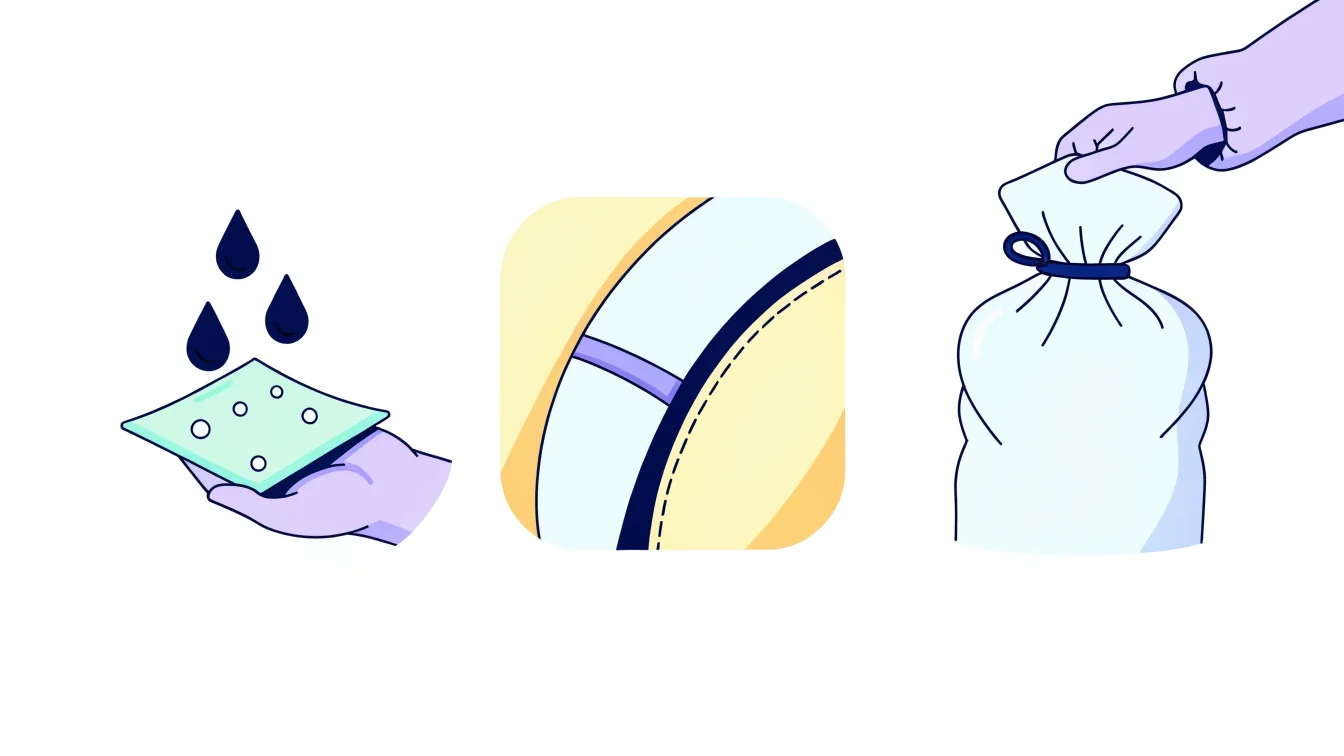
What matters is the whole bag, not just the cloth. A bag may use waterproof-coated fabric while its stitched seams and ordinary zipper provide easy paths for water. An exterior treatment that makes raindrops bead does not make every opening sealed.
The CORDURA Classic description illustrates this distinction: it cites "water repellency across finished, coated, and laminated options." The bag materials guide covers the fabrics themselves.
Waterproof vs water-resistant: a quick comparison
| Feature | Water-resistant bag | Waterproof-rated bag |
|---|---|---|
| Typical purpose | Keep drizzle and splashes off everyday contents | Keep water out under a stated condition, such as splashes or 30 minutes at 1 meter |
| Fabric | May use repellency or coating | Often uses coated or otherwise sealed material |
| Seams | May be conventionally stitched | May be welded or suitably sealed |
| Zipper or opening | May remain a leak point | Requires a closure matching the protection claim |
| Rain exposure | Depends on maker instructions | Depends on its verified conditions |
| Immersion | Should not be assumed safe | Only if immersion is explicitly covered |
| Best shopping evidence | Specific rain and care guidance | Test rating, closure instructions, exclusions |
Use this waterproof vs water-resistant table as a shopping guide rather than a legal definition. Always prioritize the maker's specific statement over a generic online label.
How IP ratings work for bag protection
The IEC 60529 standard classifies the degrees of protection provided by enclosures for electrical equipment (the IP Code). Consumer bag makers sometimes use IP-style ratings to describe protection of electronics pouches and dry cases.
The two digits answer different questions. A NEMA technical bulletin says the first digit signifies protection against dust and the second protection against water. The rating is not simply a score in which every higher number means a better bag for every activity.
One dry-pouch maker's product page defines IP64 as dust-tight and protected against splashing from all directions. The same page describes IP67 as dust-tight and protected against temporary immersion up to 1 meter for 30 minutes.
These are specific protection descriptions, not a license to assume that any model with a roll-top can be submerged. Read the product's exact tested configuration.
An ingress rating also says nothing by itself about how a bag tolerates abrasion, sharp objects, repeated folding, or an aging coating. Those are separate durability questions.
Roll-tops, zippers, and seams: where water gets in

Roll-top closures
A roll-top folds the top opening over itself before clipping it shut. That reduces the direct route through which splashes can enter.
But it needs sufficient rolling and a properly seated closure. The same maker's instructions specify 3–4 rolls for one product's IP64 protection.
That does not establish a universal rule for every dry bag. Different models have different closure instructions and supported use cases. Check those before leaving shore.
Zippers
Ordinary zippers have spaces between teeth and may allow water through their tape or ends. A coated or specialized waterproof zipper may improve performance, but the bag still needs compatible seam and end-stop construction. Do not confuse “water-resistant zipper” with a tested immersion rating.
Seams
Needle holes and stitched junctions can create routes for water. Sealed, taped, or welded seams may reduce those pathways, but the method must match the material and its intended use. Examine corners and base joins, where several panels meet.
Which bag should you choose for each situation?
| Situation | Sensible starting point | Important caveat |
|---|---|---|
| Short urban commute | Water-resistant backpack | Protect essential electronics separately |
| Extended walking in rain | A bag whose maker states it handles sustained rain, or a rain cover | Check zippers and seams |
| Kayaking with splashes | Purpose-built dry bag | Follow maker's closure instructions |
| Canoe trip with immersion risk | Explicitly immersion-rated protection | Secure bag against loss and puncture |
| Beach trip | Water-resistant or dry-pouch design | Sand and sunscreen can impair closures |
| Electronics near water | A rated electronics pouch or case | Verify size, seal, and the maker's conditions |
The bag that is enough for a rainy sidewalk may be unsuitable for a boat deck. Always match protection to the worst plausible exposure, not just the weather forecast.
For outdoor options, see the waterproof bags hub and dry bag roundup. If you want a normal daypack, compare the overall design in the waterproof backpack roundup.
What it means when you shop
Start with your exposure: drizzle, sustained rain, splashes, or temporary immersion. Write it down before you open a product page. Then locate the product's exact protection claim, any documented test conditions, and the instructions for securing the closure.
Next, look for weak points in photos. A zipper without any protective flap, a pocket with exposed stitching, or an open-top interior can compromise the benefit of a coated shell. If the maker does not describe those areas, do not assume they are sealed.
Think about how you will use it. A roll-top you reopen ten times a day on a commute will not stay properly rolled. A simple flap can be the better everyday answer, even with a lower rating.
Finally, treat protection as something to maintain. The same maker's care notes for its dry pouch say to keep it free of coarse dirt and let it dry completely before storage. Do not store it rolled up or folded; the page warns that may crack the coating.
Common myths about waterproof bags
Myth: Water beads up, so the bag is waterproof. Beading demonstrates surface water repellency, not sealed seams or tested immersion protection.
Myth: A roll-top is always submersible. Closure design and the maker's rating determine the supported exposure. One roll-top maker's own page warns that water "may enter through the closure" if the pouch is fully submerged.
Myth: IP67 means unlimited underwater time. The IP67 example above covers temporary immersion (up to 1 meter for 30 minutes), not indefinite waterproofing.
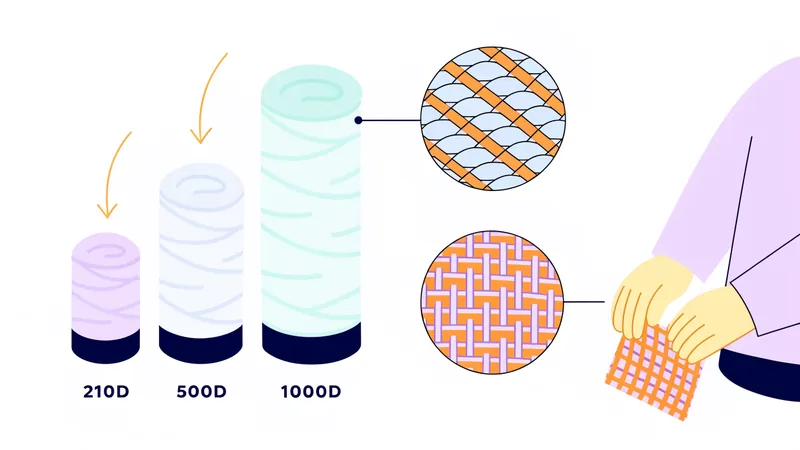
Myth: Thick 1000D fabric automatically blocks rain. Denier measures the linear mass density of fibers, not water resistance. Read the denier guide for the distinction.
FAQ
Is a water-resistant backpack okay for heavy rain?
Not necessarily. It may be fine for a short shower, but extended rain can enter through seams and openings. Look for the maker's exposure guidance and consider a protective liner or separate sealed pouch for sensitive contents.
What is the difference between IP64 and IP67?
On one maker's product page, IP64 means dust-tight and protected against splashes from all directions. IP67 means dust-tight and protected against temporary immersion up to 1 meter for 30 minutes. These descriptions apply to a particular tested product configuration, not automatically to every bag bearing a similar-looking closure.
Can I put my phone in a waterproof dry bag?
Only if the bag's manufacturer explicitly supports the needed protection and its dimensions fit the phone. A dedicated rated electronic pouch is often easier to inspect for seal condition. Check closure instructions each time before water exposure.
Does a waterproof zipper make the whole bag waterproof?
No. Water may still enter around seams, zipper ends, pockets, and other joins. The complete construction needs its own claim or test, so treat a special zipper as one useful component, not proof of overall waterproofing.
How do I keep a dry bag waterproof longer?
Follow the manufacturer's instructions. Keep closure surfaces clean, inspect for holes and coating damage, rinse when appropriate, and dry before storage. Do not assume washing, heat, or repeated creasing is safe for every coating.