Full-grain vs top-grain vs genuine leather
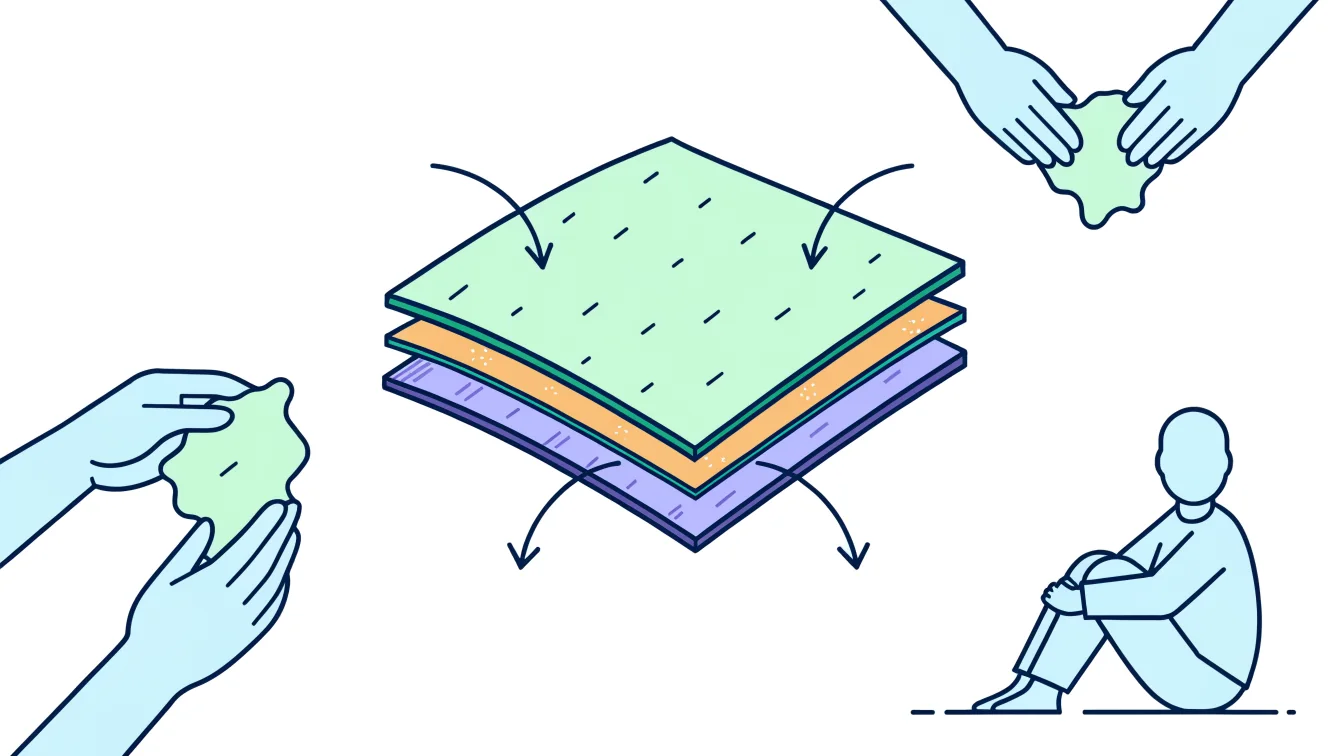
Full-grain vs top-grain vs genuine leather: pick full grain for natural markings, top grain for a uniform finish. Question any genuine leather tag; it claims only real leather. Full grain keeps the original surface; top grain is the outer layer, sometimes corrected.
What is the difference between these leather labels?
The labels are often stacked into a quality ladder: full grain on top, top grain beneath, genuine leather at the bottom. That ladder hides the real point: the three terms do not describe the same kind of property.
Full grain refers to the grain surface being retained. The Leather Working Group's terminology guide defines it as leather whose entire grain remains without corrective mechanical surface removal.
Top grain refers to material taken from the upper layer of the hide. Some top-grain leather is corrected to create a more uniform appearance. An industry processing guide explains that top-grain leather can include snuffed or corrected grain.
Genuine leather is much less precise as a shopping description. It usually asserts that real animal-derived leather is present, but it does not reveal whether the surface is full grain, corrected grain, or split. It is not a standardized grade, and it promises no particular durability.
Ask the seller for the hide layer and finish rather than treating the word genuine as a verdict.
Full-grain vs top-grain vs genuine leather: comparison
| Attribute | Full grain | Top grain | “Genuine leather” label |
|---|---|---|---|
| Main meaning | Original grain surface retained | Upper hide layer; may be corrected | Broad claim of real leather |
| Surface treatment | No corrective removal of grain | May be sanded or corrected | Unspecified |
| Visible natural markings | Often visible, depending on finish | Can be more uniform | Cannot tell |
| Aging appearance | Natural markings stay visible; an aniline finish does not mask the grain | A corrected, finished surface starts out more uniform | Cannot predict from the label |
| Ease of cleaning | Not shown by the grade; ask for care instructions | Not shown by the grade; ask for care instructions | Ask for care instructions |
| Best buying evidence | Exact grade plus finish | Correction and finish disclosed | Hide type and finish disclosed |
| Main mistake | Assuming every piece lasts forever | Assuming corrected means defective | Treating the word as a precise grade |
The distinctions above follow the Leather Working Group's definitions and a leather-processing guide hosted on its site. They do not imply that two finished bags have equal workmanship.
Choose full-grain leather if you like visible character
Full-grain leather can appeal if you want natural variations in the surface rather than a perfectly uniform coating. Because the grain is not corrected away, markings may remain visible depending on the finishing method.
But the label alone cannot promise an attractive patina or years of trouble-free wear. Tanning, thickness, dyeing, coatings, stitching, and daily treatment still matter.
Ask the seller how the surface is finished and how to care for it before you buy. Visible character might be the look you enjoy, or it might become annoying on an office bag.
Choose it if: You like visible grain and natural markings and will keep up the care routine the finish needs.
Skip it if: You want a completely uniform, wipe-clean surface and the seller cannot explain how that specific leather should be cared for.
Inspect high-friction parts closely. Shoulder straps, handle edges, and bottom corners often face different stresses than the bag's broad front panel. Full-grain material on the front does not guarantee the handles use the same leather.
Choose top-grain leather if you prefer a controlled appearance
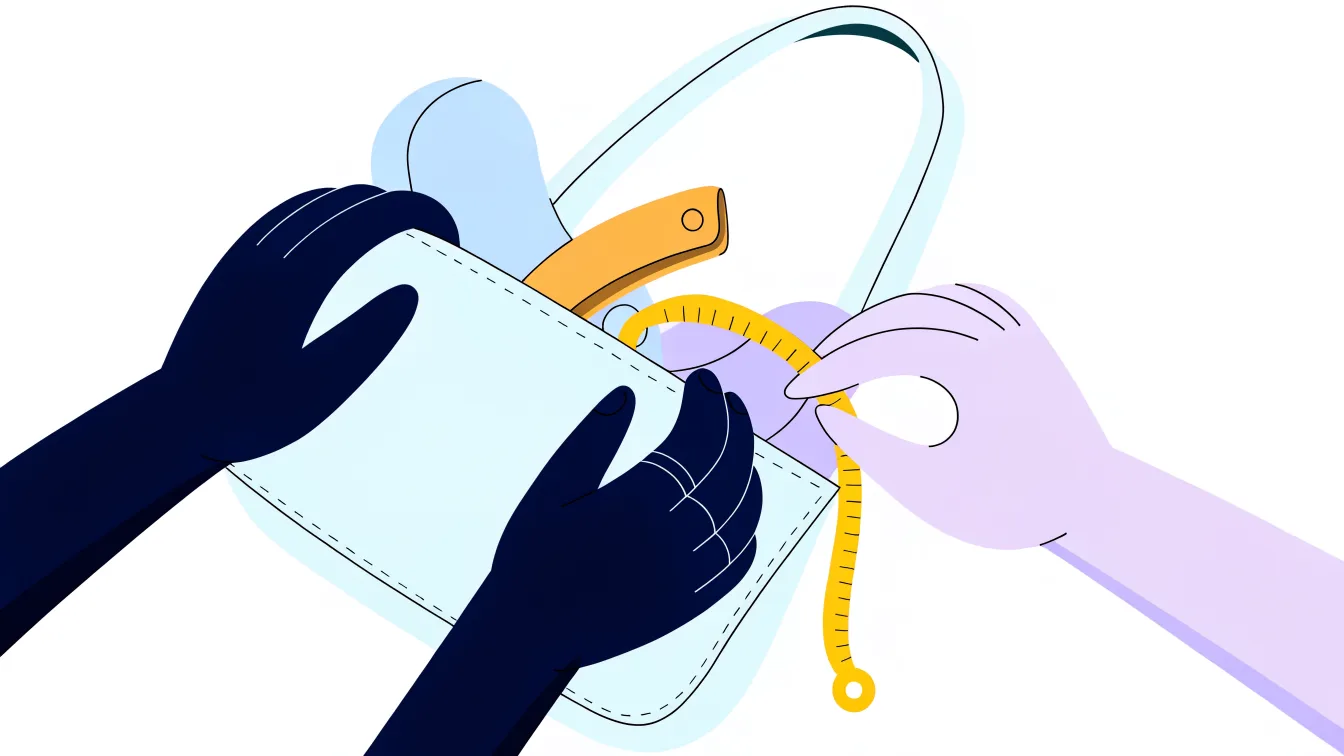
Top-grain leather can offer a smooth, uniform look, especially when a maker has corrected the surface and added a finish. This can suit structured handbags, briefcases, and satchels. Surface finishing is not inherently a defect; it is a manufacturing choice that affects look and feel.
There is a distinction between top grain and corrected grain. Not every top-grain piece necessarily has the same amount of surface correction. That is why the label needs a second question: what finishing process was used?
Choose it if: The surface looks and feels right, the finish is clearly described, and the manufacturer provides realistic care instructions.
Skip it if: A vague “top grain” claim is used to justify a premium with no explanation of tanning, coating, or hardware quality.
Feel is difficult to verify from photographs. Close-up images of the grain and edges can help, but do not treat them as scientific proof of a particular hide layer. For online purchases, a clear return policy matters.
How to interpret “genuine leather” on a product tag
Of the three, it is the least informative. Sellers use it loosely, from a plain statement that the item contains animal leather to general marketing copy. The phrase alone tells you nothing about the hide layer.
If a product page only says genuine leather, do not conclude that it must be split leather. Equally, do not conclude that it is full grain. Treat the grade as unknown until the maker states the hide layer and finish.
A bag may combine different materials: leather handles, a coated body, a textile lining, and bonded reinforcements. Ask which components carry the leather claim. A leather trim on a fabric tote is not the same as a leather body.
In the US, the FTC's Leather Guides address misrepresentations about the composition and characteristics of certain leather and imitation leather products. Under them, a “bonded leather” label should disclose either that the material is not leather or its percentages of leather fibers and non-leather substances.
Buy it if: The maker goes beyond the term and states the hide layer, finish and care.
Skip it if: The term is the only proof offered for expensive or supposedly long-lasting construction.
When grain type does not decide the purchase
Bag design can matter more than the full-grain vs top-grain vs genuine leather label on the tag. A shoulder bag with narrow straps may be uncomfortable even if its surface material is excellent.
A satchel with a rigid opening may feel formal but give awkward access. A carefully built tote using corrected-grain leather may suit your commute better than a heavier full-grain option.
Look for edge finishing, reinforced handles, and dependable closures. Examine the interior: seams, lining attachment, pockets, and base shape can affect daily use. The bag construction hub covers these points.
Consider how you plan to use the bag. For regular rain, follow the maker's care guidance rather than treating leather like waterproof fabric; how to clean a leather bag covers the basics. For an occasional dress bag, color stability and storage may matter more than abrasion ratings.
If you are comparing complete handbags, the leather handbags guide may help organize your questions. Do not infer future resale value from the leather grade.
How to read a leather product description
Begin with material composition: cowhide, goat, sheep, or another animal if stated. Next identify the layer or surface: full grain, corrected grain, split, suede, or nubuck. Then ask about finish: aniline, pigmented, waxed, or another maker-defined treatment.
The Leather Working Group glossary is useful because it distinguishes surface terminology from tanning terminology. A bag can be vegetable-tanned and full grain; those terms describe different properties.
Finally, check the product's construction and care. If the maker gives no useful details, do not substitute assumptions drawn from price, brand prestige, or product photography.

FAQ
Is genuine leather always poor quality?
No: the words are too broad to establish quality by themselves. Ask the maker whether it is full grain, corrected grain, split, or another specified construction. Also assess thickness, finish, hardware, and stitching instead of treating one label as a complete verdict.
Does full-grain leather always develop a patina?
Its appearance can change with time and handling, but the result depends on tanning, surface finish, color, exposure, and care. Not every finished leather darkens or wears in the same way. Check the care guidance for the exact bag.
Is top-grain leather real leather?
Yes. It refers to leather from the outer part of the hide, and it may be finished or corrected. “Top grain” does not automatically reveal the final feel or maintenance needs, so the product description should state what surface treatment it has received.
Is bonded leather the same as genuine leather?
Do not treat them as interchangeable specifications. The Leather Working Group's closest term, recycled leather fibre, means leather broken into fibers or particles and formed into sheets, with or without binders. Genuine leather is often a broad marketing term, so ask for an exact material breakdown.
Which leather is best for an everyday handbag?
Choose a finish you can maintain and a construction that fits your daily load. Full grain can suit someone who likes natural surface character; top grain with corrected grain can suit someone who prefers a more uniform look. Both depend on workmanship.
Sources
- leatherworkinggroup.com/learn-more/features/74-essential-leather-industry-terms
- leatherworkinggroup.com/fileadmin/uploads/lwg/LN_Guide_to_Modern_Leather_Making__Concis…
- leathernaturally.org/faqs
- ftc.gov/legal-library/browse/rules/leather-guides
- federalregister.gov/documents/2008/06/18/E8-13656/guides-for-select-leather-and-imitati…