Ballistic nylon vs Cordura vs polyester

Ballistic nylon vs Cordura vs polyester: choose ballistic nylon for a smooth, structured bag and CORDURA Classic nylon when abrasion resistance matters most. Pick polyester when cost, color, or a lighter-duty design matters more. None wins automatically: the weave, coating, seams, and actual fabric specification decide performance.
What is the difference between these three bag fabrics?
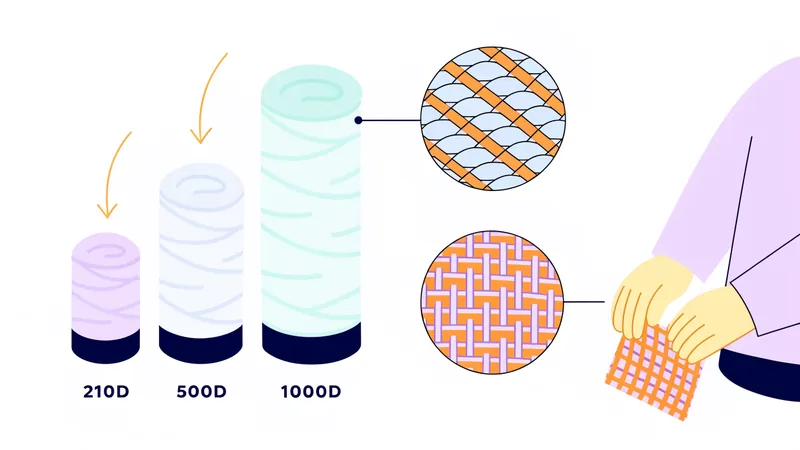
Ballistic nylon names a textile construction commonly associated with tough, tightly woven luggage fabric. According to Specialty Fabrics Review, luggage-style ballistic cloth often uses a 2×2 basket weave and nylon yarn. It does not mean a backpack is bulletproof.
CORDURA is different: it is a brand covering multiple engineered fabrics. In a common backpack comparison, people usually mean CORDURA Classic, a textured high-tenacity nylon 6,6 fabric.
But CORDURA's collection also includes different fibers, including recycled polyester. Always read the particular product's composition.
Polyester is a broad fiber family; the bag materials hub covers it alongside the others. It can appear in inexpensive school bags, sophisticated travel packs, linings, and coated technical fabrics. Calling it “ordinary polyester” describes too many products to produce a useful quality verdict.
This is why the comparison needs more than a brand-versus-fiber slogan. You are comparing a weave family, a textile brand, and a fiber. Start from the exact fabric spec, not the biggest word on the hang tag.
Ballistic nylon vs Cordura vs polyester: comparison table
| Attribute | Ballistic nylon | CORDURA Classic nylon | Polyester bag fabric |
|---|---|---|---|
| What the name describes | Common basket-weave luggage textile | Branded engineered nylon fabric | Fiber family |
| Typical surface impression | Smoother, more polished | More textured | Depends on weave and finish |
| Abrasion performance | Depends on yarn and finish | Manufacturer emphasizes abrasion resistance | Depends on yarn and construction |
| Structure | Often used for structured shells | Used across structured and soft panels | Wide range of stiffness |
| Water protection | Needs a suitable coating/finish | Finished, coated and laminated options exist | Depends on treatment and seams |
| Weight | Heavy; one maker's 2×2 ballistic is 10.5 oz/yd² (360 g/m²) | Varies with yarn size, 330D to 1000D | Varies widely; check the listing |
| Where you see it | Soft-sided luggage and backpacks | Bags and packs, apparel, footwear | School bags, travel packs, linings |
| Main buying risk | Assuming “ballistic” means invulnerable | Assuming every CORDURA fabric is the same | Assuming all polyester is low-quality |
The characteristics above are broad shopping distinctions, not standardized test rankings. Published examples come from CORDURA, Specialty Fabrics Review, and a manufacturer's ballistic specification.
Choose ballistic nylon if you want a structured everyday bag
A smooth ballistic nylon outer is a sensible candidate for commuting, office travel, or a briefcase-style backpack. The weave can provide a fairly refined appearance while supporting a structured shape. That matters when a pack needs to sit upright or slide beside luggage without snagging.
Compare the actual published details. One maker's materials description specifies a 2×2 basket weave, urethane backing, exterior water-repellent treatment, and fabric weight.
Those are concrete things a shopper can check. A listing that says only “premium ballistic nylon” omits essential information.
Choose it if: You want a smooth, structured shell for an office or travel bag that sits upright and does not snag.
Skip it if: Your priority is the absolute lightest possible daypack or a soft packable silhouette. The exact product still matters; no universal weight penalty can be assigned from the weave name alone.
Also inspect the strap anchors. A strong shell does little good when its handles pull away at the first heavy load. The bag construction guide explains the non-fabric details that deserve equal scrutiny.
Choose CORDURA Classic if abrasion is your main concern

The appeal of CORDURA Classic is a clearly specified range of high-tenacity nylon 6,6 fabrics made for applications that include bags and packs. It is available in multiple denier weights and finishes, making it useful for builders who want different levels of structure and surface treatment.
The textured surface may be desirable on outdoor or work-oriented bags. However, the textile's performance still depends on which CORDURA fabric the manufacturer selected, how it was coated, and how it was sewn. “CORDURA” alone is not a complete specification.
Choose it if: Your bag will be dragged over rock, concrete or truck beds, and the maker names the exact CORDURA fabric and finish.
Skip it if: The seller gives only a logo and no information about weight, coating, or panel placement. A logo is not a spec sheet.
If you see CORDURA polyester, do not call it nylon. The re/cor family explicitly demonstrates that the brand covers different fiber types.
Choose polyester if fit, features, and budget matter more
Polyester deserves a fair evaluation. A well-designed polyester commuter pack may be more useful than an expensive nylon pack with awkward shoulder straps, poor organization, or no laptop protection. Fabric is one part of the package.
Polyester often turns up in the lower price tiers, so judge the rest of the bag harder. Check what the manufacturer actually tells you. Ask whether the outer material is plain woven, ripstop, or coated.
Examine zipper placement, rain flaps, lining, and padded compartments. If there are abrasion tests, compare only results that use compatible methods and conditions.
Choose it if: The backpack's organization, comfort, and stated construction match your needs at an acceptable price tier.
Skip it if: “Polyester” is the only material information and durability is central to your purchase. Ask for the shell's weave and finish before paying for durability.
The number printed next to the fabric is not a durability guarantee. See denier explained for what 500D or 1000D actually measures.
When the fabric choice does not matter much
For an occasional overnight bag carried between a closet and a car, pocket layout and zipper usability may matter more than small differences among technical textiles. Likewise, a lightweight office backpack might be chosen mainly for comfort, not for its ability to scrape along concrete.
On the other hand, frequent bike commuting, outdoor gear hauling, and heavy work use place more pressure on seams and shells. Here, you should demand more transparent materials information, reinforced attachment points, and a realistic care routine.
Weather protection is another separate decision. All three fabric categories can be paired with coatings.
None guarantees a watertight bag just because the surface sheds droplets. Seams, closures, and actual protection ratings are addressed in waterproof versus water-resistant bags.
How to compare two product listings fairly
First, note the exact shell fiber and weave. Second, find the finished fabric weight or other relevant published specification. Third, check coating and seam treatment.
Fourth, compare empty bag weight, usable dimensions, and warranty wording. Finally, look for structural weaknesses at handles, corners, and zippers.
If one bag provides a detailed fabric specification and the other does not, do not invent missing values for the second. Compare what you can verify and mark other claims as unresolved.
In the ballistic nylon vs Cordura vs polyester choice, the practical winner is the bag whose total construction fits your load and environment. A great technical fabric is wasted on an uncomfortable or poorly assembled pack.
FAQ
Is ballistic nylon stronger than Cordura?
There is no universal answer. Ballistic nylon describes a common weave-based textile category, while CORDURA covers multiple engineered fabrics.
A defensible comparison needs actual samples and matched abrasion, tear, or tensile tests. Neither name alone settles the question.
Is Cordura the same as nylon?
Not always. CORDURA Classic uses high-tenacity nylon 6,6, but CORDURA also offers recycled polyester technology. Read the exact model's material designation before assuming which fiber it contains.
Does ballistic nylon stop bullets?
Do not assume so. The luggage term refers to a basket-woven fabric construction, not a claim that a single backpack shell is certified ballistic armor. Treat a bag as a bag unless it has separately documented protection credentials.
Is polyester a bad choice for luggage?
No. Polyester can be perfectly reasonable for a travel or school bag. The practical decision depends on its weave, finishing, reinforcement, and the complete bag design. Inspect specifications and warranty terms rather than excluding an entire fiber family.
Which fabric is best in heavy rain?
No fabric label alone answers that. Look at coatings, seam sealing, closures, and any documented water-resistance testing. For prolonged soaking or immersion, a properly specified waterproof system matters more than an abrasion-focused textile brand.