Best kids' hiking backpacks
We may earn a commission when you buy through links on this page. It never changes what a guide says. How this works.
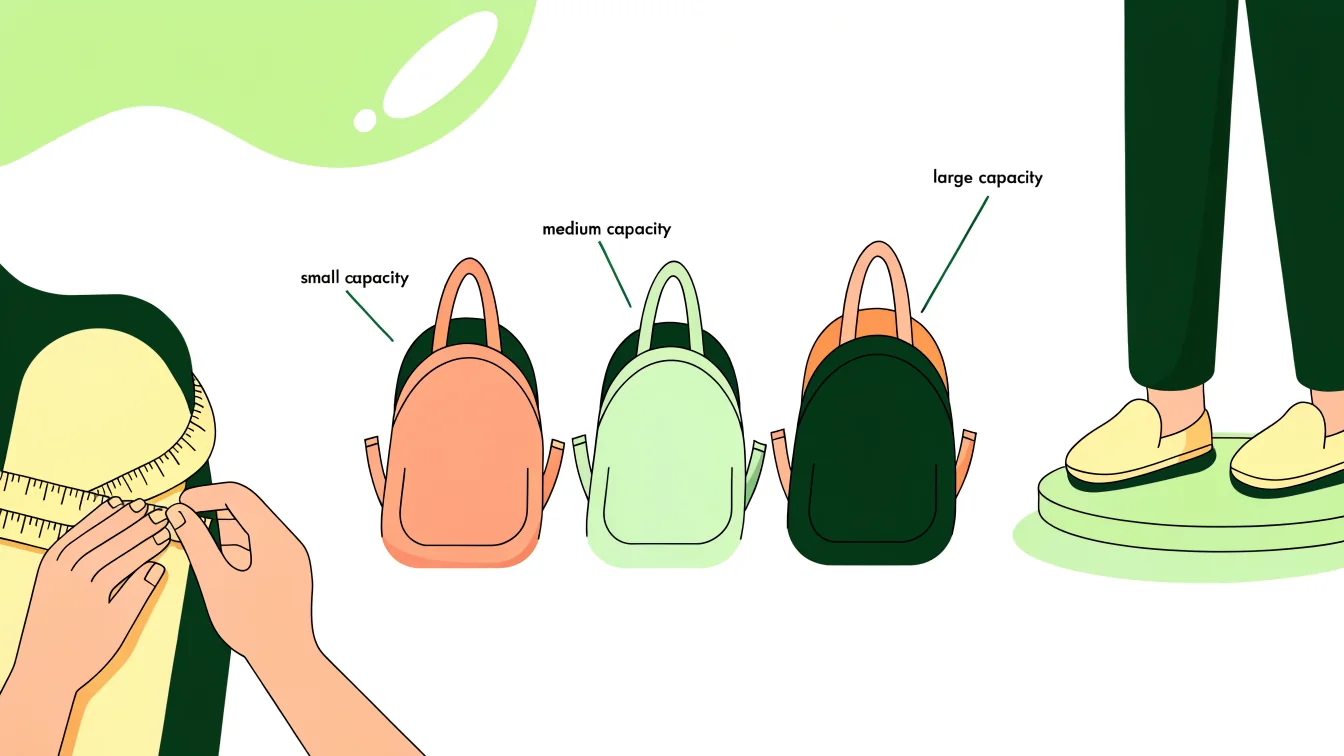
The best kids' hiking backpacks fit the child's back first and stay light when loaded; pick capacity last. Measure the child's back, then compare deuter's Schmusebär (8L), Forest Fox 14, Junior (18L), Fox 30 and Fox 40 against it.
Quick picks
| Pick | Best for | Key spec | Price tier |
|---|---|---|---|
| deuter Schmusebär | A first pack for preschoolers | 8L; approximately 9.4–11.8-inch back; 10.2 oz | $$ |
| deuter Forest Fox 14 | Wet, muddy days in the woods | 14L; approximately 9.4–11.8-inch back; rain cover | $$ |
| deuter Junior | Day hikes with a longer back fit | 18L; approximately 12.6–17.3-inch back; maker age 7+ | $$ |
| deuter Fox 30 | Adjustable fit for overnight-sized equipment | 30L; approximately 11–16.5-inch back; 2.54 lb | $$ |
| deuter Fox 40 | Hut-to-hut trips for older kids and teens | 40L; approximately 12.6–18.1-inch back; 2.78 lb | $$ |
Converted measurements are approximate; the maker's original figures appear in the linked specifications. Back length means the maker's stated fitting measurement, not the bag's external height. Our hiking-backpack guide covers the broader choice of layout and capacity.
How we chose
Bags.net has not tested these backpacks or fitted them to children. Picks come from the makers' published specs: capacity, empty weight, harness adjustment, back-length range and age guidance. Tiers use each maker's US list price: $ under $50, $$ $50–$149, $$$ $150–$299, $$$$ $300+.
All five picks are from deuter and all sit in the $$ tier. deuter's US pages publish back length, weight and a list price for each kids' pack. Load figures come from deuter's kids' guide and the American Academy of Pediatrics' school-backpack guidance.
What to look for in the best kids' hiking backpacks
Start with back length, then capacity, then empty weight. The table pairs each pick with deuter's own age and height guidance.
| Age guide | Pack | Capacity | Back length | Child height | Empty weight |
|---|---|---|---|---|---|
| 3 and up | deuter Schmusebär | 8L | 9.4–11.8 in | about 38.6–51.2 in | 10.2 oz |
| Not stated | deuter Forest Fox 14 | 14L | 9.4–11.8 in | about 38.6–51.2 in | 13.8 oz |
| 7 and up | deuter Junior | 18L | 12.6–17.3 in | about 51.2–66.1 in | 14.1 oz |
| 8 into the teens | deuter Fox 30 | 30L | 11–16.5 in | about 43.3–66.1 in | 2.54 lb |
| Kids and teens | deuter Fox 40 | 40L | 12.6–18.1 in | about 51.2–66.9 in | 2.78 lb |
Heights are converted from deuter's centimeter ranges. Children of the same age can need different fit ranges, so treat the age column as a filter only.
How to measure back length
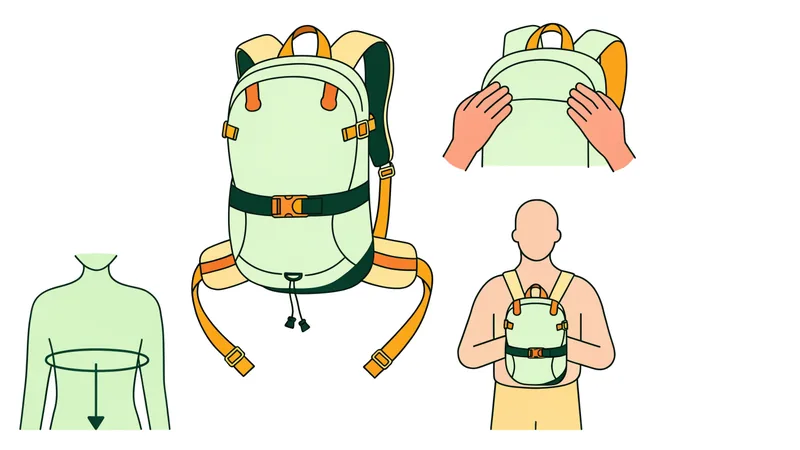
deuter defines back length as the distance between the 7th vertebra and the iliac crest. Have the child tilt their head down; that vertebra is the one that arches out below the base of the neck. Next, wear a belt horizontally on the hip bone, across the two iliac crests. Measure from that vertebra down to the belt.
Adjustment range. Compare that number with the exact model's stated range, and do not carry one pack's range over to another. An adjustable harness has little value if its smallest setting does not fit now.
Capacity by age. deuter suggests 5 to 10 liters for kids ages 3 and up and an 11-to-22-liter pack for school-aged kids. It says kids ages 8 and up can even handle 30 liters or more, depending on height.
Access the child can manage. Let the child try closures and pockets with the intended equipment. Decide which items the adult will carry before choosing storage space. Our packing guides help organize that equipment.
Smaller daypacks for personal essentials
deuter Schmusebär: for a short back measurement
The Schmusebär has 8L capacity, a single main buckle, and an adjustable sternum strap. It weighs approximately 10.2 oz, converted from 290 g, and deuter places it among packs for kids aged 3 and up. Manufacturer list-price tier: $$.
Consider it for a few personal items when the child's back measures 9.4–11.8 inches. Let the child try the single buckle before you decide.
Watch out for: At 8L it holds a child's own snack, bottle and layer, not the family's kit. Do not buy it for a child whose back is outside the 9.4–11.8-inch range, however much they like the design.
deuter Forest Fox 14: for wet days outdoors
The Forest Fox 14 lists 14L, a removable rain cover, a removable sitting mat and a water-repellent base. It weighs approximately 13.8 oz, converted from 390 g, and deuter calls it the perfect backpack for forest schools. Its list price puts it in $$.
It shares the Schmusebär's 9.4–11.8-inch back range but adds 6L and weather gear. Its stretch side pockets and zipped front compartment suit a bottle and snack.
Watch out for: deuter's recommended load is 1–3 kg, about 2.2–6.6 lb, and it weighs 3.6 oz more than the Schmusebär empty. Do not fill all 14L.
deuter Junior: for a longer daypack fit
The Junior lists 18L, an adjustable sternum strap, and stretch side and front pockets. It weighs approximately 14.1 oz, converted from 400 g, and deuter says it is for adventurous kids aged 7+. Price tier: $$.
Compare it when the child's back measures 12.6–17.3 inches and 18L suits the day's kit. Ask the child to reach the intended pockets rather than assuming every item stays accessible when loaded.
Watch out for: deuter does not list a recommended load for it, and 18L is easy to overfill. Weigh the packed bag.
Adjustable options for overnight-sized equipment
deuter Fox 30: for an adjustable back
The Fox 30 lists 30L, VariQuick back adjustment, and pull-forward hip fins, and weighs approximately 2.54 lb, converted from 1,150 g. deuter says the Fox can go from age 8 all the way through their teenage years. It sits in the $$ tier.
Consider it when the child will carry overnight gear and their back falls in the 11–16.5-inch range. The main compartment has a zip-out divider, which gives another way to arrange equipment.
Watch out for: At 2.54 lb empty it weighs almost three times the Junior, and deuter's recommended load is 3–6 kg, about 6.6–13.2 lb. That is the pack's design range, not a target for your child.
deuter Fox 40: for a longer back and more volume
The Fox 40 lists 40L, VariQuick back adjustment, pull-forward hip fins and a pole attachment. It weighs approximately 2.78 lb, converted from 1,260 g, and deuter covers it with a lifetime warranty. The tier is $$.
Its back range is approximately 12.6–18.1 inches, converted from 32–46 cm. Choose it over the Fox 30 when the child's back runs past 16.5 inches. deuter says the Fox line suits hut-to-hut hikes and overnight alpine trips.
Watch out for: Its recommended load is still 3–6 kg, the same as the Fox 30. The extra 10L is room, not extra carrying ability.
Weight guidance: how much a child should carry
deuter's kids' guide gives load ceilings by age. It says preschoolers shouldn't carry more than one kilogram (or 2.2 lb.) and elementary school kids can handle up to 3 kilograms (6.6 lb.).
Older children get a little more. deuter says kids shouldn't carry more than 4 or 5 kg (8-11 lb.) before age 12. It adds that teenagers up to age 16 should limit their packs to 7 kg. These are a maker's general figures, not medical clearance.
The American Academy of Pediatrics' school-backpack guidance says the loaded backpack should not exceed 15% of the child's body weight. It also says that if a child needs to lean forward to support the backpack's weight, then it's too heavy.
That percentage is an upper guideline for school backpacks, not a target for hiking. For a 60 lb child, 15% is 9 lb, which is above deuter's 6.6 lb figure for elementary school kids. Use the lower number, and include the bag itself.
If pain or a health condition affects carrying, seek the child's clinician's advice. The AAP says not to ignore a child's back pain and to ask your pediatrician for advice.
Liters do not set a weight limit. Our bag-sizes guide explains storage measurements.
Which one should you buy?
For a preschooler with a back under about 12 inches, the Schmusebär, or the Forest Fox 14 for rain and mud. For day hikes from about age 7 with a 12.6–17.3-inch back, the Junior. For overnight loads from about age 8, the Fox 30 for an 11–16.5-inch back or the Fox 40 up to about 18 inches.
Count the Fox 30's 2.54 lb empty weight in the total. Its adjustable harness does not justify a large pack for an ordinary short outing.
Bring the intended equipment to the fitting where possible. Involve the child in checking closures and access, then weigh the complete loaded setup.
FAQ
Can I choose a hiking backpack by age alone?
No. Age labels are broad shopping filters, while back length and the loaded fit decide whether a design works. The best kids' hiking backpacks list a back range, so compare the child's measurement with it. A child at the edge of an advertised age range may fit well or poorly.
Should I buy a larger pack to allow for growth?
Only if it fits now. Room to grow helps when the smallest setting already works; the Fox 30's back adjusts from about 11 to 16.5 inches. Measure the child's back first. A pack bought too big is the wrong pack for this season's trips.
Is a manufacturer's load rating a safe weight for my child?
No. It describes the pack's intended carrying range, not an individual child's ability or medical suitability. The child, the route, the conditions and the complete load each need separate consideration. A spec never overrides a child's discomfort or their clinician's advice.
Does an overnight trip always require an overnight-sized kids' pack?
No. If an adult takes the shared camping gear, the child may only need a daypack, so decide that split first. The 18L Junior weighs about 14.1 oz empty, against 2.54 lb for the Fox 30, before anything goes inside.
Sources
- deuter.com/us-en/schmusebaer/4046051181356
- deuter.com/us-en/junior/4046051172590
- deuter.com/us-en/shop/backpacks/p2207840-kids-backpacks-junior
- deuter.com/us-en/fox-30/4046051172644
- deuter.com/us-en/fox-40/4046051172668
- deuter.com/us-en/forest-fox-14/4046051169989
- deuter.com/us-en/schmusebaer/4046051166261
- deuter.com/us-en/backpacks/children-s-backpacks
- deuter.com/us-en/advice/how-to-measure-your-back-length
- healthychildren.org/English/safety-prevention/at-play/Pages/backpack-safety.aspx