Gift bags
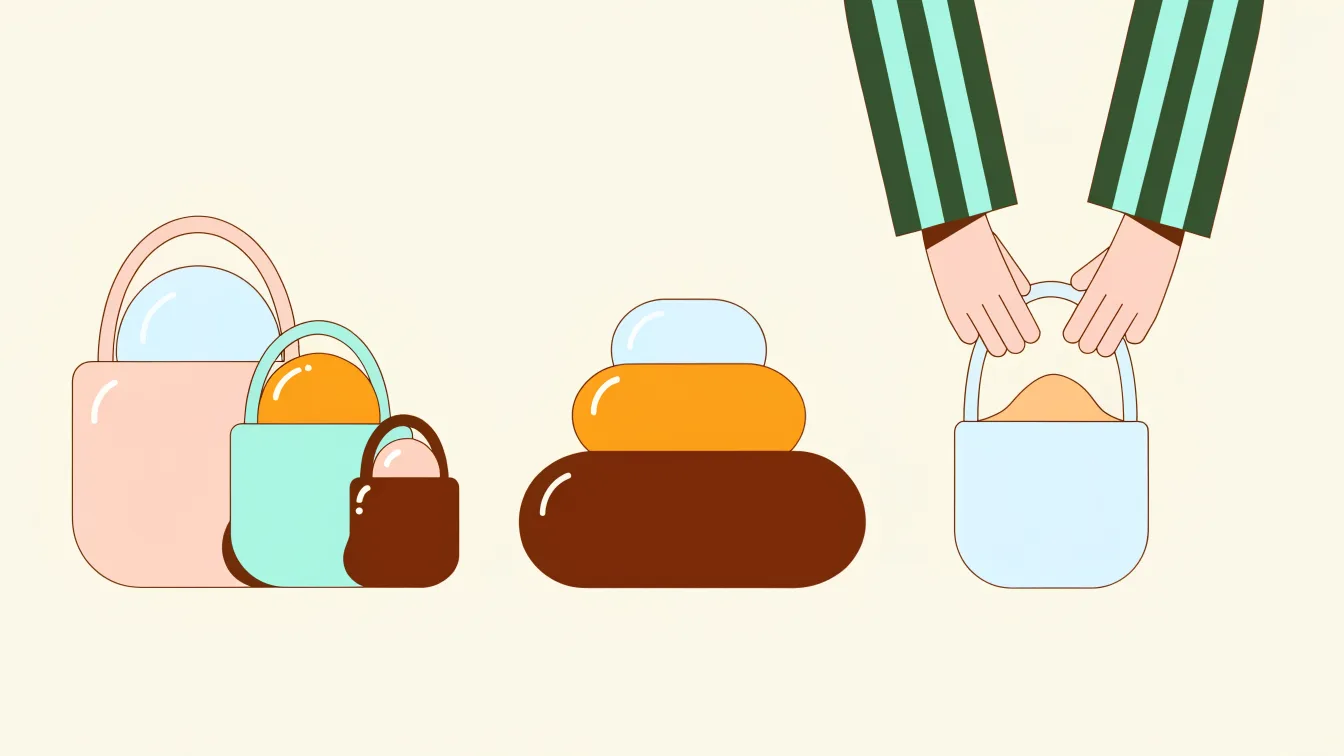
Choose gift bags around the present's measured width, height and depth, including any box or protective wrapping. Then select the material and presentation style. Use size names as a starting point, and leave room to place and remove the gift comfortably.
Match gift bags to the shape of the present
Start with the complete package you intend to give. Include a retail box, protective case or wrapping before measuring, rather than measuring the loose object alone.
| Format | Gift shape to compare | Detail to measure | Source example |
|---|---|---|---|
| Small paper bag | Small boxed item | Box width, height and depth | Small-format dimensions |
| Medium paper bag | Book or boxed candle | Actual package and base depth | Medium-format specification |
| Large paper bag | Toy box or folded clothing | Full package and opening | Assortment specification |
| Beverage bag | A bottle in its intended presentation | Bottle width and overall height | Compare your packaged bottle directly |
| Cloth drawstring sack | Gift with a gathered closure | Package and room for the drawstring | Cotton-sack specification |
Treat these as comparison categories. A book, candle or toy does not have one standard package size, so measure the one you are giving.
Decide whether you want the gift concealed or partly visible. Let that presentation choice guide the height comparison after you establish the required base dimensions.
Keep multiple small presents together in the arrangement you intend to use. Measure that group before choosing a larger outer bag.
Compare the actual dimensions behind size labels
Small, medium and large are labels within a product range. Compare the numbers when changing designs or choosing from an assortment.
| Size label | Example A: width × height × depth | Example B: width × height × depth |
|---|---|---|
| Small | 5.5 × 6.5 × 2.9 inches | 4.3 × 5.7 × 2.5 inches |
| Medium | 7.7 × 9.6 × 4.3 inches | 7 × 8.8 × 4 inches |
| Large | 10.4 × 13 × 5.7 inches | 9 × 11.5 × 5.2 inches |
Sources: Example A assortment and Example B assortment. Measurements are the maker's approximate figures.
Check the dimension order, too. Some listings place depth second; others place height second. Rewrite the numbers in one consistent order before comparing them.
For a boxed present, compare all three measurements. Choosing from height alone leaves the width and base fit unresolved.
If you already have a bag, open its base and compare the usable space directly. Place the packaged present inside gently rather than relying on the printed size name.
Include any intended tissue or inner presentation box in the final check. If the arrangement feels crowded, change the format or simplify the presentation before adding decorations.
Measure bottle formats and drawstring sacks differently
A bottle-format bag needs a different comparison from a flat cloth sack. Begin with how each opens and closes rather than trying to compare height alone.
Open the candidate bag and compare its base and height with your bottle or bottle box. Check the opening before planning the decorative finish.
For a bottle with separate packaging, measure the packaged form you intend to give. Include a stopper, cap decoration or outer case where applicable.
The cotton drawstring set measures approximately 8.7 x 11.0, 13.8 x 17.3 and 18.5 x 25.2 inches. The corresponding listed sizes are 22 x 28, 35 x 44 and 47 x 64 cm.
These are converted listed dimensions, not guaranteed usable space after gathering the top. Leave the closure area free to operate as intended.
For a boxed object, compare its depth as well as its flat outline. Try the intended arrangement before attaching a card or tying the strings.
Use the separate wine-and-bottle bag guide when you need a carrier for that specialized task. Keep decorative presentation and transport requirements distinct when planning the journey.
Read the body and handle materials separately
Look at the whole construction. Note what the body uses, what the handles use and whether the bag includes any separate decorations or inserts.
One paper example specifies satin ribbon handles. Another medium paper version uses grosgrain ribbon handles, while the cotton version closes with sewn-in strings.
| Part | Detail to identify | Decision it affects |
|---|---|---|
| Body | Paper, fabric or another specified material | Care and potential reuse |
| Handles or strings | Attachment and material | Intended carrying or closing method |
| Decoration | Separate tag, foil, ribbon or other accents | Presentation and disposal checks |
Inspect an existing bag before using it again. Look at the base, side folds, handle attachments and any closure. Set aside damaged packaging rather than hiding the problem with tissue.
Follow any published loading instructions. If the intended gift needs protective packaging, keep that protection in place and choose the outer presentation around it.
For construction terms, see the paper-bag guide. Use the exact product's details rather than assuming every paper design shares the same body, handles or care requirements.
Arrange the gift before adding the finish

Make the fit decision first. Place the fully packaged present into the bag and decide where the card will go before adding decorative tissue or ribbon.
For several small items, choose a deliberate arrangement. You might put the main gift in its own box and group the accompanying card and smaller pieces beside it.
Keep protective packaging separate from decorative filling. If the object came with care or packing instructions, retain them and follow the relevant directions.
Use a simple final check:
| Check | What to confirm | Change to consider |
|---|---|---|
| Fit | Present enters and can be removed comfortably | Choose another size or format |
| Closure | Strings or top remain usable | Reduce decorative filling |
| Identification | Recipient card is easy to find | Attach a separate tag |
| Reuse | Decorations can be removed without damaging the bag | Use a detachable finish |
Choose colors and patterns as personal preferences. Match the presentation to the recipient or occasion without treating a style convention as a rule.
If the gift is a bag itself, use the bag-gift guide to plan the present before choosing its outer wrapping. Measure the final packaged shape after any protective tissue or box is added.
Reuse intact packaging and follow its care directions
Keep a bag for another occasion if it remains suitable for the next present. The EPA encourages reusing presentation bags, boxes and tissue paper.
Remove the old recipient's tag and check the inside before putting the bag away. Retain reusable tissue separately so you can match it with another gift later.
For fabric, read the actual care label. The cotton example permits warm machine washing but prohibits tumble drying. Apply those directions to that product rather than every cloth sack.
For paper packaging, inspect the finish and construction before deciding how to handle marks or damage. Follow any maker instructions instead of copying a fabric-cleaning method.
Keep bags organized by usable shape: narrow bottle formats, shallow paper bags and cloth sacks. Open and inspect the candidate before deciding it suits a new present.
Choose reuse as a practical routine rather than assigning every material a fixed number of replacement uses. Keep the next gift's fit, condition and care needs central to the decision.
When a bag no longer suits presentation, identify its materials and follow the disposal route accepted in your community.
Separate recycling instructions from decorative appearance
Read the materials and disposal guidance together. A paper body can have non-paper handles or accents that need a separate decision.
The medium paper example instructs users to remove its handles before recycling. Follow your local program's acceptance instructions as well.
Seattle Public Utilities' holiday guidance, checked November 2026, excludes bags with handles or foil/glitter decorations from its recycling. Use the current instructions for your own collection service, including its tissue-paper guidance.
For broad wrapping choices, the EPA suggests reusable cloth or recyclable paper options and cautions about coatings, ribbons and glitter. Choose a disposal route from the actual construction rather than its color or occasion.
Keep spare packaging away from young children. The CPSC warns that thin plastic bags and packaging can cause suffocation; remove loose packaging during gift opening.
Store intact reusable supplies separately from items awaiting disposal. That gives you a clear place to start the next time you prepare a present.

FAQ
What size gift bags do I need for a book?
Measure the actual book, including any box or protective wrapping. One medium paper example measures 7.7 × 9.6 × 4.3 inches.
Compare all three measurements and the opening, rather than assuming every book fits a medium label. Include room for the presentation you intend to add.
Are small and medium labels standardized?
Use dimensions rather than assuming a shared standard. Two published medium examples measure 7.7 × 9.6 × 4.3 inches and 7 × 8.8 × 4 inches. Keep the measurement order consistent and compare the complete packaged gift with the particular product you intend to use.
Will a bottle bag fit any wine bottle?
Measure the bottle or its outer box before choosing. Compare the packaged width and height with the bag fully open, including its base and mouth.
Do not treat a bottle-format label as a fit guarantee. Include the cap, any outer case and the room needed for your intended presentation.
Can I wash a reusable cloth sack?
Read its care label. One 100% cotton set permits warm machine washing and prohibits tumble drying.
Use those instructions for that set only. Keep the product's care information with the sack, and inspect its condition before assigning it another present or storage task.
Can I put a decorated paper bag in recycling?
Identify its handles and accents first. One maker instructs users to remove ribbon handles before recycling.
Local acceptance still matters: Seattle excludes bags with handles or foil/glitter decorations. Check your provider's current instructions for the construction you actually have, and reuse intact packaging where appropriate.
Related guides
Sources
- hallmark.com/gift-wrap/gift-bags/solid-colors-8-pack-assorted-gift-bag-bundle-5EGB6679.…
- hallmark.com/gift-wrap/gift-bags/white-assorted-sizes-8-pack-gift-bags-5EGB7017.html
- hallmark.com/gift-wrap/gift-bags/9.6-solid-white-medium-gift-bag-349EGB7800.html
- ikea.com/us/en/p/vinterfint-gift-bag-set-of-3-mixed-colors-mixed-patterns-60635857
- epa.gov/recycle/how-do-i-recycle-common-recyclables
- epa.gov/newsreleases/epa-mid-atlantic-administrator-offers-tips-environmentally-friendl…
- atyourservice.seattle.gov/2025/12/19/recycle-your-holidays-reduce-waste-and-recycle-right
- cpsc.gov/Newsroom/News-Releases/2023/CPSC-Reminds-Early-Holiday-Shoppers-to-Follow-Thes…