Crossbody strap length: how to find yours
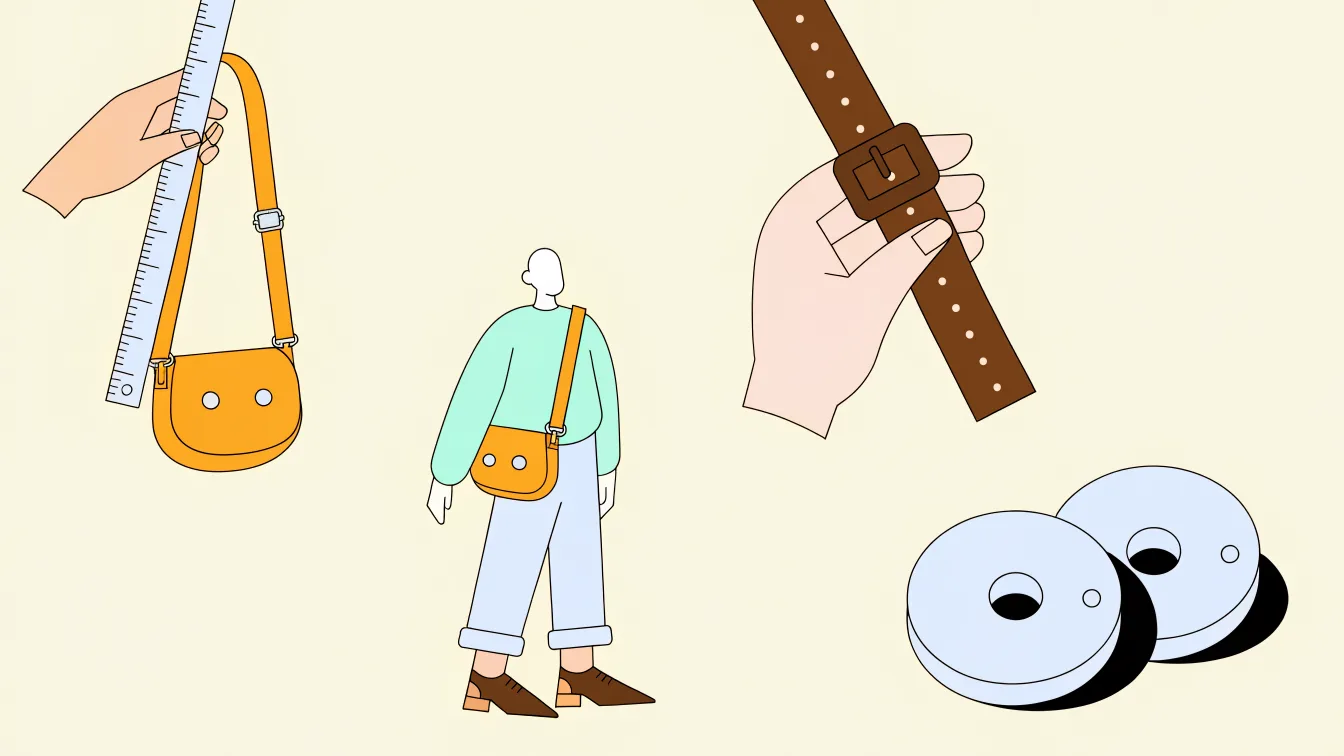
Find your crossbody strap length by positioning your bag where you want it, then measuring the complete strap needed between its attachment points. Repeat over your usual outerwear. Compare the result with a published adjustment range that uses the same measurement method.
Measure crossbody strap length using the complete attachment path
For a detachable strap, lay it flat and record the endpoints you use. Mautto's method includes the hooks in the end-to-end measurement.
Record that method beside the number. A bare webbing measurement is not the same record as a complete strap with hooks included.
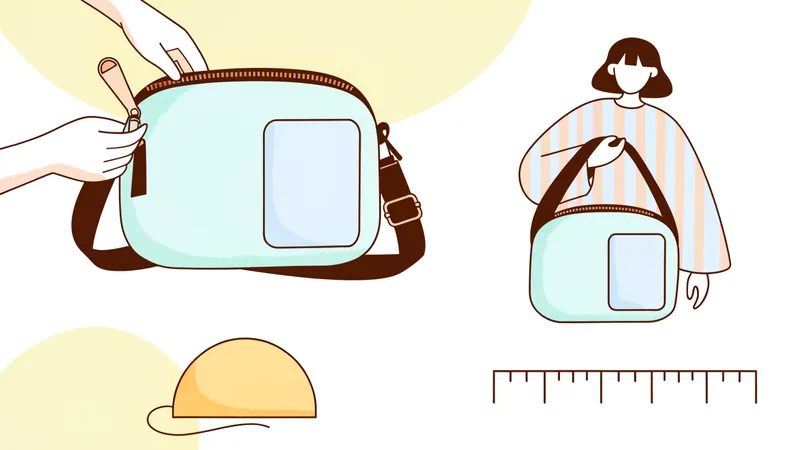
If you do not have a suitable strap, Mautto suggests using string as a mock strap. Treat this as a measuring aid for an empty bag, not something to carry your belongings.
- Put on the clothing you expect to wear.
- Hold the empty bag at your preferred position.
- Run the mock strap between its attachment points, across the opposite shoulder.
- Mark the required endpoints.
- Lay the mock strap flat and measure the marked length.
- Record the bag, clothing and wearing position with the result.
Then obtain the actual strap's measurement convention before comparing numbers. If its specifications exclude hooks, account for that difference through the maker's guidance.
The crossbody bags overview helps you compare carrying designs. Keep this measurement tied to the particular bag you used rather than treating it as a universal personal size.
Choose a wearing position through everyday actions
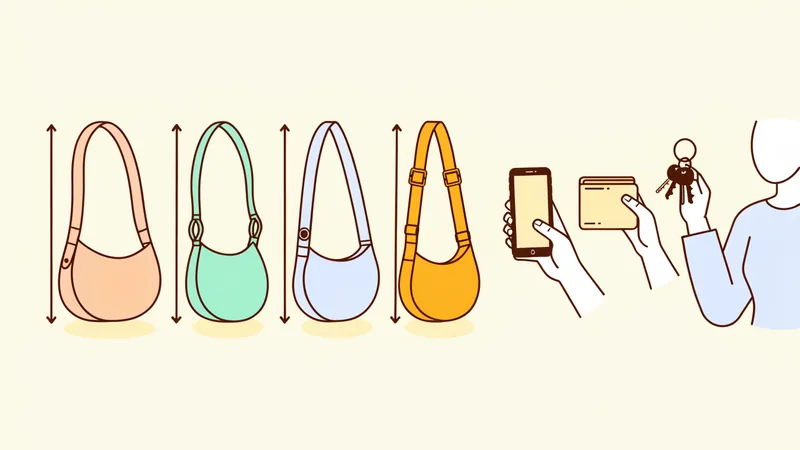
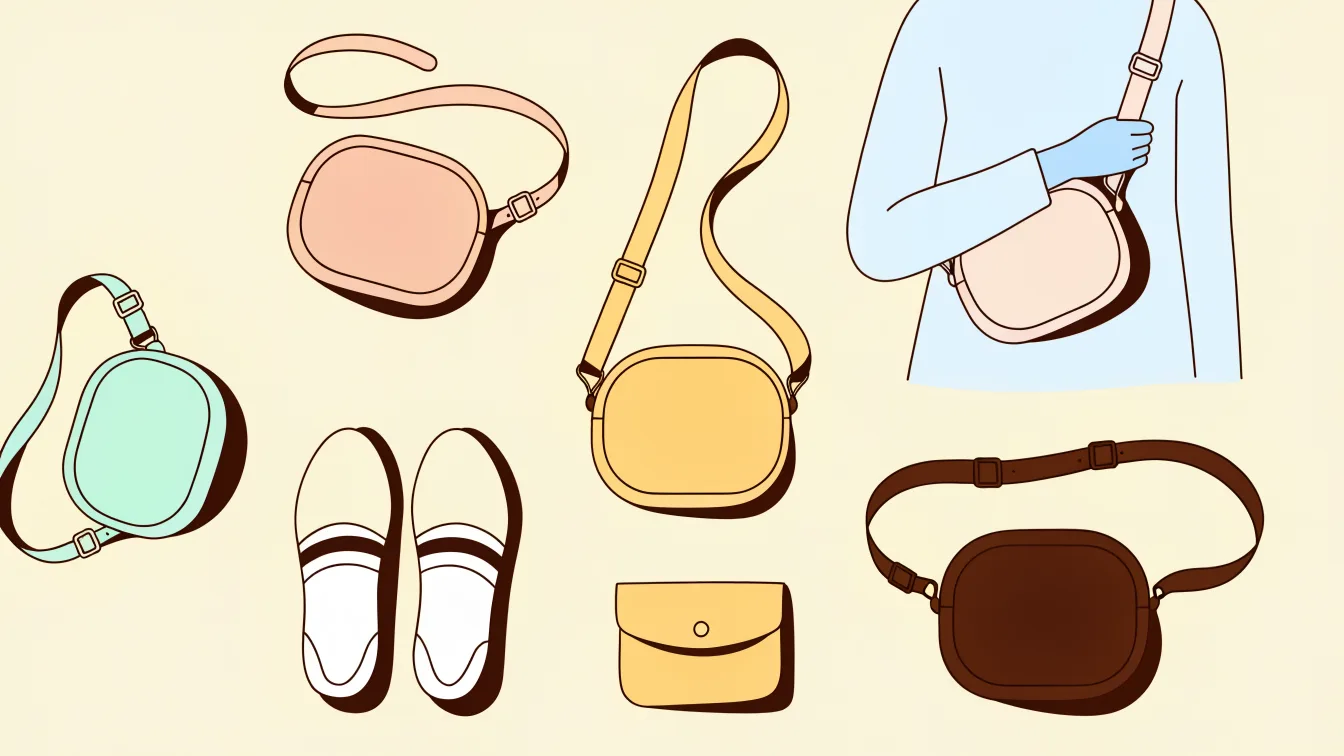
Decide where you want the opening before deciding where the bag's bottom should sit. Hold the bag there and retrieve the item you use most often.
Try a position nearer your waist, then one nearer your hip if both interest you. These are preferences to evaluate, not body-shape rules.
Close the bag, walk around your room and sit in a chair. Reach for a pocket you use frequently. Notice which arrangement lets you complete those actions without repeatedly moving the bag.
Next, repeat the routine over your coat. Keep a separate measurement for that arrangement so you can compare it with the lighter-clothing setup.
You do not need to choose a permanent position for every occasion. Record the settings you actually want to use and look for an adjustment range that covers them.
If you prefer shoulder carry on some days, measure that arrangement separately. Our crossbody versus shoulder bag comparison helps distinguish the two uses.
Finish with a short note explaining your preference: easy wallet access, clear jacket pockets, or the silhouette you enjoy. That note is more useful than copying somebody else's wearing position.
Compare your measurements with the whole adjustment range

Use both the shortest and longest published settings. A maximum length alone does not answer whether you can also use your preferred shorter arrangement.
The examples below show Tom Bihn's published adjustment ranges. They are specification examples, not recommendations for a particular bag.
| Published strap example | Minimum length | Maximum length | Question to resolve |
|---|---|---|---|
| 1-inch Shoulder Strap | 32 inches | 57 inches | Does your measured setup fall inside the range? |
| Simple Shoulder Strap | 42 inches | 56 inches | Is its minimum short enough for your intended positions? |
| Standard Shoulder Strap | 31.5 inches | 55 inches | Does its range cover both clothing setups? |
For an arithmetic example, suppose your mock-strap records are 46 inches and 50 inches. Both numbers fall within all three ranges above.
That comparison assumes the same measurement endpoints. It does not establish hardware compatibility or how the complete assembly will feel.
Write each target measurement next to the minimum and maximum. Mark any target outside the range, then resolve that gap before considering the remaining details.
Read the bag strap guide when you also need to evaluate width, padding or attachment design.
Consider an extender only after checking the connections
An extender is another assembly to measure, not a reason to skip the strap comparison. Start by asking your bag maker which attachment options it supports.
For a dimensional example, Mautto lists an 8-inch extender including its clip and D-ring. That length describes the accessory, not a guaranteed change in the bag's vertical position.
Record the connector shape, the bag's attachment ring and the existing strap hook. Obtain confirmation that those components work together before using them as a carrying assembly.
After an approved connection change, measure the complete assembly again. Repeat your light-clothing and coat trials rather than relying only on the accessory's label.
Also check whether the new arrangement still permits the shorter position you wanted. Solve the whole adjustment problem, not just the longest setting.
If the bag's strap is permanently attached, ask its maker about alteration options. Do not cut stitching or improvise a connection to make a length estimate work.
For damaged attachment points, consult the strap repair guide before planning a length change. Keep repair and sizing decisions separate.
Common mistakes: mixing drop, length and the amount added
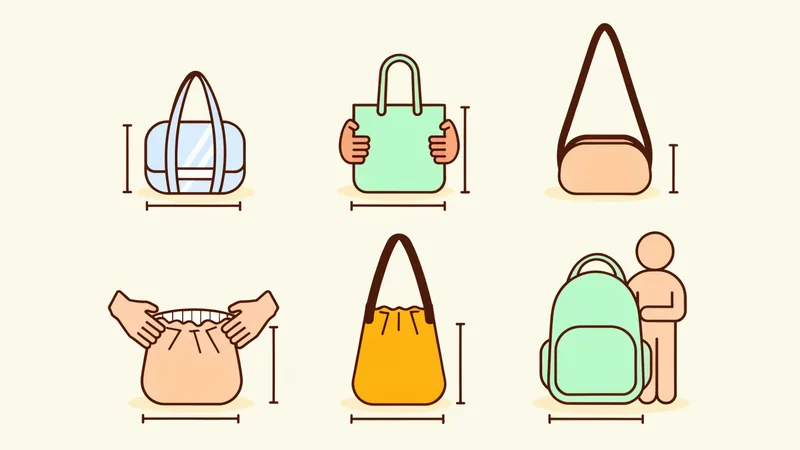
Mautto defines strap drop as the distance from the strap's peak to the bag's top. Copy that label with the number whenever a specification uses it.
Avoid treating the same number as end-to-end strap length. Instead, obtain a directly comparable measurement for the assembly you intend to use.
Likewise, do not assume an 8-inch accessory lowers the bag by 8 inches. Measure the final wearing position after fitting the compatible assembly.
Another mistake is borrowing a preferred strap length without noting which bag it belongs to. Repeat your own trial on the actual bag, including its attachment locations.
Make the final crossbody strap length decision with a small record: complete strap measurement, adjustment range, clothing setup and preferred bag position. Add the confirmed connection details if you changed hardware.
When a setup works, photograph the adjustment position or note its buckle setting. That gives you a useful starting point after someone else uses the bag or you change coats.
Revisit the record when the bag changes. Repeating a brief measurement trial is clearer than assuming an old number answers a new setup.
FAQ
What is the ideal length for a crossbody strap?
Use the complete length that places your particular bag where you want it over your usual clothing. Measure that arrangement, then compare it with the strap's adjustment range. Keep the measurement method with the result so you can distinguish complete strap length from strap drop.
Does strap length include the metal clips?
Check the maker's definition. Mautto includes its attachment hooks when measuring end to end. Use that convention only where the specifications say so, and request clarification for another maker's unclear measurement. Comparing matching endpoints keeps a webbing-only figure from being mistaken for complete length. Measurement method.
How do I measure a strap for wearing over a winter coat?
Put on the coat, hold the empty bag at your preferred position and repeat the mock-strap trial. Record this separately from your lighter-clothing measurement. Compare both targets with the adjustment range, then repeat the wearing and access checks using the actual compatible strap assembly.
Can an extender turn a shoulder bag into a crossbody?
Evaluate the complete proposed assembly rather than assuming that extra length settles the question. Obtain compatibility guidance for the bag, strap and extender connections. Then measure the arrangement and try the intended position. If the strap is permanently attached, ask the bag maker about supported alterations.