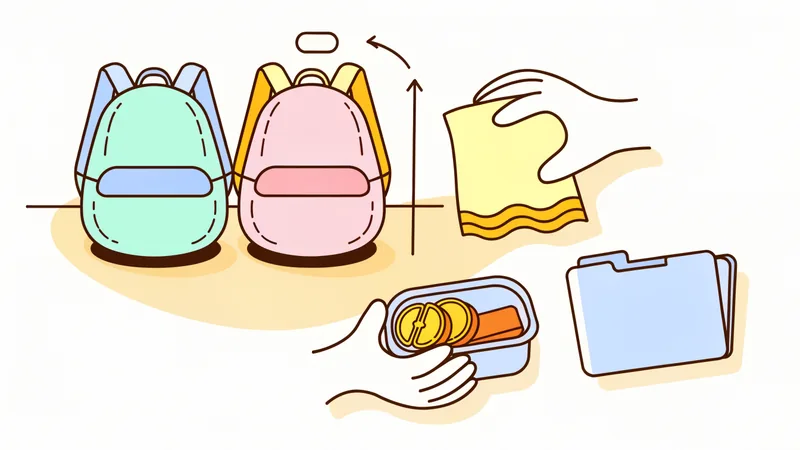
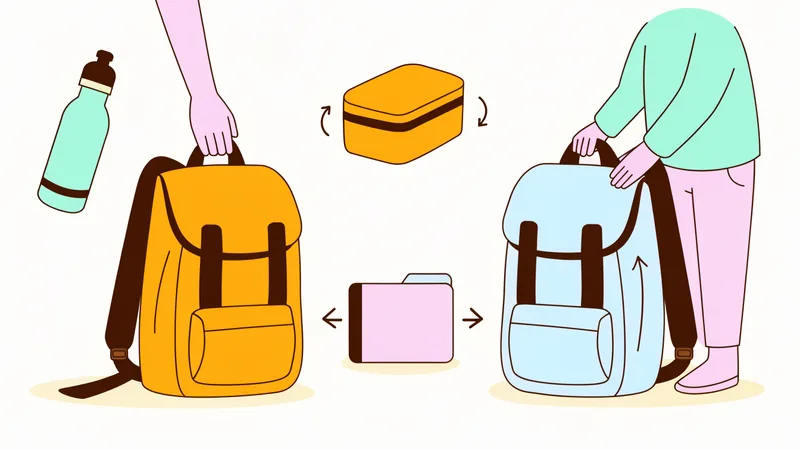
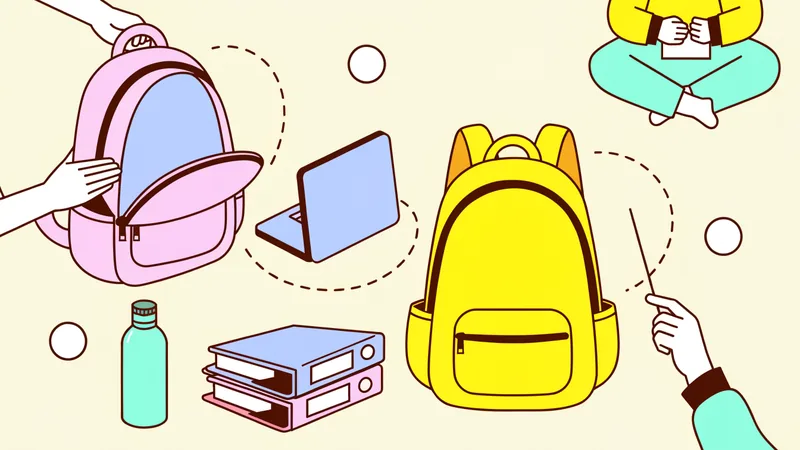
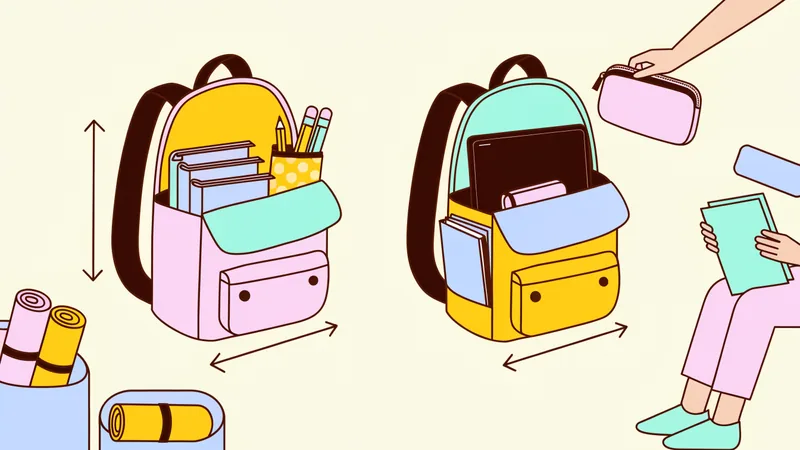
What size backpack does your child need?
When deciding what size backpack for a child to buy, choose the smallest one that fits your child's body and required school supplies without forcing the zipper. Use age-based liter ranges to shortlist sizes, then check loaded fit and weight. A larger capacity cannot correct a poorly fitting shoulder harness.
Start with this age and capacity table
What size backpack for a child comes down to body fit and the school kit. The ranges below are shopping starting points, not required capacities for each grade. Grade groupings are approximate; school-entry ages vary.
| Age and approximate grade | Capacity to shortlist | What decides the final size |
|---|---|---|
| Ages 3–4; preschool | 5–10 L for a small daily kit | Required clothing, lunch arrangement and body fit |
| Ages 5–7; kindergarten to early elementary | 11–22 L as an initial search range | Folder opening, lunch container and school supply list |
| Ages 8–12; later elementary to middle school | 11–22 L first; up to 30 L only if the kit needs it | Actual books and device load; do not size up by birthday |
| Ages 13+; high school | No published range in the cited guide; begin with the 11–22 L school range and move toward 30 L only if the packed kit does not fit | Daily timetable, locker access and separate activity equipment |
The two younger bands and the 30 L figure come from one maker's kids' sizing guide. The two older rows are our own starting points built on those numbers. The guide says children 8 and up can handle 30 L or more, but a school day may not need that much.
A small lunch-and-layer load may need less room than a younger child's folder-heavy load. Compare school backpacks only after listing what must travel every day.
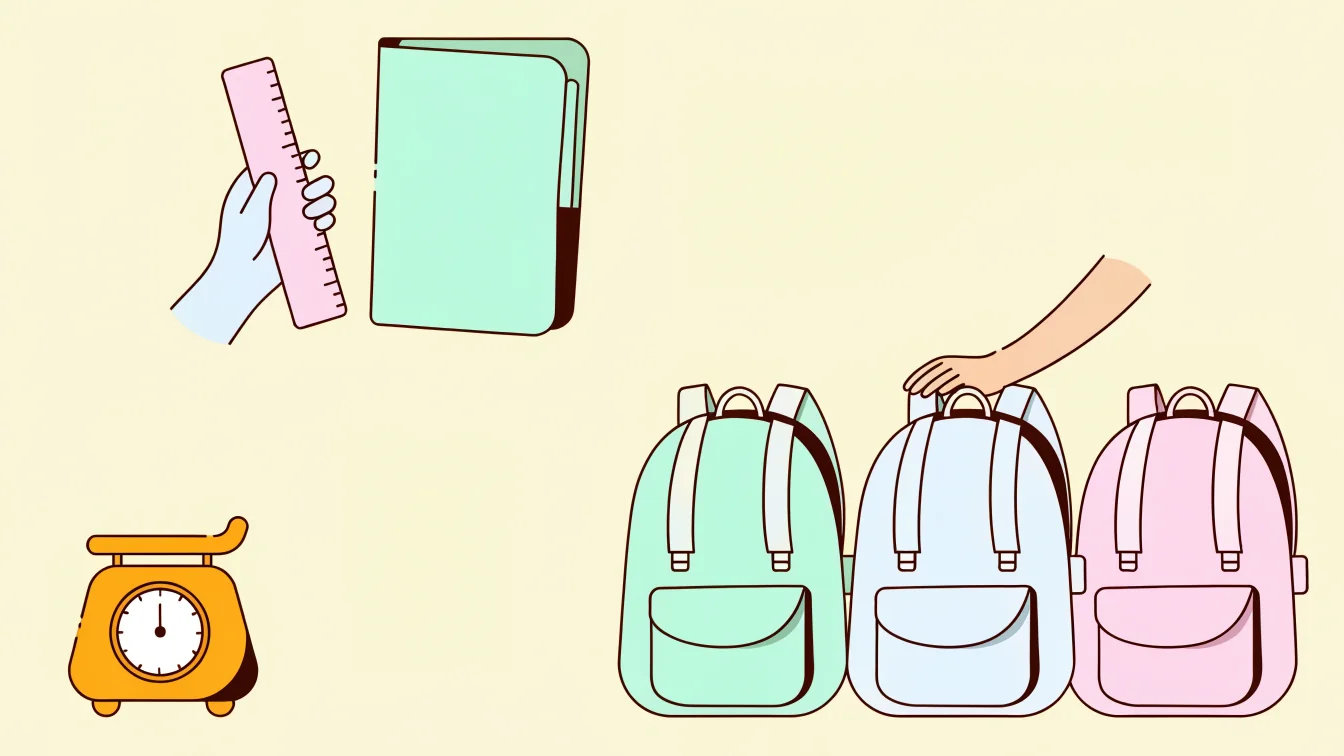
Measure the supplies before measuring capacity
Liters describe volume, but your child's folder is a particular shape. A deep bag can have plenty of volume while its opening is too narrow. A tall bag can fit papers but leave little usable depth beside a lunch box.
- Gather the real school kit. Use the school's list and a representative timetable. Include the bottle, filled as it would be for school.
- Measure the largest flat item. Record the folder or binder's height, width and packed thickness. Measure its cover, not just the paper inside.
- Measure any device with its case fitted. Compare those measurements with the actual sleeve and opening, not only a screen-size label.
- Measure bulky containers separately. Lunch boxes and pencil boxes have fixed shapes. Check whether they need to sit beside or above the books.
- Check the opening. If the listing gives exterior measurements only, ask the seller for the opening size. No figure means no confirmed fit.
Use the bag-size guide for the distinction between capacity and dimensions.
Do a quick loaded fit check
Try the intended school load while keeping tags attached and following the seller's return conditions. An empty bag can hide problems that appear once its base fills out.
- Put on both shoulder straps. Adjust them evenly and check that the pack stays close to the back.
- Check the vertical position. The AAP says the pack should run from waist level up to about 1–2 inches below the shoulders.
- Check the lower edge. The AAP says a backpack should never sit more than 4 inches below the waistline, measured at the bellybutton.
- Use the waist or chest strap if supplied. Follow the maker's fitting instructions rather than pulling it as tight as possible.
Steps 2 and 3 follow AAP fitting guidance. A maker's own torso range, where one is published, takes priority for that model.
Ask the child to describe the fit in their own words, and check they can reach the straps, zipper and bottle pocket. If the bag only fits after extreme adjustment, compare a different size or harness shape. Extra room for next year's books is not useful if this year's fit fails.
Weigh the complete load

Use a scale with the bag fully packed. Include the bag itself; a contents-only total misses part of what the child carries.
For a 60 lb child, 15% is 9 lb. If the empty backpack weighs 1 lb, that leaves 8 lb for contents. The AAP's 15% figure is an upper limit, not a target.
Do not fill a bag simply because the number is below that guideline. AAOS recommends reducing or adjusting a load when a child struggles to lift it or changes posture while walking.
If required materials create a problem, discuss school storage or the timetable with the teacher. Separate sports equipment only where there is a practical place to store it.
Compare lightweight school backpacks when empty weight is a meaningful part of the load. This is general guidance: ask your pediatrician about pain, an injury or an individual carrying restriction.
Common mistakes
Buying several sizes ahead. A future need does not tell you whether the harness fits now. Start with today's body and daily school kit.
Using grade as a measurement. Children in the same class can need different harness sizes. Their supply lists can also differ by class or school.
Reading capacity as folder clearance. Liters say nothing about how wide the zipper opens. Get the opening size or try the actual folder.
Forgetting the lunch plan. A separately carried lunch changes backpack space requirements. Decide how the child will manage both bags during arrival and dismissal.
Solving excessive weight with extra volume. A larger bag does not make the same contents lighter. Review what must travel before buying more space.
What size backpack for a child: the short version
Choose the smallest candidate that passes three checks: required items fit, the loaded harness fits, and the child can manage the routine. If one check fails, resolve that specific problem. For younger children, our preschool and kindergarten backpack guide focuses on small-body fit and school essentials.

FAQ
What size backpack should a kindergartner use?
Shortlist 11–22 L, the cited range for school-entry age, then check the supply list and fit. That range is a shortlist, not a prescription.
A small daily kit may need less space. Check the folder opening and lunch container, then try the packed bag before deciding that a larger capacity is necessary.
Is a 20-liter backpack big enough for elementary school?
It may be, but liters alone cannot confirm that answer. Put the required folder, books, lunch and bottle together.
Compare their shapes with the bag's compartments and opening. A smaller well-shaped bag can suit a particular kit better than a larger bag with awkward internal divisions.
Should I buy a bigger backpack so my child can grow into it?
Only consider spare capacity after the backpack fits now. Leave expansion for a clear school need rather than an uncertain future load.
If the harness cannot adjust to the child, more volume will not help. Compare another shape or size and reassess requirements when the school routine changes.
Does a backpack below the weight guideline always fit safely?
No. Weight is only one check. AAOS also advises checking posture, lifting difficulty and discomfort.
Treat those observations as reasons to reassess the bag and contents. Seek advice from your pediatrician for pain or individual concerns rather than adding more padding or capacity by guesswork.