Plastic bag bans: where they apply and what replaces them
Rules change. Confirm with the operator before you travel.

A plastic bag ban usually restricts the bags businesses distribute at checkout, with different alternatives and exceptions by location. Bring a bag you already own, then check the destination's rules. Paper, thicker plastic, and delivery bags do not receive identical treatment everywhere.
Where a plastic bag ban applies: western states
These tables summarize selected statewide checkout laws, rather than every municipal ordinance. All entries were checked November 22, 2026. Follow each agency link for the complete definitions.
| State | Covered checkout restriction | Alternative and required charge | Checked |
|---|---|---|---|
| California | Covered grocery, pharmacy, convenience, food mart, and liquor stores cannot supply plastic carryout bags | Qualifying recycled paper, at least 10 cents; bring your own reusable bag. CalRecycle | Nov. 2026 |
| Colorado | Covered stores cannot supply single-use plastic carryout bags; some establishments are exempt | Recycled paper, at least 10 cents, or a higher local fee. Revenue | Nov. 2026 |
| Oregon | Retail stores and restaurants cannot supply single-use checkout bags | Qualifying paper or reusable alternatives; generally at least 5 cents, with restaurant paper exceptions. DEQ | Nov. 2026 |
| Washington | Single-use plastic carryout bags prohibited | Large paper: at least 8 cents. Qualifying plastic film: at least 12 cents; film at least 4 mil thick carries an additional 4-cent charge through 2027. Ecology | Nov. 2026 |
Oregon's next change already has a date. Its amended checkout definitions and restrictions become operative January 1, 2027. Enacted law, section 4
Eastern states: paper is not always the fallback
Read the scope column before assuming that a familiar bag will be available. A grocery store, restaurant, and clothing retailer can face different requirements.
| State | Checkout restriction | Alternative or important distinction | Checked |
|---|---|---|---|
| Connecticut | Stores and restaurants cannot supply single-use plastic checkout bags below 4 mil thickness | Paper and reusable alternatives; the former statewide plastic bag fee ended when the ban began. DEEP | Nov. 2026 |
| Delaware | Retailers cannot distribute plastic film carryout bags; restaurants are excepted | Bring a reusable carrier; retail size does not remove the restriction. DNREC | Nov. 2026 |
| Maine | Single-use plastic carryout bags prohibited | Recycled paper or reusable bags; generally at least 5 cents for paper and reusable plastic, with establishment exceptions. DEP | Nov. 2026 |
| New Jersey | Single-use plastic prohibited at stores and food service businesses | Qualifying reusable bags; paper also prohibited at grocery stores at least 2,500 square feet. State flyer | Nov. 2026 |
| New York | Covered sales-tax collectors cannot distribute nonexempt plastic carryout bags | Paper or compliant non-plastic reusable bags; local paper fee can be 5 cents. DEC | Nov. 2026 |
| Rhode Island | Retailers cannot supply single-use plastic checkout bags | Qualifying reusable bags, recyclable paper, or recyclable cardboard boxes. State law | Nov. 2026 |
| Vermont | Stores and food establishments cannot supply single-use plastic carryout bags | Recyclable paper generally requires at least 10 cents; certain small bags are exempt. DEC | Nov. 2026 |
Check the locality and the transaction
Do not treat a state name as the whole answer. Colorado allows higher local bag fees, while New York lets cities and counties adopt its paper bag reduction fee. Colorado Revenue; New York DEC
Hawaii also needs a locality check. For example, Honolulu's environmental department describes Oahu's minimum 15-cent charge per allowable bag. That county example does not establish one identical Hawaii-wide fee. Honolulu
Delivery deserves its own question. California includes in-store pickup, curbside delivery, and home delivery within its covered carryout requirements. Rhode Island expressly includes deliveries from retailers. CalRecycle; Rhode Island law
When placing an order, look for the packing preference and collection instructions. If bagless collection is offered, plan how you will transfer the goods.
For a trip crossing state lines, organize your own carriers before leaving. Keep the shopping checklist with your destination details, rather than relying on last year's receipt. Our sustainable bags guide explains the broader material questions.
Exceptions: distinguish the bag's job
A checkout restriction may distinguish the outer shopping bag from packaging around particular goods. Oregon exempts specified bags for bulk items, sanitation, garments, and packaged household uses. DEQ
California separately regulates pre-checkout bags and permits specified pharmacy and garment-bag exclusions. Its carryout restriction does not make every plastic item in a store unlawful. CalRecycle
Benefit-related fee exemptions also differ. Colorado exempts qualifying food-assistance participants who provide evidence. Maine's guidance says SNAP and WIC customers still pay its applicable bag fee. Colorado Revenue; Maine DEP
Ask about the specific exemption, rather than requesting a general waiver. Describe the purchase, bag type, and benefit program where relevant.
Material wording matters too. Maine does not accept single-use compostable or biobased plastic as a substitute for prohibited checkout bags. Maine DEP
Before choosing a replacement on environmental grounds, compare paper, plastic, and cotton. Legal permission and a life-cycle comparison answer different questions.
What happens if you get it wrong
For shoppers, forgetting a carrier means planning around whatever lawful option the business actually offers. New York explicitly says stores need not supply paper bags. DEC
You can ask to decline an unnecessary bag or arrange your own packing. Avoid assuming that paying a charge makes a prohibited bag permissible.
Businesses have additional responsibilities. Colorado authorizes local enforcement, including civil penalties for repeat violations. Its original inventory transition ended in 2024. Colorado General Assembly
A retailer should match stock to the current statutory definition before ordering another shipment. Keep supplier specifications and ask the responsible agency about borderline materials.
If a receipt seems wrong, identify whether the amount is a statutory fee or a store charge. New York distinguishes these and allows certain separate store charges. DEC
Rules and charges change. This is general information, not legal advice. For a business compliance decision, use the current law and regulator's guidance.
Before you go: a short checklist
Use the plastic bag ban as a prompt to organize what you already have. A forgotten collection of totes cannot carry today's shopping.
| Check | Practical action |
|---|---|
| Destination | Open the state agency and local government guidance |
| Business type | Distinguish groceries, restaurant takeout, and other retail |
| Transaction | Check delivery and pickup packing arrangements |
| Existing carriers | Put suitable bags beside your shopping list |
| Fee exception | Have relevant evidence ready where the law provides one |
| Return routine | Put bags back where you will remember them |
Choose the number of carriers around the planned load. If you only need to carry one manageable item, consider declining an outer bag.
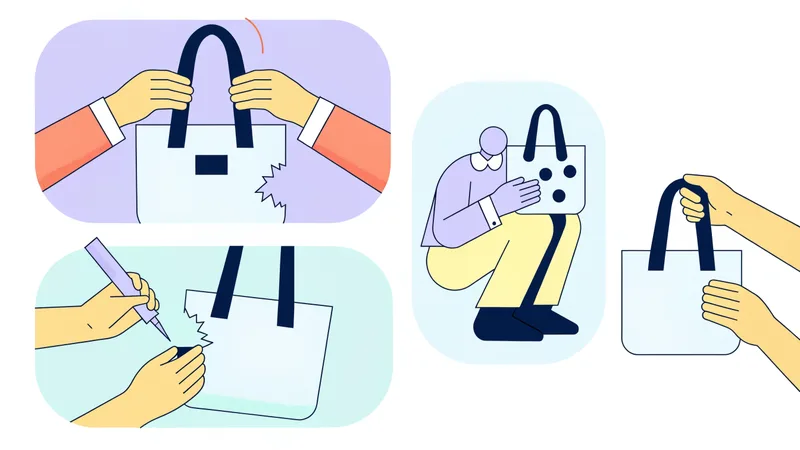
After unloading, set aside damaged carriers for inspection rather than putting them straight back into circulation. Follow their care instructions before the next trip.
For the environmental side of repeated use, read how many times to reuse a tote. A legal label such as reusable does not tell you a particular bag's complete footprint.
FAQ
Does a ban mean I cannot bring an old plastic bag?
Do not confuse distribution rules with your own reuse. Maine explicitly permits customers to bring saved single-use plastic bags, boxes, or other containers. That permission does not let retailers redistribute prohibited bags. Check your destination's wording before treating Maine's example as a rule elsewhere. Maine DEP
Are thicker plastic bags always allowed?
No. California's covered stores can now provide only qualifying recycled paper carryout bags. Washington permits qualifying reusable plastic film bags under its own specifications and charges. Thickness alone therefore cannot answer the question. Read the destination's current definition and the transaction's scope. CalRecycle; Ecology
Can a grocery delivery arrive in plastic bags?
Check the applicable law and packaging purpose. New York does not have a general plastic carryout exemption for supermarket delivery. Separate exemptions can still cover specified foods and packaging uses. Ask the retailer about its lawful delivery arrangement instead of assuming delivery avoids checkout restrictions. DEC
Will paper bags always be available?
No. New Jersey prohibits single-use paper carryout bags at grocery stores measuring at least 2,500 square feet. New York says covered stores need not offer paper. Bringing an existing suitable carrier avoids depending on a replacement bag being available when you reach the register. New Jersey guidance; New York DEC
Sources
- calrecycle.ca.gov/plastics/bagrequirements
- tax.colorado.gov/carryout-bag-fee
- portal.ct.gov/deep/waste-management-and-disposal/what-do-i-do-with
- dnrec.delaware.gov/waste-hazardous/recycling/plastic-bags
- www11.maine.gov/dep/waste/recycle/plastic-bag-film-guidance.html
- nj.gov/dep/plastic-ban-law/docs/plastics-ban-law-flyer.pdf
- dec.ny.gov/environmental-protection/recycling-composting/plastic-bag-waste-reduction
- oregon.gov/deq/mm/production/pages/bags.aspx
- oregonlegislature.gov/bills_laws/lawsstatutes/2025orlaw0276.pdf
- webserver.rilegislature.gov/Statutes/TITLE23/23-19.18/23-19.18-3.htm
- dec.vermont.gov/sites/dec/files/wmp/SolidWaste/Documents/SUP-Law-Summary-FAQ.pdf
- ecology.wa.gov/waste-toxics/reducing-recycling-waste/plastics/plastic-bag-ban
- honolulu.gov/env/ref/source-reduction
- leg.colorado.gov/bills/hb21-1162