Mailing bags and poly mailers
Choose poly mailers around the packed item's shape, protection needs and the carrier's current requirements. Compare usable dimensions, film thickness and closure separately. Use cushioning or a rigid container where the contents need it, then measure and weigh the completed package.
Choose poly mailers by protection needs
Start with the item rather than the envelope's appearance. Identify whether it is soft, needs cushioning or must resist bending before comparing formats.
| Format | Published construction example | Main decision | Source |
|---|---|---|---|
| Flat plastic mailer | Co-extruded polyethylene envelope | Whether the item suits an unpadded format | Flat-mailer description |
| Padded plastic mailer | Polyethylene outer with bubble cushioning | Whether the cushioning suits the item | Bubble-mailer description |
| Rigid paperboard mailer | Stiff paper-based envelope | Whether the item needs protection against bending | Rigid-mailer description |
| Protective box | Strong container with suitable cushioning | Whether the item needs another packing arrangement | USPS packing guidance |
One flat-mailer maker lists clothing, linens and other soft goods among its intended contents. Treat that as a starting point for the format, rather than a guarantee for every object in those categories.
Keep the item's original protection in place where its instructions require it. For a boxed item, measure the box before choosing the outer mailer.
If the item needs rigidity, compare an appropriate hard protective case or another suitable shipping arrangement. Choose the outer packaging after establishing the actual protection needed.
Compare usable dimensions, flap and gusset
Read the size table's headings before comparing numbers. Establish whether the quoted dimensions are inside measurements, outside measurements or the flat body size.
| Published example | Listed inner dimensions | Separately listed feature | Source |
|---|---|---|---|
| Small flat mailer | 6.25 × 9 inches | 2-inch flap | Flat-mailer specification |
| Medium flat mailer | 10 × 13 inches | 2-inch flap | Flat-mailer specification |
| Larger flat mailer | 14.5 × 19 inches | 2-inch flap | Flat-mailer specification |
| Gusseted plastic mailer | 14.5 × 20.5 inches | 7-inch bottom gusset | Gusseted-mailer specification |
| Padded mailer | 8.5 × 11.25 inches | 9.375 × 11.25-inch exterior | Padded-mailer specification |
Compare the complete packed item with the usable opening. Do not count the adhesive flap as extra room for the contents.
For a thick folded garment or boxed item, allow the package to take its final shape before deciding it fits. Close the flap only according to the manufacturer's directions.
If the package is crowded, choose another size or format. Do not solve a poor fit by stretching the closure across the contents.
Read film thickness as a product specification
Keep material and gauge together when reading a listing. NIST defines one mil as 0.001 inch, rather than one millimeter.
A published mailer specification describes co-extruded polyethylene film. Another range lists LDPE polyethylene and a 2.5-mil thickness.
Record the unit exactly as the supplier states it. Do not compare a mil value with a millimeter value as if the numbers used the same scale.
| Specification | What to record | What remains a separate check |
|---|---|---|
| Film material | Polymer or stated construction | Intended contents |
| Thickness | Number and unit | Carrier acceptance |
| Closure | Adhesive arrangement and directions | Whether the packed flap closes correctly |
| Size | Usable dimensions | Final packed dimensions |
Do not infer a guaranteed puncture resistance, waterproof rating or permitted postal load from thickness alone. Use the finished mailer's instructions and the carrier's current requirements for the actual package.
For terminology across different bag films, consult the bag-materials guide. Keep the manufacturer's specification with your packing notes rather than relying on a remembered gauge number.
Use current USPS packaging requirements
USPS guidance in this section was checked November 2026. Confirm the applicable service and packaging directions before sending the completed parcel.
The Domestic Mail Manual requires packaging to withstand normal handling and contents to be secured against shifting. Its parcel standards also require the package to maintain integrity so the address and required markings remain visible.
Use the current DMM container provisions and confirm the exact plastic-mailer specification with USPS before selecting stock for a shipment.
For Ground Advantage, USPS requires accurate packed weight and dimensions. Measure the finished parcel rather than using the empty mailer's catalog dimensions as the shipping measurement.
Contents need a separate check. The USPS restrictions guide distinguishes prohibited items from items allowed only under specified conditions. Packaging permission does not replace those contents-specific instructions.
For a routine clothing shipment, keep the chosen service, contents description and packed measurements together. For an unfamiliar item, establish its packing and mailability requirements before choosing an envelope.
This is general packaging information. For a particular shipment, follow the operator's current instructions and obtain clarification on any specification you cannot match to the proposed package.
Pack, close and label the finished parcel
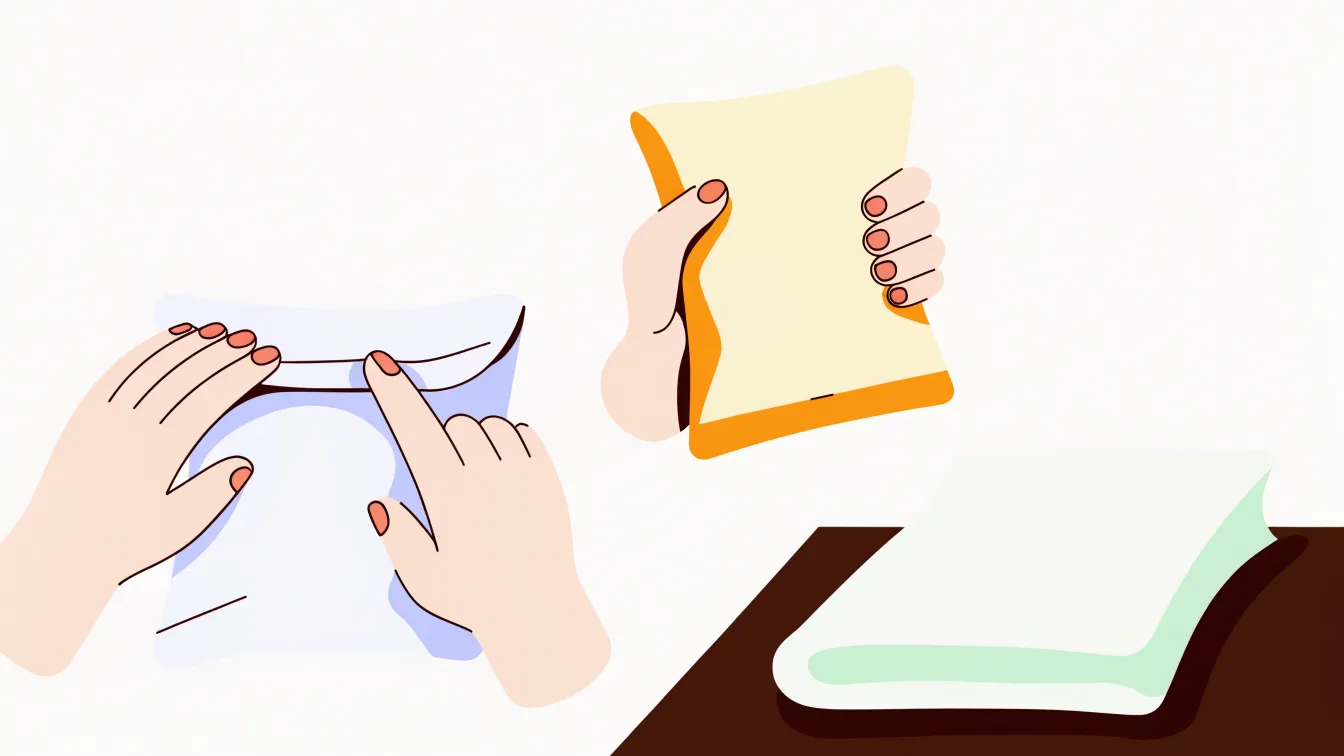
Prepare the contents and any required inner protection before sealing. Choose the outer package only after that arrangement is complete.
USPS advises strong packaging with room for necessary cushioning. Check that the packed item suits the selected format before using its adhesive closure.
| Stage | Action | Detail to retain |
|---|---|---|
| Prepare | Arrange the item and required protection | Contents and packing method |
| Fit | Compare the complete package with the mailer | Usable opening and closing space |
| Seal | Follow the maker's adhesive directions | Correctly closed flap |
| Measure | Weigh and measure the finished parcel | Actual packed figures |
| Label | Apply the current shipment's details | Clear delivery and return information |
USPS says to put labels on the same side without bending, folding or overlapping them. Choose a placement that remains readable on the completed package.
Before dispatch, compare the recipient details with your order or shipping record. Keep an accurate description of what went into the parcel.
If you prepare several shipments together, complete the final label check for one parcel at a time. Keep each item, its label and its packing record together through that step.
Plan reuse around the closure and condition
Inspect a previously used mailer before assigning it another shipment. Look at its body, seams, closure and any cushioning rather than assuming the appearance is sufficient.
Some designs include a second adhesive strip. One manufacturer describes dual peel-and-seal options for returns, while another range lists a dual adhesive strip and opening tear strip.
Use those features according to the exact model's instructions. Do not assume an opened single-strip design provides the same resealing arrangement.
Before repacking, establish which markings belong to the new shipment. Keep the current delivery information clear and follow the carrier's directions for any previous labels or markings.
Choose another container when the old mailer no longer suits the contents or closing method. Ask the maker about a damaged closure rather than improvising around it.
For an item being returned, retain any merchant-supplied packing directions and label. Match them to the actual item before sealing the package.
When you unpack a delivery, keep an intact reusable mailer with its instructions in a designated place. Separate damaged packaging so it is not mistaken for ready-to-use stock.
Follow the correct disposal route after use
Identify the mailer's construction before choosing a collection stream. A film envelope, a bubble-lined format and a paperboard envelope require separate material checks.
The EPA advises checking local recycling acceptance and keeping plastic film out of ordinary household recycling bins. Its film guidance points readers toward appropriate collection locations rather than assuming curbside acceptance.
Read the manufacturer's disposal directions for the specific item. Do not treat an overall recyclable claim as confirmation that every local program accepts the finished envelope.
For a return-ready design, decide whether another suitable use remains before disposal. Keep any second adhesive strip intact if the instructions identify it for that purpose.
At a household packing station, separate the materials as you empty deliveries. Retain only the mailers whose condition and construction suit a planned use.
For paper presentation packaging, use the paper-bag guide to identify handles, finishes and local disposal checks. For other environmental claims, use the sustainable-bag guide.
Keep the disposal instructions with any unfamiliar mixed-material envelope until you have identified the correct route. Follow the collection program's current acceptance directions for the actual construction.
FAQ
Do poly mailers count as padded envelopes?
Read the construction description. A flat polyethylene model and a bubble-lined polyethylene model are different formats.
Choose according to the item's protection needs, including cushioning or rigidity. Then confirm the completed package meets the selected carrier's current requirements for your actual shipment.
Does the advertised size include the adhesive flap?
Check the maker's diagram and table. One flat-mailer specification lists a 2-inch flap separately from its body dimensions.
Use the stated usable dimensions when checking fit. Leave the closure area free to operate as instructed, rather than counting it as room for the contents.
Can I use the catalog size as the USPS package dimensions?
Measure the completed parcel instead. USPS Ground Advantage requires accurate packed dimensions and weight.
Compare those figures with the requirements for the selected service, and keep them in the shipping record. An empty envelope's catalog measurements should remain separate from the final packed shape.
Is a 2.5-mil bag automatically acceptable to USPS?
Match the complete package to the current requirements rather than relying on one gauge number. Consult the Domestic Mail Manual's packaging and container provisions and confirm the exact specification with USPS. Include the contents, packed weight, construction and intended service when seeking that clarification.
Can I put a plastic mailer in curbside recycling?
Check the actual construction and your collection program. The EPA directs plastic film away from ordinary household recycling bins and toward suitable collection locations. Follow the manufacturer's disposal instructions as well, and do not infer local acceptance from a general recyclable claim on the package.
Related guides
Sources
- pac.com/product/polyjacket
- pac.com/wp-content/uploads/2024/12/Product_Sheets_PJ-1.pdf
- pac.com/product/airjacket
- pac.com/product/mailjacket
- ecoenclose.com/shop/poly-mailers
- nist.gov/glossary-term/40906
- pe.usps.com/text/DMM300/601.htm
- usps.com/ship/packages.htm
- usps.com/ship/ground-advantage.htm
- usps.com/ship/shipping-restrictions.htm
- epa.gov/recycle/how-do-i-recycle-common-recyclables