Pilot and flight crew bags
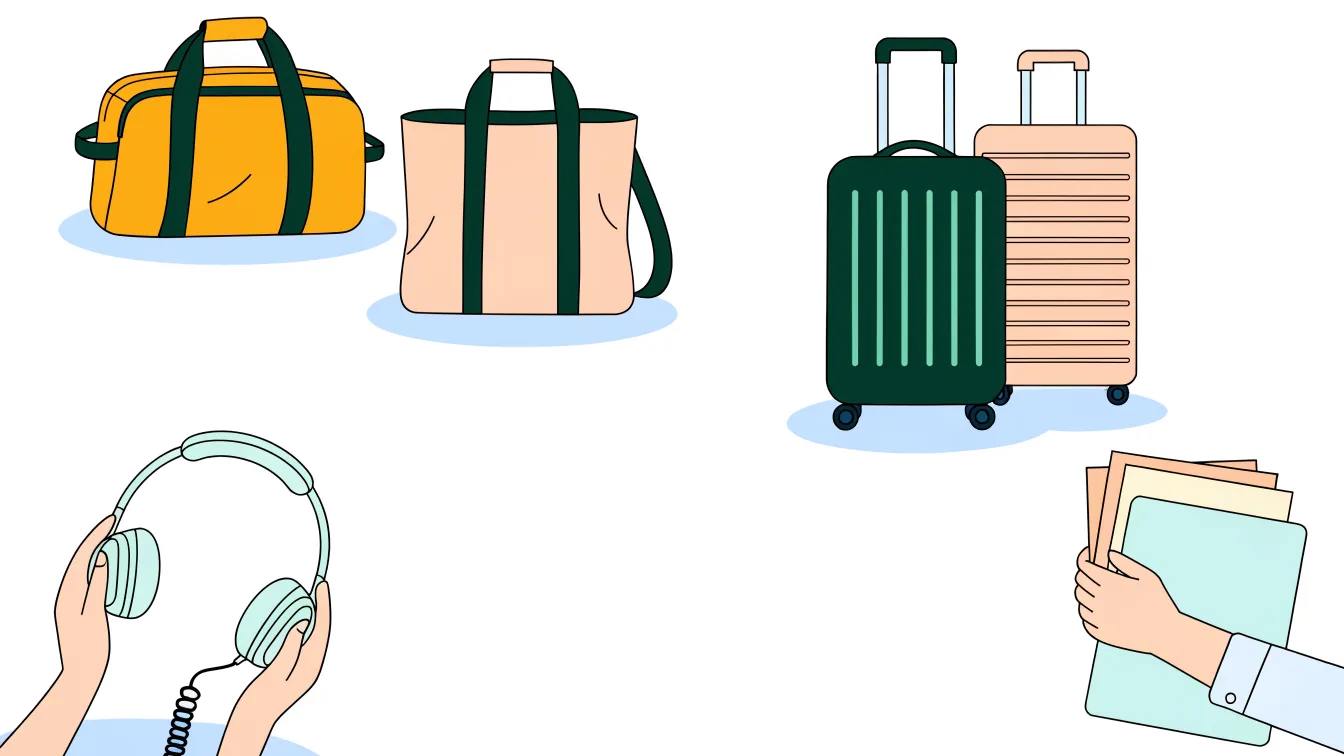
A pilot bag organizes flight equipment separately from clothing and personal items. Choose around the headset, protected tablet, documents, and accessories you actually carry. Add a crew tote or rolling case when the trip requires a separate overnight load.
Which pilot bag format fits your work?
Start with the load you need available during the working day. List that separately from clothing, toiletries, and personal items for the overnight stay.
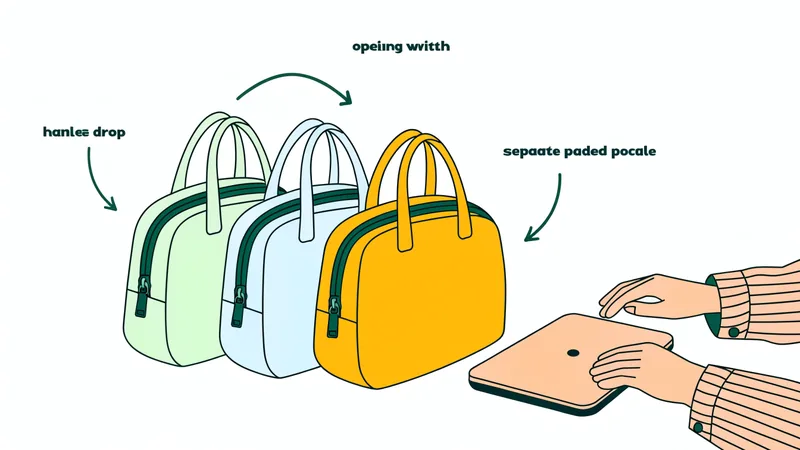
Published designs include a top-zip flight bag, a carpenter-style opening, modular compartments, and a tote with two main compartments. Top-zip design, carpenter-style opening, modular layout, tote layout
Use this framework to decide which format deserves closer comparison.
| Format | Load to plan around | Layout priority | Main tradeoff to assess |
|---|---|---|---|
| Compact flight bag | Headset and daily equipment | Dedicated positions for essential items | Limited space for a second purpose |
| Modular flight bag | Equipment that changes between trips | Compatible removable sections | Dimensions of each assembled configuration |
| Crew tote | Equipment plus personal accessories | Separate main compartments | Total packed depth |
| Two-wheel rolling case | Clothing and a larger travel load | Packing space and compatible attachments | Overall size and empty weight |
These are planning categories, not baggage allowances or universal equipment lists.
For general carrying formats, see the work bags guide. Follow your operator's equipment and luggage requirements when narrowing the selection.
Keep the daily equipment list specific. A large empty compartment is useful only when it supports a load you intend to carry.
How much space do you need?
Measure the complete equipment load before choosing the bag. Include device cases, headset protection, connectors, and the documents or kneeboard you actually use.
The examples below show different scales of published storage.
| Construction example | Published dimensions | Volume, when stated | Measurement basis |
|---|---|---|---|
| Compact leather flight bag | 12 wide x 5.5 deep x 9.5 high inches | Not stated | Listed bag dimensions |
| Larger leather flight bag | 16 wide x 6 deep x 13.5 high inches | Not stated | Listed bag dimensions |
| Crew flight tote | 11.5 high x 15 wide x 10 deep inches | 28 liters | Overall dimensions |
| Two-wheel crew case | 23.5 high x 14.75 wide x 9.5 deep inches | 40 liters | Overall, including wheels and handles |
Sources: compact bag, larger bag, tote, rolling case.
Do not calculate a flight bag's usable capacity from exterior dimensions alone. Request measurements for the compartment that must accommodate your equipment.
For a hypothetical tablet measuring 10 x 7.5 inches in its case, compare the protected outline with the actual pocket and opening.
Repeat that process for the headset in its intended carrying arrangement. Do not infer fit from the bag's exterior size or a device's screen diagonal.
How should headsets and documents be organized?
Give the headset its own planned position. Follow the headset manufacturer's storage instructions, including any guidance on folding, cables, and its protective case.
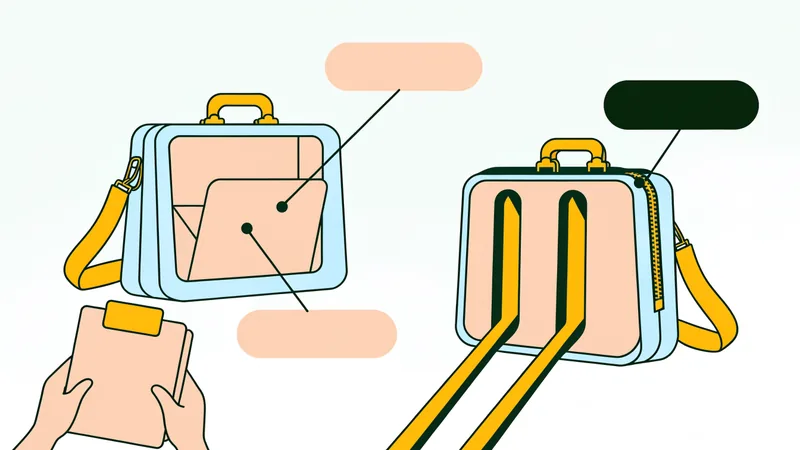
A published modular layout has separate center sections measuring 13.5 x 10 x 3 inches and 13.5 x 10 x 4 inches internally. Compartment specifications
Use that kind of compartment detail to compare your actual protected equipment. A statement that a bag holds headsets does not settle every model's fit.
For documents, identify the items you need to remove independently. Separate those from spare cables and personal accessories in your packing plan.
One compact bag lists a rear document pocket measuring 8 x 11 inches and a divided front organizer measuring 10 x 8 inches. Pocket measurements
Use the measurements to assess your folders rather than assuming that every document sleeve accommodates the same paper format.
Keep a consistent position for each routine item. Plan the layout around your approved workflow, without replacing required checklists or operating procedures.
Before choosing, rehearse loading and removing the equipment on the ground. Include the bag's opening direction and the surface where it will sit.
Should the flight bag connect to rolling luggage?
Evaluate the complete pair rather than choosing each bag in isolation. Include the attachment method, loaded dimensions, access to pockets, and carrying arrangements when separated.
Published options include a tote's handle sleeve, a rear pocket that doubles as a rolling-luggage slot, and a case's add-a-bag strap. Tote attachment, rear attachment slot, case attachment
Confirm compatibility for the combination you intend to use. Follow the attachment instructions and any published loading limits.
Also plan the moments when the bags separate: stairs, vehicle loading, boarding, and storage. Each bag needs an arrangement you can manage on its own.
For a hypothetical trip, keep clothing in the rolling case and working equipment in the smaller bag. Then decide where personal travel documents and permitted batteries belong.
Do not make the attachment point the sole reason for choosing an otherwise unsuitable flight bag. Compare access and equipment fit first.
When transporting the bags, follow the operator's stowage procedures and equipment manuals. Avoid adopting a generic airport arrangement as a cockpit storage instruction.
How should you pack spare batteries and power banks?

Allocate a specific, accessible place for permitted spare batteries before filling the remaining pockets. Treat battery packaging as part of the load you measure.
FAA passenger guidance requires spare lithium batteries and power banks to travel in cabin baggage. Remove them if the carry-on is checked at the gate. FAA PackSafe guidance
Protect batteries from damage and terminals from short circuits. FAA examples include original packaging, battery cases, and suitable protective pouches. Checked November 2026. Packing precautions
For spare lithium-ion batteries, the FAA chart lists a 100-watt-hour limit without airline approval. It permits up to two larger spares rated 101–160 Wh with airline approval. Passenger battery chart
Airlines may impose stricter restrictions. Check the operating carrier's current policy before travel, including any power-bank quantity or use restrictions. FAA airline-policy advice
This section summarizes passenger packing guidance. Crew members should follow their operator's applicable procedures for duty equipment.
Keep installed device batteries separate in your planning from loose spares. Do not assume the same packing instructions cover both.
Which materials and care instructions matter?
Compare materials alongside construction and approved maintenance. Focus on the components you need to clean, inspect, or repair.
Published examples include full-grain oiled cowhide flight bags and a crew case with 1682D ballistic nylon. Leather construction, nylon construction
Those material descriptions alone do not establish a comparative lifespan or protection rating.
For a textile bag, obtain instructions for the shell, lining, padding, and removable sections. For a leather bag, use the guidance for its actual finish.
The leather flight-bag maker specifies wiping its bags with a damp cloth. Care instructions
Apply that instruction to the relevant product. Do not transfer a conditioning or washing routine from an unrelated material.
Include maintenance in the layout decision. Choose an arrangement that lets you access the empty interior and inspect fasteners without dismantling equipment unnecessarily.
Store the bag according to its instructions after removing equipment that requires separate care or storage. Keep headset and device maintenance instructions with those items.
Inspect handles, seams, closures, wheels, and attachment components as applicable. Obtain repair advice when a component stops operating as intended.
What should you check before choosing?
Use a shortlist based on your equipment, route, and operator requirements. Record the actual dimensions instead of relying on names such as compact or crew.
A rolling case's listed size can describe its body. The 22-inch example above has a 23.5-inch overall height once wheels and handles are included. Body versus overall dimensions
Compare the overall packed bag with the allowance for the journey. Confirm acceptance with the operator before traveling.
For modular equipment bags, measure the assembled configuration you will actually take. The published example's exterior includes its side pockets. Configuration dimensions
Add nothing to the kit merely to occupy spare compartments. Keep optional clothing, accessories, and backup items connected to an actual requirement.
Before deciding, work through a complete ground-based packing rehearsal. Include equipment removal, document access, separating the bags, and retrieving batteries if a bag must be checked.
A pilot bag earns its place through that arrangement. Keep the equipment list and compartment measurements so future changes are easier to assess.
This is general packing information, not legal advice or an aircraft operating procedure.

FAQ
Do pilots need a special flight bag?
Choose around the equipment and operator requirements, rather than the label. Compare the protected headset, tablet, documents, and accessories with the actual compartments. A purpose-designed layout may match that inventory, but you still need to establish fit and an appropriate carrying and stowage arrangement.
Does a 22-inch crew case meet every airline's cabin limit?
Confirm acceptance with the operator for the actual journey. A manufacturer's size label may describe the case body. One published 22-inch case measures 23.5 x 14.75 x 9.5 inches overall, including wheels and handles. Compare those complete dimensions and the packed weight with the applicable allowance. Maker dimensions
Can I leave a power bank in a gate-checked bag?
FAA passenger guidance says to remove power banks and spare lithium batteries when cabin baggage is checked at the gate or planeside. Keep them in the cabin with terminals protected and follow the carrier's current restrictions. Plan their location before packing so removal does not require emptying the bag. FAA guidance, checked November 2026
How do I know whether a headset will fit?
Measure the headset in the storage arrangement required by its manufacturer, including its protective case when used. Compare that outline with the bag's usable compartment and opening. Check the cable and accessory positions too. Do not assume that a general headset-capacity claim covers every configuration.
Related guides
Sources
- lightspeedaviation.com/product/markham-flight-bag
- lightspeedaviation.com/product/gann-flight-bag
- brightlinebags.com/products/b7-flight-modular_gear_bag
- aviation.travelpro.com/collections/flightcrew™-5/products/flightcrew-5-flight-tote
- aviation.travelpro.com/products/flightcrew-5-22-rollaboard
- faa.gov/hazmat/packsafe/lithium-batteries
- faa.gov/hazmat/packsafe/resources/airline-passengers-batteries