Bag closures: snaps, turn locks, drawstrings and roll-tops
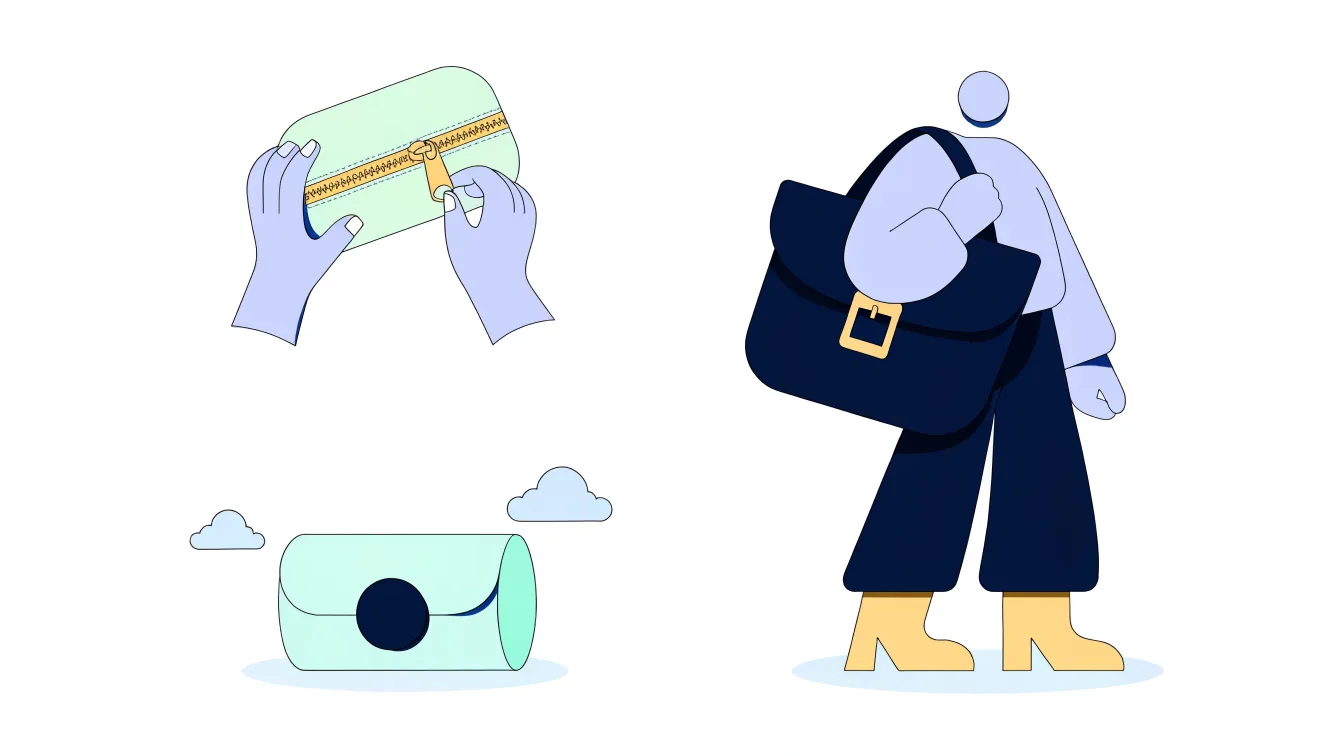
Different bag closure types hold an opening together through pressing, turning, cinching, zipping, or folding. Compare the opening action with your daily routine. Then examine containment and weather claims separately: a water-resistant zipper is not necessarily watertight.
How bag closure types change access
Start by separating the fastener from the opening around it. A central closure and the surrounding flap deserve inspection together.
This qualitative comparison follows the mechanisms below; it is not a timed test. Containment means keeping contents inside, not resisting theft.
| Closure | Access effort | Containment | Weather protection |
|---|---|---|---|
| Press snap | Pull apart; align and press to close | Point fastening holds the panels together; spaces beside it depend on the opening | The snap does not seal those spaces; flap coverage matters |
| Magnetic snap | Pull apart; magnets bring the halves together | Point fastening releases by pulling; corners may remain open | Magnetic attraction does not seal the opening |
| Turn lock | Rotate, then lift the flap | Holds the flap until rotated; side gaps depend on flap overlap | Coverage comes from the flap, not a watertight lock |
| Drawstring | Loosen the cord, then spread the mouth | Gathers the opening; a central gap may remain | A gathered mouth is not a continuous seal; a covering flap changes exposure |
| Zipper | Move the slider along its track | Joins the opening along a path rather than at one point; end gaps still matter | AquaGuard is water resistant, not watertight; other zippers need their own specifications |
| Roll-top | Unbuckle and unroll; repeat the prescribed folds to close | Folded layers close the mouth when correctly secured | ORTLIEB specifies its own rolling method for waterproofness; the complete bag's limits still apply |
Snap and turn-lock actions follow the hardware maker's descriptions. Cinch, zipper, and roll-top examples come from published bag features, zipper specifications, and closure instructions.
Snaps and turn locks: inspect the whole flap
A magnetic snap draws its halves together, while a turn lock requires rotation. Try the actual motion before choosing between them.
For frequent access, rehearse a small task such as returning your keys. Include reopening, finding the item, replacing it, and closing the bag again.
Do this in the carrying position you intend to use. A tabletop demonstration alone leaves out that part of the decision.
Next, examine the flap with the bag filled normally. Look at both corners and decide whether you want an additional internal zipped pocket.
Treat the word "lock" carefully. For a turn-lock bag, establish whether the description refers only to its rotating fastener or includes a keyed mechanism.
Magnetic closures also differ in construction. The European Patent Office describes fasteners combining magnets with a mechanical locking mechanism. Their release actions include sliding, twisting, and rotating.
Therefore, do not judge every magnetic fitting by a simple snap. Learn the action for the specific hardware.
Use the handbag anatomy guide to identify the flap, gussets, and internal compartments during that inspection.
Drawstrings and roll-tops: decide how often you open them
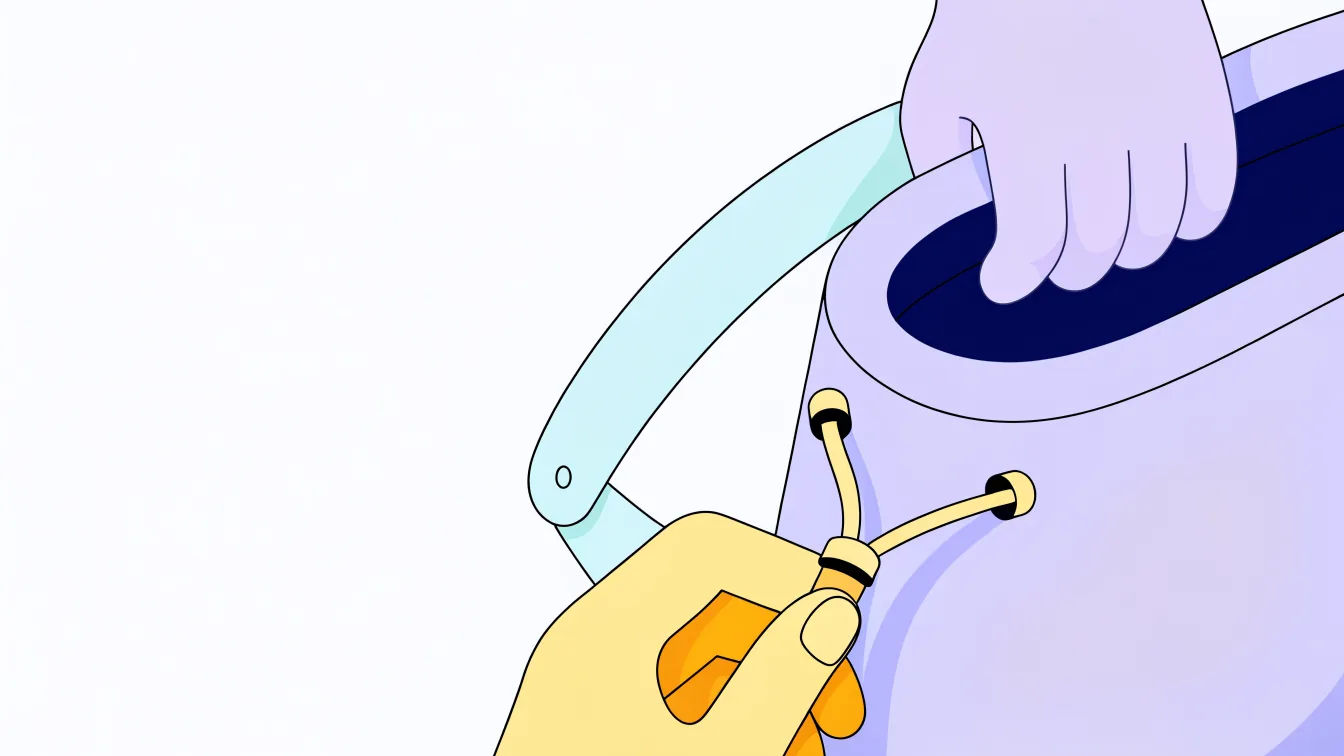
For a cinch design, inspect the mouth after drawing it closed. Decide whether its remaining opening suits the items you intend to carry.
Then examine any secondary pocket. A published cinch-pack example combines a top-loading closure with a front zippered pocket. That arrangement separates small-item access from the main opening.
Treat a roll-top differently: practice its complete closing sequence. One maker requires at least three rolls before securing the buckle.
Another maker instructs users to fold over the sealing strip, roll at least twice more, and clip the buckle.
Follow your bag's instructions rather than transferring a roll count from another model. When packing, leave the room needed to complete that sequence.
As a practical access check, list everything you retrieve during a normal outing. Decide which items should require opening the main compartment.
For a phone, keys, or travel document, consider a separate designated pocket. For spare clothing, consider whether the main opening's extra steps matter to you.
The organization layout guide helps connect those choices to the rest of the interior.
Weather protection belongs to the complete design
A closure name alone is an incomplete weather specification. Look for the maker's claim for the complete bag and the instructions attached to it.
For example, AquaGuard coil zippers use a laminated construction but are not watertight. Avoid interpreting a coated-looking zipper as permission to submerge the bag.
Roll-top instructions also have limits. A dry-bag maker warns that its bags do not guarantee electronics protection during heavy submersion.
For your comparison, write down the actual exposure you expect. Distinguish a short walk in rain from a situation involving possible immersion.
Then match that situation to the published product instructions. Leave out any candidate whose stated limits do not cover the intended use.
Before an outing, inspect and close the bag as directed. The same dry-bag instructions advise checking the fabric and inner coating for damage.
Use the waterproof versus water-resistant guide for the terminology. For other construction details, start with the bag construction guide.
What it means when you shop
Compare bag closure types against your main priority before considering hardware finishes. Decide whether you value frequent access, deliberate opening, coverage, or specified weather protection.
For frequent access, rehearse opening and closing with your usual contents. Choose the motion you can perform comfortably, including returning the item afterward.
For containment, inspect corners, ends, and any secondary compartments. Give small loose items their own closed pocket if that suits your routine.
For weather protection, require specific product information. Follow the closure method in that product's manual instead of relying on a general style description.
Avoid three shortcuts: treating "magnetic" as one mechanism, treating "lock" as proof of theft protection, or treating every roll-top as submersible.
The EPO's explanation of magnetic-mechanical designs and the dry-bag limitations show why those labels need context.
Use an opening-and-closing video when photographs leave the mechanism unclear. Watch the entire sequence and consider whether it suits your hands and usual carrying position.
Make your decision from the complete task, rather than the satisfying click at the end.
FAQ
Which closure is easiest to open with one hand?
Try the specific mechanism in the intended carrying position. Some magnetic-mechanical designs support one-handed opening, according to the EPO's technology explanation. That does not establish a universal winner. Include closing the bag again in your comparison, and assess the action with your usual contents inside.
Does a turn lock make a bag theft-proof?
Do not treat the name as a theft-protection rating. A turn lock describes a rotating closure mechanism. Inspect the surrounding opening and establish whether a keyed lock is included. For your valuables, consider where you want a separate closed compartment and how you will access it.
Are all roll-top bags waterproof?
Choose according to the complete product specification and its limits. One maker's instructions warn against relying on a dry bag for electronics during heavy submersion. Follow your own bag's folding method. Do not transfer waterproofness or immersion claims between products simply because their openings look similar.
Can one bag combine different closures?
Yes. A published cinch-pack design includes a zippered front pocket. Evaluate each compartment according to its job. You might reserve the main opening for clothing and use another pocket for frequently retrieved items. Practice that arrangement with your own contents before deciding whether the layout suits you.
Sources
- jx-mc.com/resources/buying-guides/how-to-choose-a-bag-closure-magnetic-snap-twist-lock-…
- osprey.com/gb/daylite-cinch-pack
- us.ortlieb.com/pages/roll-closure
- support.seatosummit.com/hc/en-us/articles/19361653630996-How-should-I-correctly-close-a…
- ykkamericas.com/product/aquaguard-coil-zipper
- epo.org/en/news-events/european-inventor-award/meet-the-finalists/joachim-fiedler