Liquids in hand luggage: the 3-1-1 rule and the quart bag
Rules change. Confirm with the operator before you travel.
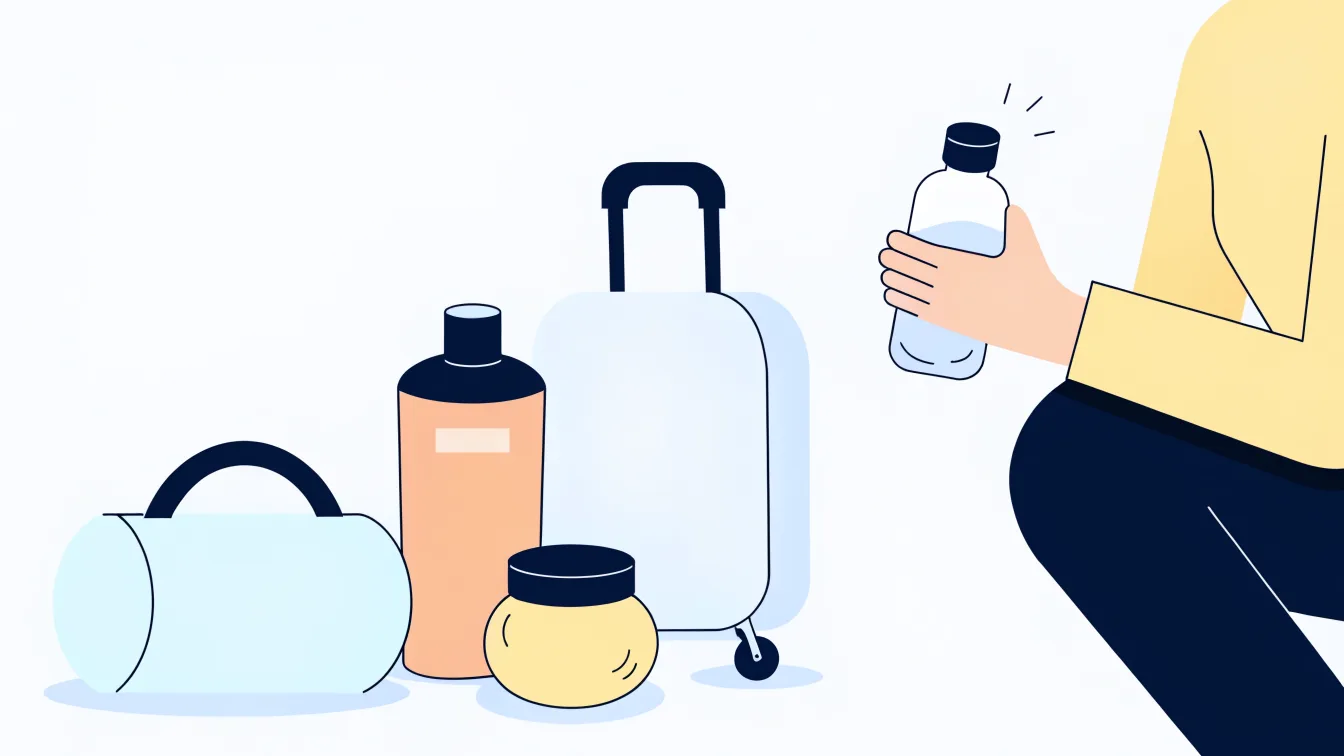
The 3-1-1 rule allows ordinary carry-on liquids in containers of 3.4 ounces (100 milliliters) or less, inside one quart-sized bag per passenger. TSA publishes those limits. Necessary medication and infant-feeding supplies have separate exemptions and screening procedures.
How the 3-1-1 rule works
These US checkpoint rules were checked in November 2026. Use the container label to make the first decision, then consider the total ordinary liquids allowance.
| Item or situation | Applicable rule | Packing response |
|---|---|---|
| Ordinary liquid toiletries | Each container no larger than 3.4 ounces (100 milliliters) | Place within the quart bag; TSA guidance |
| Toiletries across two cabin bags | One quart bag per passenger | Combine ordinary liquids into that allowance; TSA FAQ |
| Toothpaste and lotion | Included in ordinary liquids | Count both alongside shampoo; TSA FAQ |
| Peanut butter | Carry-on limit of 3.4 ounces (100 milliliters) | Treat it as a spread within the allowance; TSA directory |
| Necessary liquid medication | Reasonable quantities above the ordinary limit permitted | Declare for separate screening; TSA medical guidance |
| Formula and breast milk | Larger quantities permitted outside the quart bag | Present separately; TSA children's guidance |
Do not treat “travel size” as the measurement. Read the actual capacity printed on each container.
The carry-on packing rules guide covers other item categories, including electronics and sharp objects. Keep those decisions separate from the liquids pouch.
Choose a quart bag and make everything accessible
Use a quart-sized bag for the ordinary US allowance, as specified in TSA's FAQ. Select by its stated capacity, rather than treating one pouch's dimensions as a universal template.
Choose a transparent, resealable design and arrange the containers so it closes comfortably. An airline example, Delta's published guidance, explicitly calls for a clear, quart-size, zip-top plastic bag.
Avoid selecting a large cosmetics case merely because its product name mentions airport security. Match the stated capacity, then reduce the contents if necessary.
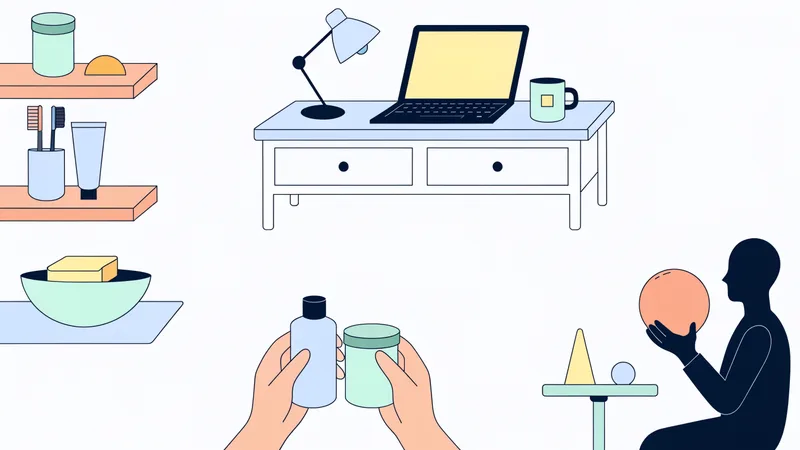
Build the pouch around the trip's essentials. Put each ordinary liquid toiletry on the table before choosing what to take. Consider leaving duplicates behind.
Do a closure check after filling it. If you cannot close the pouch normally, remove something rather than squeezing another bottle between the others.
Pack the completed pouch near the top of your cabin bag. TSA says separating liquids from other baggage facilitates screening. Follow the officer's instructions for your lane when you arrive.
Keep medication and feeding supplies in their own accessible group. That arrangement makes it easier to explain an exemption without mixing ordinary shampoo into the same discussion.
Exceptions: medication, milk, and cooling packs
TSA allows medically necessary liquids, gels, and aerosols above the ordinary limit in reasonable quantities. Declare them before screening, together with associated supplies. Its medical guidance also covers cooling accessories, including melted or partially frozen packs.
This exemption does not remove screening. TSA may need additional procedures to clear the items. Inform the officer if you do not want liquid medication X-rayed or opened.
Keep medicines in suitable packaging and follow their storage instructions. For temperature-sensitive medication, discuss the travel arrangement with your pharmacist or clinician.
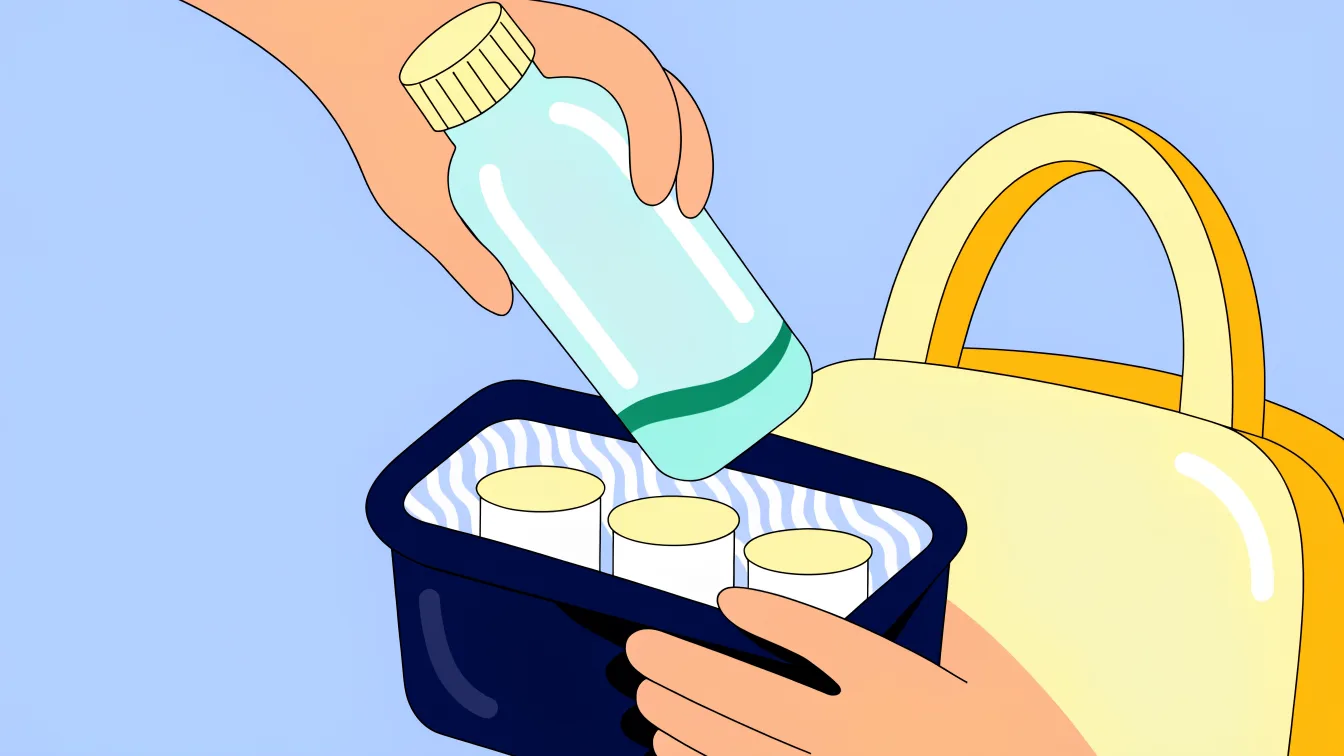
Formula, breast milk, toddler drinks, and baby or toddler food can also exceed ordinary container limits. They do not need to fit within the quart bag. See TSA's infant-feeding guidance.
TSA recommends clear, translucent bottles for formula and breast milk when possible. Pouches may need alternate screening. Your child does not need to accompany you to bring breast milk and its cooling accessories.
Keep the feeding supplies together and announce them at the start. This gives the officer the relevant information before your belongings move through screening.
For a complete family bag arrangement, use the packing guides alongside the official screening instructions.
International flights and duty-free connections
TSA's rule describes US screening. Do not assume your departure, connection, and return checkpoints all use the same liquid limits.
UK government guidance illustrates the difference. Most UK airports retain a 100-milliliter container limit, while some may allow containers holding up to 2 liters. The government's liquids page tells travelers to verify every airport involved. Checked in November 2026.
Where a UK airport requires a separate transparent bag, the published specification is approximately 8 x 8 inches (20 x 20 centimeters). It must hold no more than 1 liter and close comfortably. Follow the UK specification, rather than treating that measurement as TSA's quart-bag template.
For an international purchase followed by a US connection, TSA publishes a duty-free exception. Larger liquids need the retailer's transparent, tamper-evident security bag, an original receipt, and purchase within 48 hours. All conditions and screening requirements apply.
Keep that security bag sealed and its receipt accessible. TSA warns that items which alarm or cannot be screened will not be permitted in the cabin.
Plan the whole journey before buying a large bottle abroad. The next checkpoint matters as much as the first.
What happens if you get it wrong
A partly empty large bottle still exceeds the ordinary container limit. TSA instructs passengers to put containers above 3.4 ounces (100 milliliters) into checked baggage. See its liquids guidance, checked in November 2026.
That instruction does not mean every liquid is safe or permitted in the hold. Identify the actual substance in the TSA item directory before choosing checked baggage as the alternative.
If an officer identifies a problem, ask which part of the rule applies. The answer may concern capacity, the substance itself, or screening of an exempt item.
Avoid repacking assumptions such as “the medicine exemption covers my whole toiletry bag.” Separate ordinary products from medically necessary supplies before joining the queue.
Another common mistake is dividing ordinary liquids between a backpack and a suitcase. TSA's allowance is per passenger, rather than per piece of cabin luggage.
Rules change. Review current official instructions before departure, especially when your itinerary includes several airports or a return trip after a lengthy stay.
Before you go: finish the liquid-packing check
Complete this sequence while you can still change the contents easily. Start with the products you need, rather than the number of bottles you own.
- List ordinary toiletries and liquid or spreadable food separately from medication and infant nourishment.
- Read each ordinary container's capacity and remove oversize bottles from the cabin selection.
- Put ordinary liquids into the quart-sized allowance and close the pouch.
- Group exempt supplies separately so you can declare and present them.
- Review each airport's official instructions, including connections and your return departure.
The sequence is an organization method. The actual US limits and exemptions come from the TSA sources above.
Save your itinerary beside the relevant airport guidance. Label your planning notes by departure airport so you do not accidentally apply a return airport's policy to the outbound flight.
Use the airline baggage rules hub for the broader travel checklist. If you move large toiletries into a checked suitcase, revisit your luggage weight allowance.
Finally, keep the liquids and exemption groups accessible. You should be able to present either without spreading the rest of your belongings across the checkpoint.
FAQ
Does toothpaste count under the 3-1-1 rule?
Yes. TSA specifically includes toothpaste with shampoo, conditioner, mouthwash, and lotion in its liquids FAQ. Use a container within the ordinary limit and include it in your quart-sized allowance. A toothpaste tube does not get a separate allowance because it contains a paste.
Can I take a half-empty large shampoo bottle?
The ordinary restriction concerns the container. TSA directs travelers to place containers above 3.4 ounces (100 milliliters) into checked baggage, as explained in its liquids guidance. Choose a suitably sized container for cabin travel, while following the product's own storage and labeling instructions.
Does breast milk have to fit in the quart bag?
No. TSA permits breast milk above ordinary liquid limits outside the quart bag. Declare it and present it separately for screening. Its children's travel page also covers cooling accessories. Your child does not need to be traveling with you to bring breast milk and those accessories.
Can I use the same liquids bag abroad?
It depends on the airport's requirements. For example, UK guidance specifies a resealable bag no larger than 1 liter where a separate liquids bag is required. Other airports may apply different arrangements. Review each checkpoint on your itinerary before deciding that one packing setup covers the journey.
Sources
- tsa.gov/travel/security-screening/liquids-aerosols-gels-rule
- tsa.gov/travel/frequently-asked-questions/liquids-aerosols-and-gels-rule
- tsa.gov/travel/security-screening/whatcanibring/all-list
- tsa.gov/travel/tsa-cares/disabilities-and-medical-conditions
- tsa.gov/travel/tsa-cares/traveling-children
- delta.com/us/en/baggage/carry-on-baggage
- gov.uk/hand-luggage-restrictions/liquids