TSA-approved locks explained
TSA-approved locks are more accurately called TSA-recognized luggage locks. They let authorized airport screeners use compatible inspection tools to open and relock baggage. They do not prevent inspection, guarantee security, or promise that inspectors will never cut them.
What does TSA-approved actually mean?
The phrase appears everywhere on luggage packaging, but it can mislead. The Transportation Security Administration is not awarding a blanket quality seal for a lock's security. The useful feature is simpler: an authorized screener may open a recognized lock without destroying it.
That matters because checked luggage can be physically inspected. A normal padlock may keep casual access inconvenient, but it may also obstruct the inspection. In TSA's claims guidance, a recognized lock means less chance of damage to the lock or bag during a physical inspection.
Think of the lock as a door with two legitimate entry methods. You use your combination or key; inspectors use the access system their agency supports.
That second entry is for screeners holding the matching tool, not for anyone who buys a lock.
How a recognized luggage lock works
| Part | What it does | What it does not promise |
|---|---|---|
| Your combination or key | Opens the lock during ordinary use | That the code cannot be guessed or observed |
| Inspection access | Allows equipped screeners to open the lock | That every airport uses the same system |
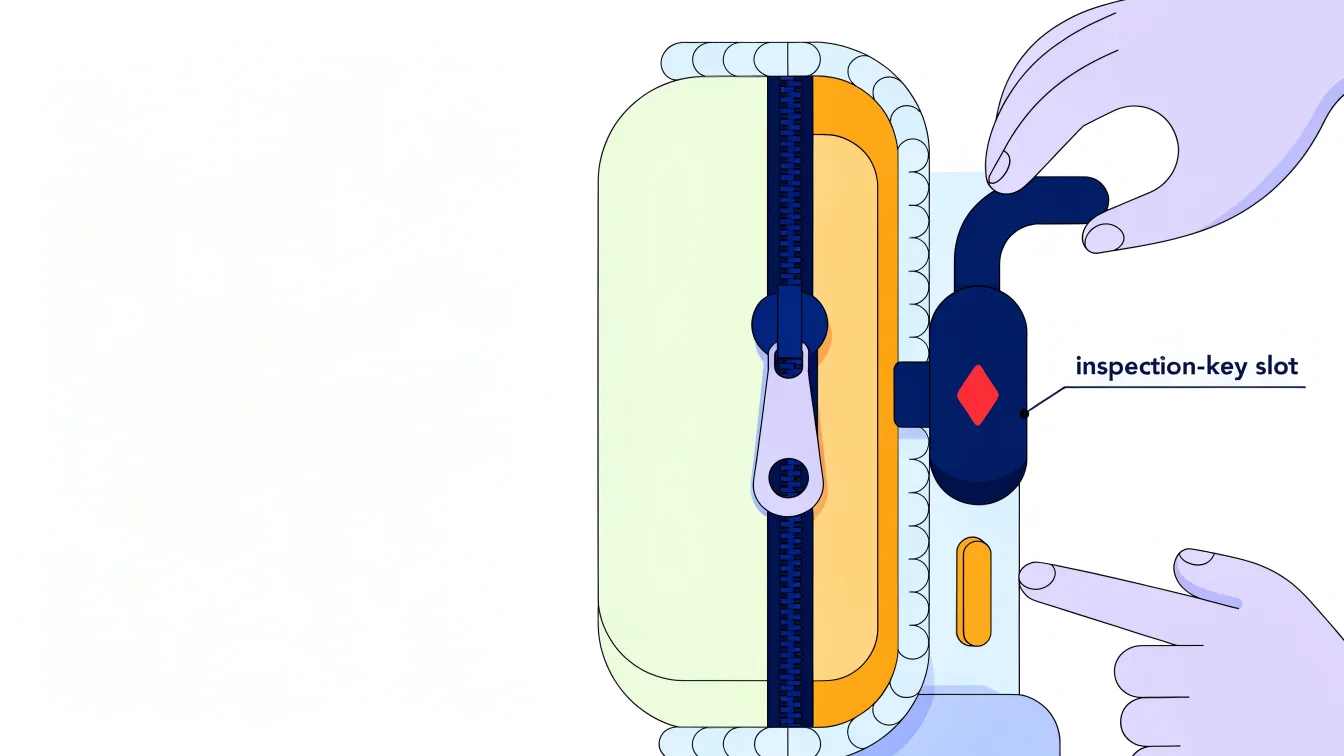
| Red diamond marking | Identifies the Travel Sentry accepted system | An independently tested theft rating |
| TSA-numbered inspection slot | Indicates a matching inspection tool category | A user-accessible spare key |
| Zipper pulls or luggage hasp | Provides something the lock can secure | That the suitcase shell or zipper is tamper-proof |
The Travel Sentry FAQ explains that numbers such as TSA001 through TSA008 identify the relevant inspection tool. They are not instructions for changing your combination. The same guidance says an older lock with the red diamond can remain usable in its system.
Travel Sentry is not the only recognized system. Safe Skies says its locks are recognized and accepted by the TSA, and screeners need only its tools to open them. The maker says an inspected lock is relocked, though in rare cases one is clipped.
When an inspection occurs, the screener may unlock the compatible device, inspect the contents, and close it again. That is the intention, not a guaranteed result. Damaged mechanisms, unsuitable hardware, or screening circumstances can still lead to removal.
How to identify an accepted lock before buying
Start with the lock body or packaging, not a marketplace title, and look for the Travel Sentry red diamond. For a Safe Skies lock, confirm the recognition claim on the maker's own page rather than a listing. A suitcase's factory-integrated lock may also be compatible; do not assume all integrated locks are.
Next, inspect the attachment. A small padlock needs to pass through the zipper pulls or eyelets without forcing them apart.
A cable-style shackle may thread through awkward zipper tabs more easily, but the exposed cable creates its own wear point. An integrated lock needs the pullers to seat correctly; a bent zipper pull can defeat the design before the trip begins.
Finally, test the lock at home. Set your combination with the case open, close it, unlock it several times, and record the code somewhere separate.
Never set a new combination while distracted at the airport counter. That is an unnecessarily thrilling way to begin a vacation.
What a luggage lock actually protects

A lock primarily discourages casual opening and keeps zipper pulls together during transport. It can also reveal obvious tampering if a hasp is broken or a lock disappears. But inexpensive luggage zippers, flexible soft shells, and exposed seams may be more vulnerable than the lock itself.
This distinction matters for valuable belongings. Locking a checked case does not turn it into a safe.
Keep medication, ID, electronics and irreplaceable documents in your carry-on, as your airline's rules allow. Check the carrier's prohibited and restricted-item policies before packing.
A lock cannot guarantee recovery of a delayed bag either. A visible identification tag and accurate contact details solve a different problem. For layered protection, see the bag security hub and the guide to luggage locks, tags, and trackers.
When should you use one?
For ordinary checked luggage, a recognized lock is a practical default if you want the zipper pulls secured. For a carry-on, locking may be useful on buses, trains, or in shared accommodation. You must still be able to open it quickly when asked at security.
Some specialized baggage categories have additional requirements. Do not generalize ordinary suitcase advice to firearms, hazardous goods, live animals, or medical transport. Consult the TSA and airline rules that apply to the specific item.
Outside the US, the "TSA" label carries less weight. Travel Sentry says screening procedures vary by country and airport, so an intact lock at one airport is no guarantee at another. Check the relevant security agency if your itinerary has unusual stops.
What it means when you shop
Choose the recognition system first (Travel Sentry or Safe Skies), then the mechanism you can operate reliably. A combination lock eliminates a small key to lose.
A keyed lock may be easier for someone who struggles with tiny number dials. Either design should feel mechanically secure without jamming the zipper pulls.
Avoid judging by an oversized shackle alone. A strong shackle attached to weak fabric tabs does not strengthen the suitcase. Examine the zipper, stitching, and lock anchor together, and compare the bag construction guide for the rest of the hardware.
The clearest product description states the recognition system and explains how to reset the code. If the manufacturer only uses vague marketing language, keep looking.
Common myths about TSA-approved locks
Myth: TSA certifies recognized locks as secure. TSA's claims guidance covers one thing: recognized locks reducing damage during inspection. It says nothing about how secure they are.
Myth: The lock cannot be cut. Travel Sentry says it is rare but possible that a screener has to cut open one of its locks. Compatibility lowers the odds; it does not remove them.
Myth: The TSA number is my personal combination. It identifies the relevant inspection tool, according to Travel Sentry.
Myth: A locked zipper makes a suitcase theft-proof. The lock protects only part of the bag. Shells, seams, handles, and zippers still matter.
FAQ
Are TSA-approved locks mandatory for checked bags?
TSA's claims page presents recognized locks as a way to reduce damage if a bag is inspected. It does not say you must use one. Special baggage categories can have different rules; check those separately.
Can TSA open a combination lock without knowing my code?
Authorized officers can use compatible inspection tools on recognized designs. This is separate from your combination, as the Travel Sentry FAQ explains. Not every airport uses the same inspection system, and a lock can still be removed.
What does the red diamond on a lock mean?
It identifies a lock in the Travel Sentry accepted system. It does not make the bag theft-proof, and it does not mean anyone holding a key may open your bag. Verify the mark on the lock or packaging.
Can I lock my carry-on bag?
Usually, yes, but you must comply with screening requests and carrier conditions. Choose a mechanism you can open without delay, and do not lock away anything you will need mid-flight. Confirm the airport's security instructions before travel.
Should I get a built-in lock or a separate padlock?
A built-in design is convenient when its zipper pulls line up properly, while a separate lock is transferable and replaceable. Compare the attachment points, how easily you can open it, and the inspection marking. Neither design is more theft-resistant on its own.