Laundry bags and wash bags

A laundry bag should match its job: separating garments during washing, carrying dirty clothes or organizing laundry inside luggage. Start with that job, then compare dimensions, closures and cleaning instructions. Treat carrying capacity and permission to machine wash as separate questions.
Choose a laundry bag by the job it needs to do
Begin at the point where your present routine breaks down. Is it the washing machine, the walk downstairs or the return journey from a trip? Choose a format for that problem before comparing fabrics.
| Format | Intended job | Detail to compare | Source example |
|---|---|---|---|
| Zippered mesh pouch | Keep selected garments separate during washing | Opening, mesh and closure | Wash-pouch description |
| Large mesh sack | Collect and carry laundry | Drawstring, dimensions and care permission | Drawstring-sack description |
| Hamper-style tote | Gather clothes and carry them to the machine | Handles, lining and cleaning method | Hamper-tote description |
| Divided travel organizer | Separate clean clothing from dirty clothing | Divider, packed dimensions and capacity | Travel-organizer description |
Treat these as categories rather than competing versions of the same thing. A household may need a carrying sack and a separate wash pouch.
For shared laundry rooms, sketch the whole journey: collecting clothes, carrying detergent, opening doors and bringing clean clothes home. Decide where the emptied carrier will go while a load runs.
For travel, make the same decision before departure. Reserve an identifiable space for worn clothing instead of reorganizing the suitcase beside the hotel checkout desk.
Size the bag around the opening and the route
Compare actual measurements before trusting labels such as small, large or family size. A flat pouch and a shaped hamper need different measurements.
One maker lists small wash pouches at approximately 13 × 9.8 inches and a larger version at approximately 17.7 × 13 inches. These are conversions of its 33 × 25 cm and 45 × 33 cm dimensions.
Use those figures as examples, then measure what you intend to put inside. For a washable sweater, compare its folded outline with the usable opening, not just the longest side.
For a hamper liner, measure the rim it must fit around and the depth it must reach. Ask whether the quoted width describes a flattened sack or an expanded shape.
For a carrying tote, map its position on your route. Will you carry it beside your leg, across your body or by two handles? Include doorways and stairs in that decision.
Do not turn a volume figure into a promised number of loads. Build your choice around your own collection routine and the washer instructions. If one large carrier is awkward, plan separate trips or smaller batches.
For socks, compare the opening with the group you actually wash together. Keep garment measurements and carrier dimensions together on your shortlist.
If a listing provides only package measurements, ask for the opened bag's dimensions. Keep that answer beside your own measurements instead of substituting the size of the shipping carton.
Read the material and closure together
Compare the complete construction rather than choosing from a fiber name alone. Mesh, solid panels, coatings, handles and closures all deserve their own line on your checklist.
The published examples here include nylon mesh and polyester mesh. Neither specification, by itself, tells you which cycle every garment inside can tolerate.
A zippered wash pouch deserves a close look at the zipper area. One maker uses a cover over the pull tab to protect other laundry and the machine. Include that detail when comparing closures.
For a drawstring sack, decide whether you prefer opening one wide mouth or working around a zipper. For a tote, consider whether you want long handles, short handles or both.
Next, plan how you will clean the carrier. Would you regularly wipe a lining, or would you prefer a model whose instructions permit washing? Make that decision before choosing a material.
Keep any claims about moisture protection specific to the finished item. For bags intended to contain wet gear, use the separate waterproof-bag guide and the exact model's instructions.
Keep wash-pouch instructions separate from garment care
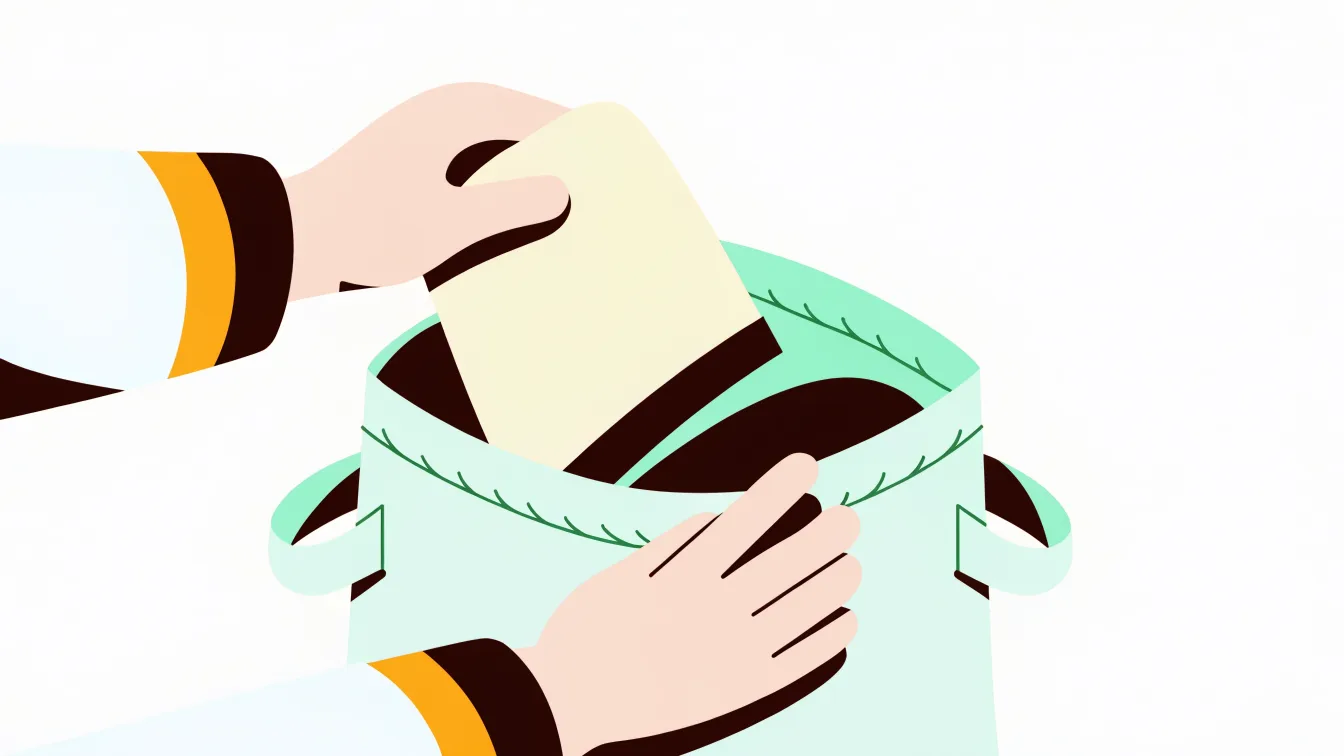
Read the garment label first, then the pouch instructions, then the washer manual. Use a care method that all three permit.
The FTC explains that clothing instructions address the finished garment, including components that may need warnings. Use that guidance when evaluating trims, fasteners or contrasting panels. A mesh enclosure does not supply a new care instruction for the clothing inside.
Before loading, group items by compatible care directions. Then decide which pieces need separate pouches. Keep the garment labels accessible until you have chosen the cycle and drying method.
Follow the pouch maker's loading directions rather than inventing a universal half-full rule. If no loading limit appears, ask the maker about the particular item you want to wash.
Close the pouch as directed. After washing, consult the clothing label again before transferring anything to a dryer. Permission to dry the pouch is a separate matter from permission to tumble-dry its contents.
Make this a short repeatable routine: sort, read, load, close, wash and reassess before drying. Keep a note beside the machine for garments with care directions you otherwise forget.
Plan travel laundry around separation and drying
Choose a travel organizer by the space it will occupy inside your luggage. Start with the packed footprint, then decide how you want to divide worn and unworn clothing.
A published divided organizer measures 14 × 10 × 4 inches and has a stated capacity of 9 liters. Its maker describes an internal clean/dirty divider and water-resistant fabric.
Those specifications describe organization and construction. Do not treat them as a promise of a sealed barrier for wet swimwear. Assign drying its own place in your travel routine.
For example, plan to unpack damp items when you reach suitable drying facilities. The EPA identifies moisture control as the key to preventing indoor mold. Closing wet belongings inside a carrier is not a drying method.
If you use packing cubes, nominate one compartment for worn clothing before the trip begins. Label it or choose a consistent position inside the suitcase.
On arrival home, empty the organizer and sort clothes by their care needs. Clean the organizer according to its own instructions, then finish drying it before storage.
For trips with several stops, identify laundry access before packing. Keep garments needing individual care separately identified throughout the trip.
Clean the carrier according to its construction
Laundry equipment can have surprisingly different care instructions. Read the sewn label and the maker's current directions rather than assuming everything near a washer belongs inside it.
The small polyester wash pouch above permits warm machine washing and low tumble drying. The larger coated hamper tote instead specifies lukewarm-water cleaning and wiping dry, with no washing or tumble drying.
Outdoor sacks require their own care plan. Sea to Summit recommends hand washing its dry bags and stuff sacks with mild soap, rinsing and air drying. It also warns against putting tape-sealed dry sacks in a dryer.
Keep these instructions with the item, especially if several people share laundry duties. A photograph of the care label can serve as a useful household reference.
When emptying a carrier, inspect the closure, seams and handles. Set aside anything needing repair before the next carrying trip. Ask the maker for an appropriate repair method rather than improvising around a damaged load-bearing part.
After cleaning, choose a designated storage spot. Keep wash pouches with laundry supplies and travel organizers with luggage so each returns to its intended job.
FAQ
Can a laundry bag go in the washing machine?
Only when its instructions permit it. One published mesh sack is washer and dryer safe, while a coated hamper tote says do not wash. Read the exact model's directions before loading it, then choose care settings that also suit the clothing inside.
Do mesh wash pouches make delicate clothing machine washable?
Choose the washing method from the garment label, not from the presence of mesh. The FTC's care guidance explains that instructions and warnings concern the complete garment. Use a pouch only within those directions, including any restrictions on washing, temperature, bleaching or drying.
What size should I use for a trip?
Measure the space you intend to reserve inside your suitcase. As one reference, a divided travel organizer has 14 × 10 × 4-inch dimensions and 9-liter capacity. Compare your folded clothing with that footprint rather than choosing from a promised trip length or number of outfits.
Should wet towels stay in a closed sack?
Make drying the next step rather than treating a closed sack as storage. The EPA's household mold guidance emphasizes controlling moisture. At your destination, follow the towel's care directions and the carrier's instructions, and arrange suitable drying before putting either item away.
Can I tumble-dry an outdoor dry sack used for laundry?
Follow that sack's instructions. Sea to Summit specifically warns that dryer heat can delaminate tape-sealed seams and recommends air drying after cleaning. Do not copy the drying method from a mesh wash pouch or from the clothing that was carried inside the sack.
Related guides
Sources
- ikea.com/us/en/p/slibb-washing-bag-white-gray-60567735
- honeycando.com/products/mesh-laundry-bag-white
- ikea.com/us/en/p/purrpingla-laundry-bag-beige-20614239
- brabantia.com/us/wash-bags-set-of-3-in-2-sizes-149221-white
- ftc.gov/business-guidance/resources/clothes-captioning-complying-care-labeling-rule
- eaglecreek.com/products/pack-it-isolate-carry-on-set
- seatosummit.com/blogs/product-care/caring-for-your-gear
- epa.gov/mold/brief-guide-mold-moisture-and-your-home