Moving bags
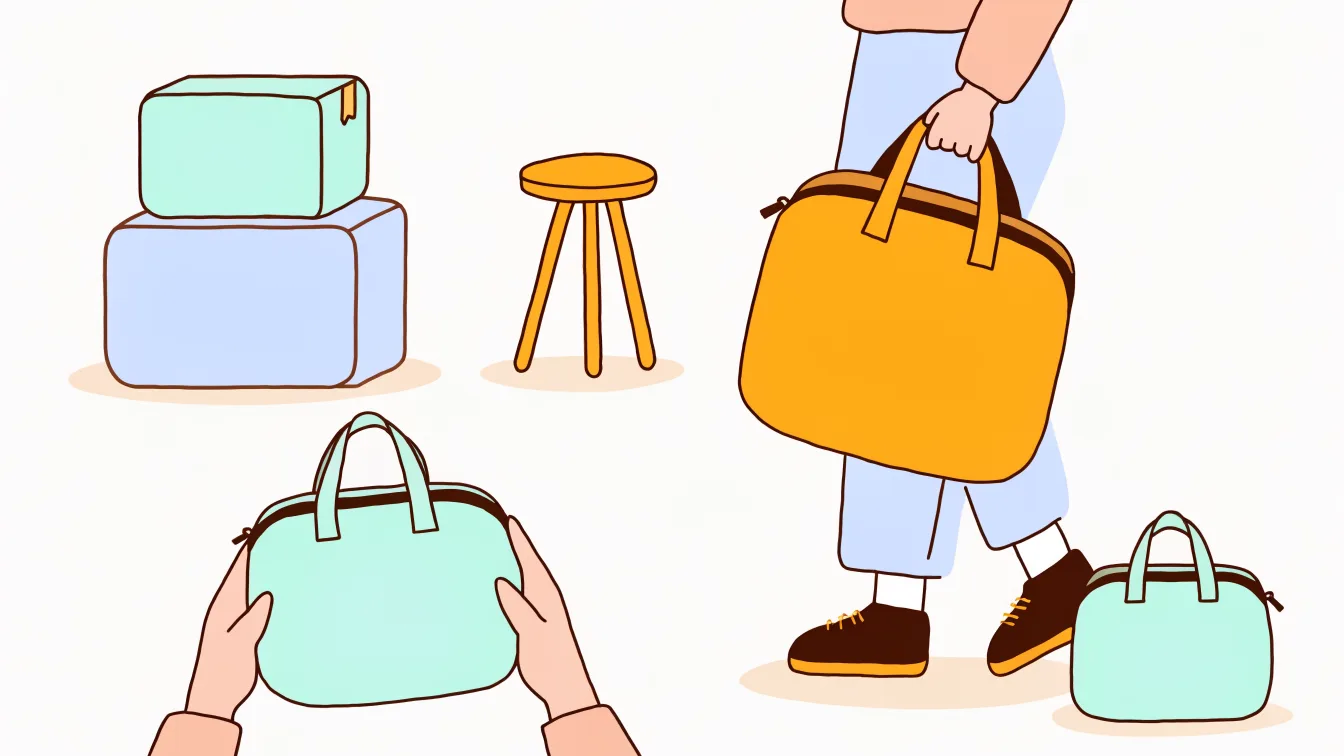
Moving bags suit grouped soft belongings when their opening, dimensions and handles fit the job. Choose a manageable package for clothing or bedding. Use item-specific packing methods for fragile objects, and treat a published bag load rating separately from your own lifting capability.
When moving bags make sense beside boxes
Choose the container after identifying the contents. For a group of folded shirts or towels, consider a zippered carrier. For glassware or a framed picture, begin with item-specific protective packing.
U-Haul's clothing-packing guide recognizes bags and suitcases as options for short-term transport of folded clothing. Its fragile-item guidance instead describes protective wrapping, cushioning and appropriate boxes.
| Contents or task | Format to consider | Decision to make first | Supporting source |
|---|---|---|---|
| Folded everyday clothing | Zippered carrier or suitcase | Grouping and manageable packed size | Clothing-packing guidance |
| Spare blankets and linens | Wide-opening storage tote | Actual folded bundle dimensions | Bedding-tote specification |
| Clothing staying on hangers | Wardrobe box | Garment length and hanging arrangement | Wardrobe-box guidance |
| Glassware and other breakables | Suitable box with protective packing | Item-specific cushioning and separation | Fragile-item guidance |
For a small household move, make separate groups before choosing quantities. Reserve the soft carriers for belongings that suit that format, and keep the protective-box plan alongside them.
Avoid treating one container type as the answer for an entire room. A bedroom can include bedding, hanging clothes and fragile lamps, each needing a different packing decision.
Include the unpacked container in your decision. One clear tote is designed to fold flat after use. If you expect another move, decide where the emptied carriers will live between trips.
For a dorm-room move, sketch two groups: belongings going straight into daily use and items remaining stored. Assign containers after making that distinction, rather than packing everything into whichever bag is open.
Compare shape and dimensions before capacity
A low, wide tote and an upright carrier can organize similar belongings in different layouts. Measure the proposed contents and the space where you intend to load them.
| Published example | Listed dimensions in inches | Capacity reference | Source |
|---|---|---|---|
| Wide zippered carrier | 28¾ long × 13¾ deep × 11¾ high | About 76 liters, converted from 20 US gallons | Carrier specification |
| Upright carrier | 15¾ × 11¾ × 23½ | About 72 liters, converted from 19 US gallons | Upright-carrier specification |
| Large wide-opening tote | 27.6 wide × 16.5 high × 13.8 deep | About 102 liters, converted from 27 US gallons | Tote specification |
| Low storage case | 22 wide × 19 deep × 7 high | Compare by published dimensions | Case specification |
Use dimensions for the fit decision. Treat capacity as a separate reference rather than a promise about how many blankets or garments will fit.
Check the opening as well as the body. A maker may describe a top opening or a zipper extending around several sides. Match that access to how you will load folded belongings.
Before packing every carrier, fill one representative group and check the planned arrangement. Adjust the grouping while the remaining items are still easy to sort.
Inspect fabric, closures and handle attachment
Read the complete construction description rather than choosing from the phrase heavy duty. Write down the material, closure layout, handle arrangement and care method for each candidate.
The wide blue carrier specifies polypropylene construction. The larger tote specifies woven polypropylene, reinforced handle stitching and a three-sided zipper.
For another layout, the upright carrier offers hand carrying or adjustable shoulder straps. Choose the arrangement around your route and follow the model's instructions for its intended use.
Inspect the actual bag before loading. Look over the seams, handles, zipper tape and base. Set aside a damaged item and ask the maker about repair before assigning it another carrying task.
Keep water-resistance claims specific. One tote's maker describes its woven material as water resistant. Do not turn that wording into permission to leave the packed contents exposed to rain.
For a model with a label pocket, prepare the label before filling. Include the destination room and a short contents description. Keep handles and closures free to operate as intended.
Pack clothing and bedding by destination
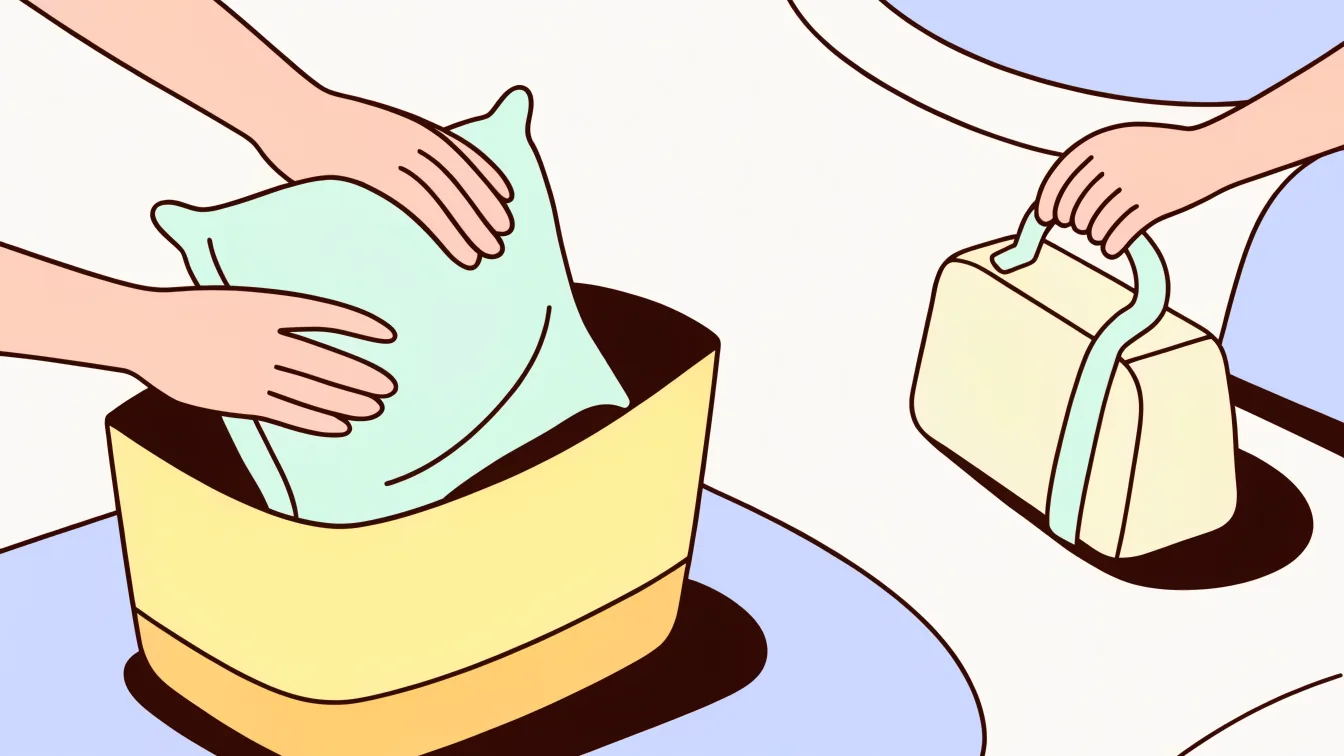
Assign each carrier a destination before putting anything inside. A label such as “bedroom, everyday shirts” gives you a specific group to assemble and unpack.
Start with clean, dry belongings. Keep items still awaiting care in a separate laundry bag rather than mixing them into the packed group.
U-Haul's clothing guidance recommends avoiding overstuffing and placing heavier garments below lighter ones. Apply the bag maker's own loading instructions as well, including any stated maximum.
For linens, fold the intended group and compare it with the opening. Choose a grouping that makes sense at the destination: a guest-bed change, bathroom towels or spare blankets.
Before closing, write a brief inventory. Update it if you transfer items into another carrier. Keep the room name consistent across your labels so helpers can follow the same arrangement.
Use a simple labeling template for every packed group:
| Label field | Example | Decision it records |
|---|---|---|
| Destination | Guest bedroom | Where to take the carrier |
| Contents | Sheets and pillowcases | What belongs in this group |
| Unpacking order | First evening | When you expect to open it |
Make the wording specific to your household. Match the label to your inventory before closing the bag, especially after transferring part of a bedding set.
Set aside the belongings you need immediately. U-Haul recommends a separate essentials bag with items such as clothing, toiletries, chargers and important documents.
If suitable bedding needs compression, prepare it separately using the vacuum-storage guide. Then choose an outer carrier from its dimensions and loading instructions. Do not use compression to justify adding weight beyond a carrier's rating.
Keep bag ratings separate from lifting decisions
Published load ratings describe particular products. The examples above list 55 pounds and 50 pounds. Neither number is a personal lifting recommendation.
For moving bags, make two separate checks: whether the product permits the load, and how you will handle that packed item. Follow the bag's manual for the first check.
For the second, use general handling guidance and account for the actual route. NIOSH recommends clearing the path, planning the lift, avoiding twisting and using lifting equipment or help for heavy objects.
Its retail guidance also advises keeping heavy or awkward loads close and considering assistance or suitable equipment. These are general precautions, not a guarantee that a particular packed item is manageable for you.
Decide before departure who will move each group and where it will be placed. Include stairs, doorways and the final unloading point in that discussion.
If the packed carrier is too awkward, split the contents or arrange suitable help. Do not wait until someone is holding it at a doorway to decide where it goes.
Tell helpers about the destination and any special handling instructions before they start. Keep the agreed unloading spot clear so nobody has to improvise mid-carry.
Unpack, clean and decide the next use
At the destination, deliver each carrier to its labeled room before opening it. Check off the contents as you unpack, then collect empty bags in one place.
Follow the finished product's care instructions. The upright carrier specifies lukewarm-water cleaning with a soft damp cloth and prohibits washing or tumble drying.
The clear bedding tote's maker instructs users to wipe it clean and air dry. The low storage case also carries a do-not-wash instruction. Keep the directions specific rather than assigning every polypropylene bag the same cleaning method.
Before storage, inspect the emptied carrier for damage and follow its drying directions. For household moisture problems, the EPA advises against enclosing wet or mold-affected materials.
Decide whether the bag will return to transport duties or remain around stored belongings. If you keep clothing packed, use the clothing-storage guide to reassess location, access and textile care.
For empty bags intended to fold flat, follow the maker's folding arrangement. Keep matching instructions with them and remove obsolete room labels before the next move.
FAQ
Are moving bags better than boxes?
Choose according to the contents. U-Haul identifies bags as an option for short-term transport of folded clothing, while its fragile-item guidance uses protective packing and suitable boxes. Plan each group separately instead of choosing one format for everything in the home.
How much weight can a zippered tote hold?
Use the exact model's published rating. Examples here list 55 pounds and 50 pounds.
Stay within the manufacturer's instructions and assess handling separately. NIOSH recommends help or suitable equipment for heavy or awkward loads; a bag rating does not establish your personal lifting capability.
Will a large bag fit my comforter?
Measure the comforter in the folded arrangement you intend to use, then compare it with the opening and body dimensions. One published bedding tote measures 26 × 14 × 13 inches. Use that as a measurement example rather than a guaranteed fit for every comforter with the same bed-size label.
Can I wash these carriers in a machine?
Check the individual product. One polypropylene carrier prohibits washing and tumble drying, while a clear tote specifies wiping and air drying. Choose the permitted cleaning method from the finished bag's instructions rather than its material name or the fact that it carried clothing.
Can I leave clothes packed after moving?
Reassess the contents and storage location before doing so. Follow the textile's storage instructions and the carrier's care directions. The EPA advises against enclosing wet or mold-affected materials.
Keep an accurate inventory and choose an arrangement that lets you retrieve and inspect the clothing when needed.
Related guides
Sources
- ikea.com/us/en/p/frakta-storage-bag-for-cart-blue-90149148
- ikea.com/us/en/p/goersnygg-bag-10595948
- ikea.com/us/en/p/goersnygg-storage-case-white-clear-40504193
- venobags.com/a/s/products/extra-large-moving-storage-bags-27-6-w-x-16-5-h-x-13-8-d-stor…
- venobags.com/products/veno-4-pack-clear-moving-bags-comforter-and-blanket-storage-bags
- uhaul.com/Tips/how-to-pack-clothes-for-moving-a-step-by-step-guide-28524
- uhaul.com/Tips/how-to-pack-fragile-items-for-shipping-41598
- uhaul.com/Tips/Packing/Tips-for-Moving-One-Week-Before-Moving-Day-24386
- cdc.gov/niosh/media/pdfs/2026/09/2026-119.pdf
- cdc.gov/niosh/young-workers/retail
- epa.gov/indoor-air-quality-iaq/biological-contaminants-and-indoor-air-quality