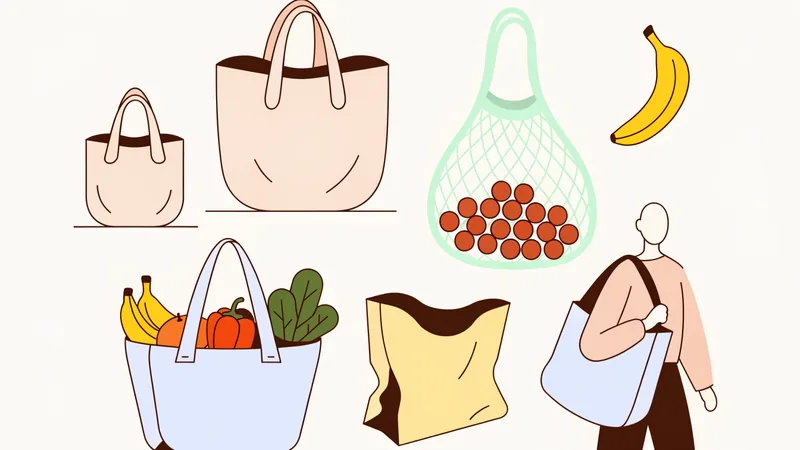
Net and string bags
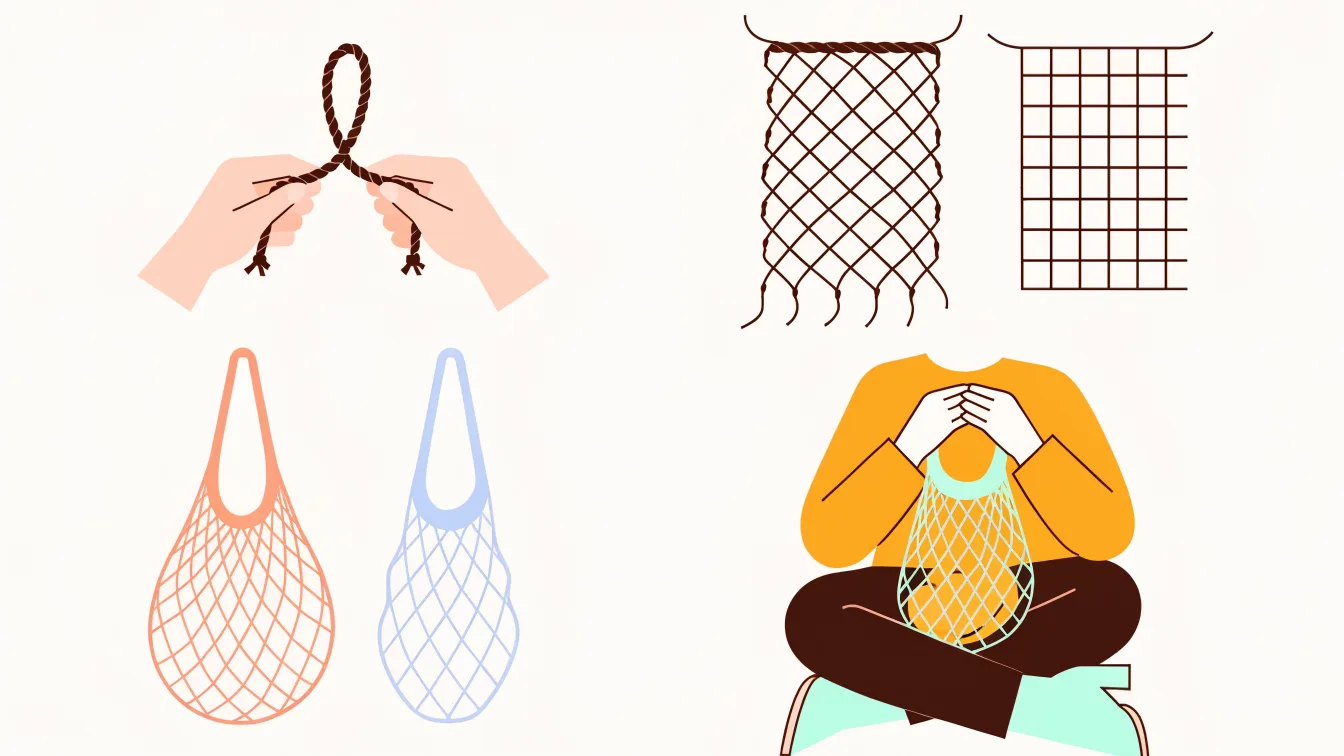
A net bag carries belongings in an open mesh body, with examples ranging from expandable cotton string shoppers to finer produce bags. Choose the openings before the overall size. Expansion, published volume and carrying limits answer different questions.
Which net bag construction suits your contents?
Start with what you want to carry and what must stay enclosed. A large market shopper and a small produce pouch should not be judged as interchangeable containers.
| Construction | Published example | Choosing priority |
|---|---|---|
| Open string shopper | Expandable cotton body with tote or long handles; specification | Compare the gaps with your smallest belongings |
| Fine produce mesh | Polyester mesh with a drawstring and toggle; construction | Match the mesh and closure to the intended food |
| Cotton storage mesh | A cotton model intended for indoor use; instructions | Follow the stated use and washing directions |
| Gear sack | Nylon mesh with a drawcord closure; specification | Choose for the gear and purpose described by its maker |
Treat those as functional groups, not quality rankings. First decide whether you need an outer shopping carrier, separate produce bags or an organizer inside another bag.
For a grocery trip, sketch the whole packing arrangement. Decide which items go into separate inner containers and which bag will carry them together.
Use the parent shopping-bags guide to compare open mesh with other grocery-carrier constructions. Choose mesh because its actual arrangement suits your contents, rather than its familiar market-bag appearance.
Separate expansion, dimensions and carrying limits
An expandable description does not provide a fixed interior rectangle. ECOBAGS describes its cotton string construction as expandable and gives body dimensions of 13.5 x 17 inches. Product description.
Record how the maker measured a bag before comparing sizes. Keep flat dimensions, filled dimensions, liters and weight limits in separate columns.
| Published information | What it describes | What to establish separately |
|---|---|---|
| Body dimensions | Measurements under the stated conditions | Opening size and packed shape |
| Capacity in liters | A maker's volume specification | Suitability for your individual objects |
| Maximum carrying weight | A limit for the named model | Whether the carrying arrangement suits your trip |
| Handle drop | Clearance between handle and body | Position with the bag packed |
For example, a nylon mesh-sack range offers 3-, 5-, 8- and 13-liter sizes across two sets. Those are published volumes, not weight allowances. Maker's size range.
For a hypothetical shopping list, record bulky items separately from dense ones. Do not assume that reaching the bag's volume means you remain within its stated weight limit.
Use how to measure a bag to keep the units straight. Never calculate a dependable expanded capacity from two flat measurements alone.
Compare cotton and synthetic mesh by the exact design
Read both the fiber and construction entries. Cotton versus synthetic is only the beginning of the comparison; the actual openings and closure still need attention.
One produce-bag maker identifies its options as organic cotton and Dacron polyester. It describes larger openings in its cotton version and finer mesh in its polyester version. Maker's comparison.
That is a comparison of those products. Avoid turning it into a rule that every cotton mesh is coarse or every polyester mesh is fine.
| Detail | Cotton example | Synthetic example | Decision to make |
|---|---|---|---|
| Composition | Recycled cotton string; source | Nylon mesh gear sack; source | Which exact construction suits the task? |
| Opening | Tote-style mouth | Drawcord closure | Do you want an open carrier or enclosed organizer? |
| Intended contents | Shopping belongings | Outdoor gear and storage | Does the maker describe your intended use? |
Keep food use separate from general organization. A bag described for clothing or camping gear should not be selected for direct food contact from appearance alone.
For wider fiber comparisons, see bag materials. Start with the complete specification rather than predicting washability, lifespan or environmental performance from the fiber name.
Decide what needs a smaller inner container
Compare each small item with the actual mesh, including the mouth when closed. Do this with the bag arranged as you intend to carry it.
Purifyou specifically says its mesh will not retain flour or sugar. Its instructions also distinguish the drawstring closure from the mesh body. Maker's limitations.
Use that distinction when planning other contents. Closing the top does not change the openings throughout the sides and base.
| Intended contents | Question to resolve | Packing choice |
|---|---|---|
| Loose keys or small accessories | Can any part pass through the gaps? | Use a closed inner pouch when needed |
| Small produce | Does the mesh retain each piece? | Select appropriately fine, food-suitable containment |
| Flour or sugar | Does the maker permit that use? | Choose a container specified for fine contents |
| A rigid case | Can it pass through the mouth normally? | Compare the opening before the overall body |
| Personal belongings | Are you comfortable with their visibility? | Decide what you want enclosed separately |
Rehearse removing and returning the item you use most often. A packing arrangement should work during the trip, not only while everything rests on a table.
See pouches and zip pouches for separate small-item organization. Include the filled pouch when assessing the space and carrying arrangement.
Use produce bags within a food-handling routine

Choose a construction explicitly intended for produce, then follow general food-safety guidance. Mesh is a container choice, not a replacement for correct food handling.
The FDA advises separating fruits and vegetables from raw meat, poultry and seafood during the journey home. General FDA guidance.
Health Canada similarly recommends separate carriers and individual wrapping for raw animal products to prevent leaking juices from contaminating other contents. Reusable-bag guidance.
Plan the trip in order:
- Select clean bags intended for the foods you will carry.
- Assign produce and raw animal products to separate carriers.
- Pack using the food-safety separation guidance.
- Unpack promptly and follow the food's storage instructions.
- Clean and dry reusable carriers as directed before reuse.
Do not infer a universal countertop-storage rule from a picture of vegetables hanging in a mesh shopper. The FDA identifies perishable produce requiring refrigeration at 40°F or below. Storage guidance.
For food handling, follow the relevant authority's guidance. For the bag's cleaning method, follow its own label; choose a different construction if those requirements cannot work together.
Match the handles to the packed arrangement
Compare handle drop with handle drop, and handle length with handle length. Record which measurement the maker supplies. Do not substitute one for the other.
One string shopper offers approximately 0.75-inch-wide handles with either a 4-inch or 13-inch drop. Maker's handle dimensions.
Use the shorter and longer versions as examples of different carrying arrangements. Neither measurement predicts comfort for every person or every packed shape.
| Fitting point | What to observe | Decision |
|---|---|---|
| Packed body position | Where the base rests during intended carry | Choose a position you can manage normally |
| Hand clearance | Whether both handles work together | Rehearse lifting and setting down |
| Shoulder clearance | Space with your normal clothing | Assess the actual packed arrangement |
| Access | Opening and retrieving your essentials | Decide whether you prefer removing the bag first |
| Empty storage | Where you will keep the spare bag | Choose a repeatable place before your next trip |
Keep the maker's carrying limit attached to the exact model. FILT specifies about 17.6 pounds, or 8 kilograms, for its small-handle shopper. Product limit.
That is a product claim, not a recommendation for how much you personally should carry. Consult the maker's instructions when the intended load or carrying method is unclear.
Wash according to the model, then prepare for reuse
Cotton bags can have different care instructions. One string-shopper maker specifies cold delicate machine washing and hanging dry, with some natural shrinkage. Care instructions.
A separate cotton mesh model specifies warm machine washing, no tumble drying and maximum shrinkage of 10%. Model-specific label.
Follow the label for your own bag. Do not copy a temperature or drying method from another cotton product merely because both use mesh.
For grocery use, Health Canada advises frequent washing, drying after washing and thorough cleaning after leaking food juices. General hygiene guidance.
Empty the bag before cleaning and follow any instructions for its drawstring, toggle or attached label. Keep the care information available rather than relying on memory.
Before the next outing, look for damaged mesh, separated seams or loose handle attachments. Ask the maker about repair rather than assuming the original carrying specification still applies.
Return the clean, dry bag to the place you chose for shopping supplies. If your packing needs change, reassess the contents instead of automatically stretching the same arrangement further.
A net bag works when the mesh, opening, handles and care routine all suit the job. Choose the complete arrangement, not expansion alone.
FAQ
How much does a string shopper stretch?
Use the exact product's description rather than a universal multiplier. One maker describes an expandable body and supplies its dimensions, but those measurements alone cannot establish a dependable filled volume. Assess your intended contents together, keep within the maker's carrying instructions, and compare the packed shape with your preferred carrying position. Published example.
Will small things fall through mesh?
Compare the actual gaps with each item, including any narrow parts that could pass through. Use an enclosed inner pouch when needed. A drawstring closes the mouth; it does not close the sides. One produce-bag maker specifically excludes flour and sugar from its mesh bags. Maker's limitation.
Is cotton mesh better than polyester?
Choose by the complete design and intended contents. A maker offers larger-opened cotton mesh and finer polyester mesh within its range, but that comparison does not define every product. Read the composition, inspect the openings, establish food suitability when relevant, and follow the exact cleaning label before deciding. Material comparison.
Can I leave all my produce hanging in mesh?
Follow storage guidance for the specific food. The FDA identifies perishable produce that belongs in a clean refrigerator at 40°F or below, and it advises refrigerating pre-cut produce. A mesh container does not replace those requirements. Choose the carrier for transport, then store the food as directed. FDA storage guidance.
Related guides
- Jute and burlap bags: comparing woven shoppers, lamination and cleaning limits.
Sources
- ecobags.com/products/ecobags-string-bag-natural-cotton-long
- purifyou.com/pages/help-center
- seatosummit.com/products/mesh-stuff-sack-set
- filt1860.fr/en/12-167-net-shopping-bag-with-small-handle.html
- ikea.com/us/en/p/kungsfors-mesh-bag-set-of-2-natural-20372834
- fda.gov/food/buy-store-serve-safe-food/selecting-and-serving-produce-safely
- canada.ca/en/health-canada/services/general-food-safety-tips/reusable-grocery-bags-bins…