Craft, knitting and project bags
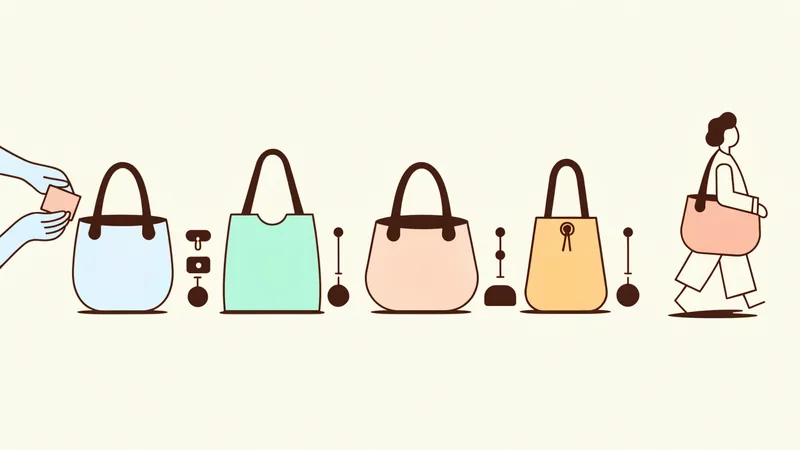
A knitting project bag keeps your current work, working yarn, and tools together. Choose around the project at its largest packed stage, then compare the opening, yarn feed, and pockets. Plan separate storage for small notions and protected tools.
Which knitting project bag format suits your work?
Start with the project you want to carry today. Separate that load from your wider yarn collection, spare needles, and supplies for unrelated projects.
Published constructions include snap-top mesh sacks and a mesh tote with a structured base. A 100% linen bag accepts optional removable leather handles, sold separately. Sack construction, structured tote, linen construction
Use this comparison as a planning framework.
| Format | Load to plan around | Feature to prioritize | Main decision |
|---|---|---|---|
| Small project sack | One compact work in progress | Opening and working-yarn access | Can the project close inside with its tools? |
| Larger project sack | A growing garment and its yarn | Usable depth and accessible pockets | Is there room for the later stages? |
| Project tote | Several project pouches or a larger load | Base, handles, and interior organization | Will projects remain individually contained? |
| Separate notions wallet | Small accessories for one or more projects | Closed compartments and packed depth | Does it fit alongside the actual project? |
For general shapes and carrying options, begin with the tote bags guide.
Choose the smallest arrangement that accommodates your intended work comfortably. Avoid filling a bag with extra supplies simply because space remains.
If you rotate projects, keep a separate inventory for each. That makes it easier to decide what travels and what stays at home.
What size do you need for socks, garments, and blankets?
Use the project type to begin your shortlist, then measure your own materials. A sock project and a garment should not receive a size purely from their names.
The published dimensions below illustrate different formats. They are not guaranteed interior measurements or standardized capacity categories.
| Published example | Dimensions in inches | Construction detail | Useful comparison |
|---|---|---|---|
| Small project sack | Approximately 8 x 7 x 3.5 | Mesh with internal pockets | Your compact project and working yarn |
| Larger project sack | 11 x 11 x 5 | Mesh with an interior pocket | Your growing work and packed tools |
| Mesh project tote | 15 long x 10 high x 6 wide | Structured base | Project pouches plus accessories |
Sources: small sack, larger sack, mesh tote.
For socks, assemble the actual needles, yarn, pattern, and small tools before comparing sizes.
For a sweater, plan around the garment as it grows, rather than only the yarn at cast-on. Decide how much spare yarn must travel.
For a blanket, decide whether the complete work needs to leave home. Your bag requirement should follow that decision.
Keep the packed arrangement loose enough to access without forcing the closure. Measure any protective tool cases as part of that arrangement.
How should yarn feeds and closures work?
Decide whether you want to work directly from the bag. If so, examine the yarn route as carefully as the storage space.
One snap-top design specifically uses the gaps at its closure as a yarn feed. Maker's design description
That identifies the intended function. It does not promise identical results with every yarn, project, or packing arrangement.
Before choosing, trace the route from the working ball to your hands. Prefer an arrangement that lets you see where the strand enters and leaves.
If you often switch projects, consider how you will remove the working yarn. Decide whether threading through a fixed opening would suit your routine.
For multiple working colors, plan separate positions for the yarn supplies. Do not assume that several openings automatically provide separate internal compartments.
For a zipped carrier, keep the working strand clear when closing it. For a drawstring carrier, decide whether the opening remains practical while you work.
Make closure part of the fit decision. The complete project should pack away in the manner the maker intends.
Avoid choosing a yarn-feed feature at the expense of carrying the actual work. Storage space and access must support the same project.
How much structure and visibility do you want?
Choose structure around where you will work. Consider a table, your lap, a chair-side position, and the larger bag used during travel.
The published mesh tote has a structured base. A different linen design opens into a square-bottomed tote arrangement. Structured-base example, square-bottomed construction
Use those details to compare the layouts, without treating either as a universal answer.
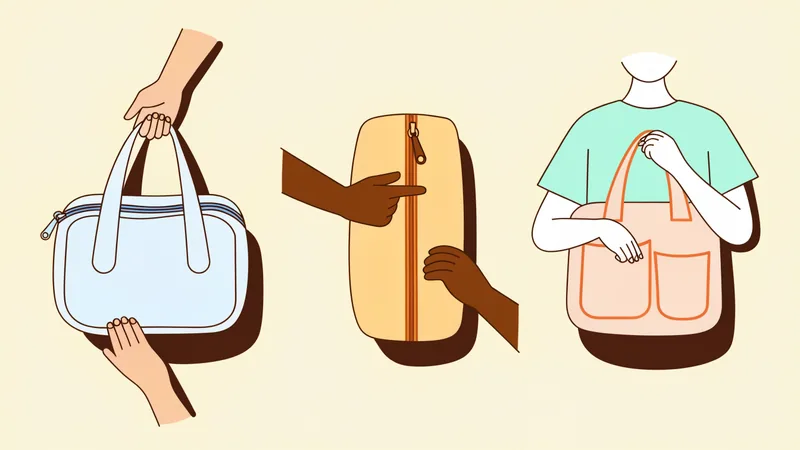
For a bag that will sit beside you, assess access with the project inside. Decide how far the opening must move before you can reach the bottom.
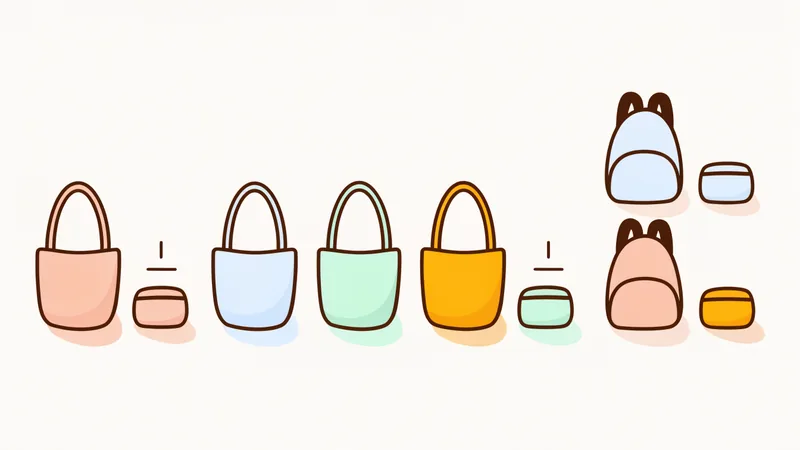
For a pouch carried inside another bag, compare its packed outline with the outer compartment. Include any wrist strap or handle arrangement.
Mesh offers a visible construction in the cited sack designs. Choose that visibility if seeing the contents suits your organization method. Mesh sack description
If you prefer an opaque carrier, plan an external identification method or a project card.
Do not infer waterproofing or protective performance from transparency, stiffness, or fabric appearance. Obtain a specific claim before relying on the carrier for weather protection.
Which pockets and organizers are useful?

Assign each compartment a purpose before deciding how many you need. Separate working yarn, the work itself, tools, and small notions in your plan.
One published accordion organizer has 11 pockets: five large, two medium, and four small. It also includes three removable tab folders. Organizer layout
Treat that as an example of divided storage, rather than a required pocket count.
| Planned location | Contents | Selection priority |
|---|---|---|
| Main project compartment | Work in progress and working yarn | Enough room for the complete packed project |
| Closed notions pouch | Markers, spare connectors, and small accessories | Closure appropriate to those items |
| Suitable tool case | Needles, hooks, and covered cutting tools | Compatibility with each protected tool |
| Flat document space | Pattern or project notes | Fit for the actual paper or device |
| Separate project card | Yarn details and progress notes | Readable identification without unpacking |
Measure an organizer when filled. The cited wallet expands substantially beyond its flat depth. Expanded dimensions
Reserve those expanded dimensions in the larger carrier.
Use tool manufacturers' instructions for protective storage. A general craft pocket should not be assumed suitable for every pointed or cutting tool.
How do you pack one project without carrying the whole craft room?
Build a project-specific kit. Start with the work and the supplies required for the next session, then add only the accessories you expect to use.
For a hypothetical two-color project, allocate one place for each working yarn supply. Add the work, its pattern, and a closed notions pouch.
Keep backup materials separate unless the session requires them. Choose intentionally between a compact travel kit and an all-day workshop load.
Use this sequence when setting up the bag:
- Lay out the project and its current tools.
- Add the yarn needed for the planned session.
- Put small notions in their assigned storage.
- Add the pattern and a project note.
- Close the complete carrier without forcing it.
This is an organization routine, not a claim about any bag's capacity.
A knitting project bag should also make the next session easy to start. Record your stopping point before packing away.
For several projects, give each its own pouch or clear identity. Decide which tools can remain shared and which must stay with the work.
Keep the inventory short enough that an absent item is noticeable before you leave.
Which materials and care instructions matter?
Choose the material alongside its care instructions. Include handles, closures, linings, and removable components in that decision.
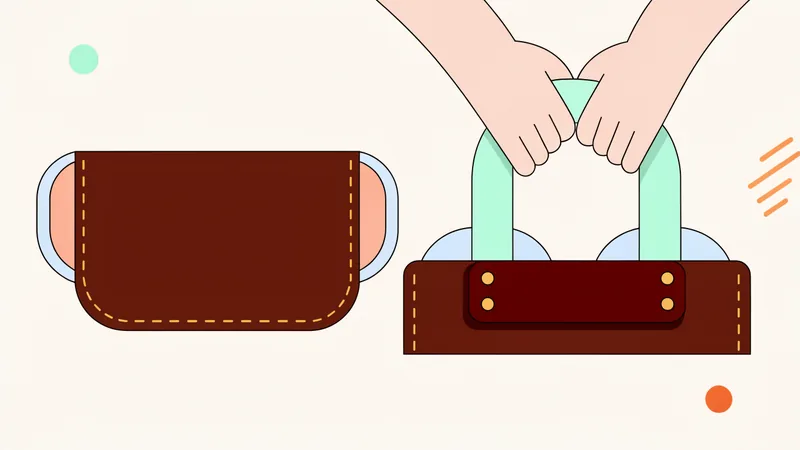
The linen example has a 100% linen body and accepts optional removable leather handles, sold separately. Its instructions permit machine washing and drying; remove any fitted leather handles first. Construction and care
Apply that routine only to the relevant product. Obtain separate instructions for a mesh bag, coated lining, or fitted organizer.
The expandable wallet uses washable paper and a cord closure. That is its material description, rather than permission to apply a linen bag's washing routine. Organizer materials
Before cleaning, remove the project and all accessories. Follow the carrier's approved method, including instructions for detachable parts.
Make inspection part of unpacking. Examine the opening, pocket edges, handles, and closure for damage that needs the maker's attention.
Keep food, drinks, and cleaning supplies assigned to separate storage during your working session. Choose a layout that makes that separation practical.
When returning a cleaned bag to use, follow its drying instructions before replacing the project.
The simplest care plan is the one written for the actual construction. Save it with the bag's measurements and component list.
FAQ
What size bag do I need for knitting socks?
Assemble your actual sock project, working yarn, needles in their intended storage, pattern, and notions before choosing. Compare that load with usable space and the opening. A small sack example measures approximately 8 x 7 x 3.5 inches, but that does not guarantee every sock kit fits. Published dimensions
Can I use an ordinary tote as a knitting project bag?
Build the choice around your project and organization needs. Compare the tote's opening, packed dimensions, and pockets with your kit. Separate pouches may provide the arrangement you want. Follow each tool's storage instructions, and do not infer weather protection or sharp-tool compatibility from the tote's shape.
Are yarn holes better than snap closures?
Choose the yarn route that suits how you work and change projects. A snap-top design can act as a yarn feeder, according to its maker. Compare how the working strand enters, how you will remove the project, and whether separate colors have suitable positions inside. Snap-feed design
Can I wash a project bag?
Follow the instructions for its exact construction. One linen bag accepts optional leather handles, sold separately. It permits machine washing and drying; remove any fitted handles first. That routine should not be transferred to other carriers or organizers. Empty every pocket and follow the stated instructions for removable components and drying before repacking. Linen bag care