Duffel bag size guide: liters by trip length
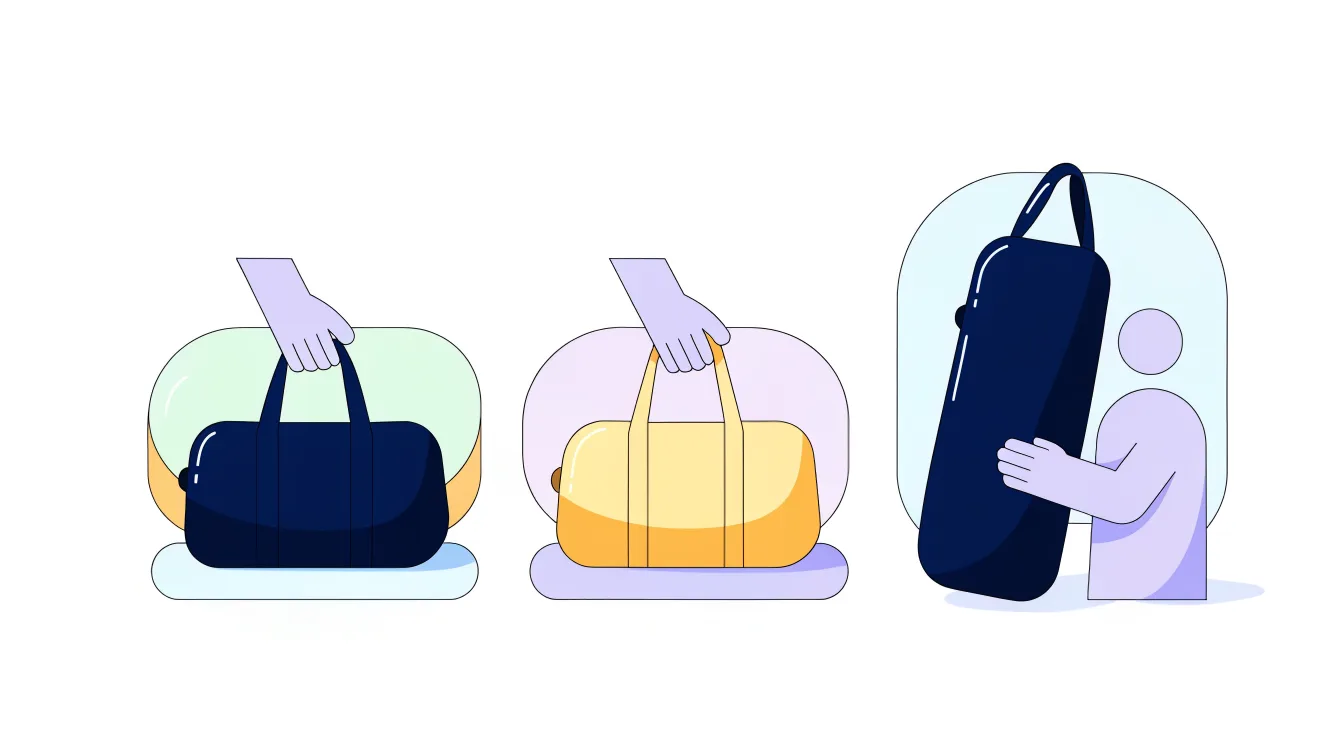
Compare duffel bag sizes by your packed load first and trip length second. Published travel guidance uses approximate capacity bands, not guaranteed day counts. For flights, measure the finished bag against your operator's current dimensions; a liter label alone cannot establish whether it can travel in the cabin.
Use duffel bag sizes as planning bands
Choose an initial capacity band, then compare your actual packing list with a specific bag. The table combines approximate trip guidance with published examples. It does not promise that every bag in a band has the same dimensions.
| Trip or packing situation | Capacity to investigate | Published dimensional example | What to include in your packing check |
|---|---|---|---|
| Weekend | Approximately 30–50 L | 40 L: 19.7 x 12.5 x 8.5 inches | Your clothing changes, toiletries and footwear |
| One to two weeks | Approximately 50–75 L | 55 L: 22.8 x 13.3 x 9.5 inches | Your planned clothing rotation and laundry approach |
| Bulkier load within that band | A larger specific model | 70 L: 26 x 14 x 11 inches | The actual bulky items, alongside the regular kit |
| Extended expedition | Approximately 75–100+ L, possibly several bags | Model-specific | The equipment list and all transport limits |
The trip bands come from REI's approximate guidance. The dimension examples are Patagonia's 40 L, 55 L and 70 L specifications.
These are measurement references, not product recommendations. For the extended-trip row, select the exact model before assigning dimensions.
Use bag sizes to compare the format with other luggage.
Turn the trip into a packing list
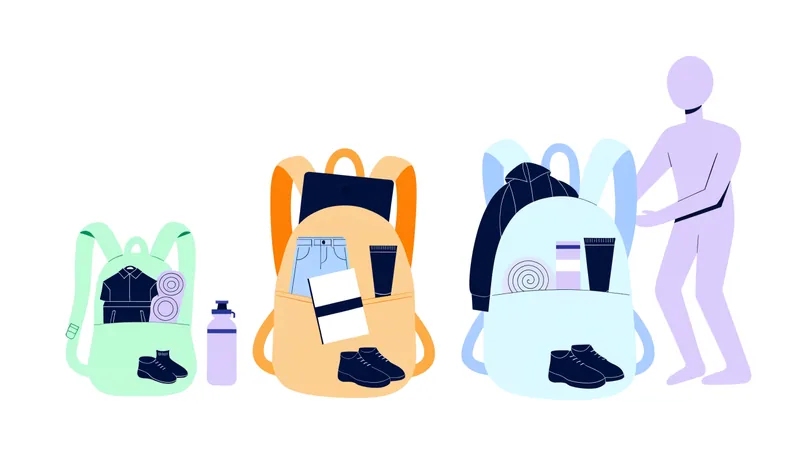
Write down what you need between opportunities to wash clothes. Separate the outfit worn in transit from the items entering the bag. Add toiletries, footwear and activity-specific equipment.
Keep the list concrete. “Clothes for a week” is harder to evaluate than a defined set of garments and an agreed laundry plan. Identify bulky items separately so they do not disappear inside a general category.
Arrange everything in the pouches or packing cubes you intend to use. Include those organizers in the fit check. If you already own a suitable comparison bag, pack the complete combination and record the result.
Use a worksheet rather than a fixed liters-per-day formula:
| Packing factor | Record before choosing | What to change if space is tight |
|---|---|---|
| Clothing | Actual garments between washes | Revisit the rotation |
| Footwear | Pairs traveling inside the bag | Reconsider an optional pair |
| Toiletries | Packed pouch dimensions | Review the contents |
| Equipment | Exact required pieces | Plan another transport arrangement |
| Return journey | Any expected additions | Reserve space deliberately |
For clothing organization, compare packing a carry-on for a week. Let the finished load determine the shortlist.
Measure the duffel in its travel configuration

Compare duffel bag sizes using each model's published dimensions and your actual packed measurements. Do not mix specifications from different versions carrying a similar name.
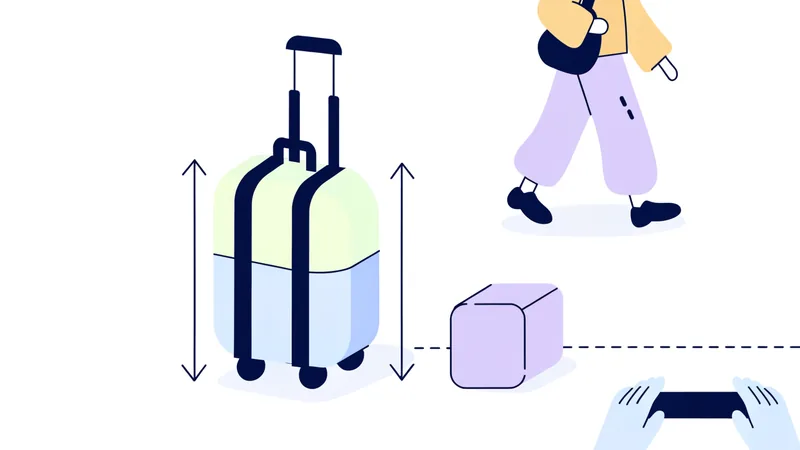
Measure the actual bag after packing:
- Pack the intended load. Include the organizers and accessories traveling inside.
- Close the main compartment. Use the configuration you intend to travel with.
- Position the straps. Arrange them as required by the operator.
- Measure the longest extent. Include projecting parts where the operator requires them.
- Measure the other two extents. Record the widest and deepest packed points.
- Weigh the finished bag. Compare it with the applicable operator allowance.
- Record the result. Repeat after adding anything else.
Keep your measurement notes beside the published specifications. The comparison concerns the bag you will present for travel, not an empty bag pressed flat.
For example, Patagonia publishes both liters and dimensions for its 55 L model. Use those separate figures for their separate jobs: capacity planning and physical comparison.
Use bag measurement guidance for the full record.
Check cabin eligibility against the operator
Open the operating airline's current baggage page before departure. Confirm size, weight, item count and any booking-specific restrictions. Check every operating carrier on a connecting itinerary.
As a concrete example, Delta's page, checked November 2026, lists 22 x 14 x 9 inches, or 56 x 35 x 23 centimeters. It includes handles and wheels. It also warns that aircraft capacity can affect cabin carriage.
The 40 L example's published dimensions are numerically within those three inch limits. That is a dimension comparison, not approval for your itinerary.
The 55 L example exceeds the cited limits in length and depth. Do not assume a soft bag will be accepted because it might compress.
If you need cabin carriage, choose a bag whose actual packed configuration complies with your operator's rules. Confirm with the operator before traveling.
Use personal item versus carry-on to distinguish the allowance you intend to use. A large duffel should not be treated as an underseat item solely because it has no wheels.
Common mistakes and a short decision summary
Avoid assigning a guaranteed trip length to a capacity. A work trip, a laundry-friendly visit and an equipment-heavy holiday require different packing lists. Choose for your itinerary rather than someone else's calendar.
Do not assume that every 40 L bag shares the example's dimensions. Use the exact model's specifications and your packed measurement. Likewise, keep a maker's carry-on description separate from the operating airline's current rules.
Do not select the largest capacity simply to keep options open. Define the ordinary load first, then identify a specific reason for extra space. If you need two bags, plan what each one will contain and which allowance each uses.
For the final choice, answer three questions: does the complete load fit, can you manage the packed bag, and does it meet the transport requirements?
Choose the smallest candidate that satisfies those requirements without relying on a forced closure or an assumed exception. Repeat the measurement if the load changes.
For shorter daily trips, compare the gym bag size guide. For lighter everyday carrying, compare tote sizing before choosing a travel-sized duffel.
FAQ
What size duffel do I need for a weekend?
REI suggests approximately 30–50 L as a weekend starting range. Use your actual clothing, toiletries and footwear to narrow it. Include the packing organizers you intend to use. If you are flying, the exact packed dimensions and your airline's rules still need a separate check.
Is a 40 L duffel always carry-on compatible?
No. One published 40 L example measures 19.7 x 12.5 x 8.5 inches, but that does not describe all 40 L bags. Compare the actual model and packed configuration with your operating airline's current limits. Confirm with the operator before traveling.
Can a 55 L duffel be a carry-on?
Check the specific bag and airline. The 55 L example here measures 22.8 x 13.3 x 9.5 inches, exceeding the cited Delta example in two dimensions. Another model or operator may differ. Do not rely on nominal capacity or hoped-for compression.
How large a duffel do I need for two weeks?
REI's approximate guidance places many one-to-two-week trips in the 50–75 L band. Treat that as a starting point. Build the clothing rotation around your laundry plans, add required equipment and try the complete load. A longer trip does not automatically require more clothes every day.