Roll-top bags
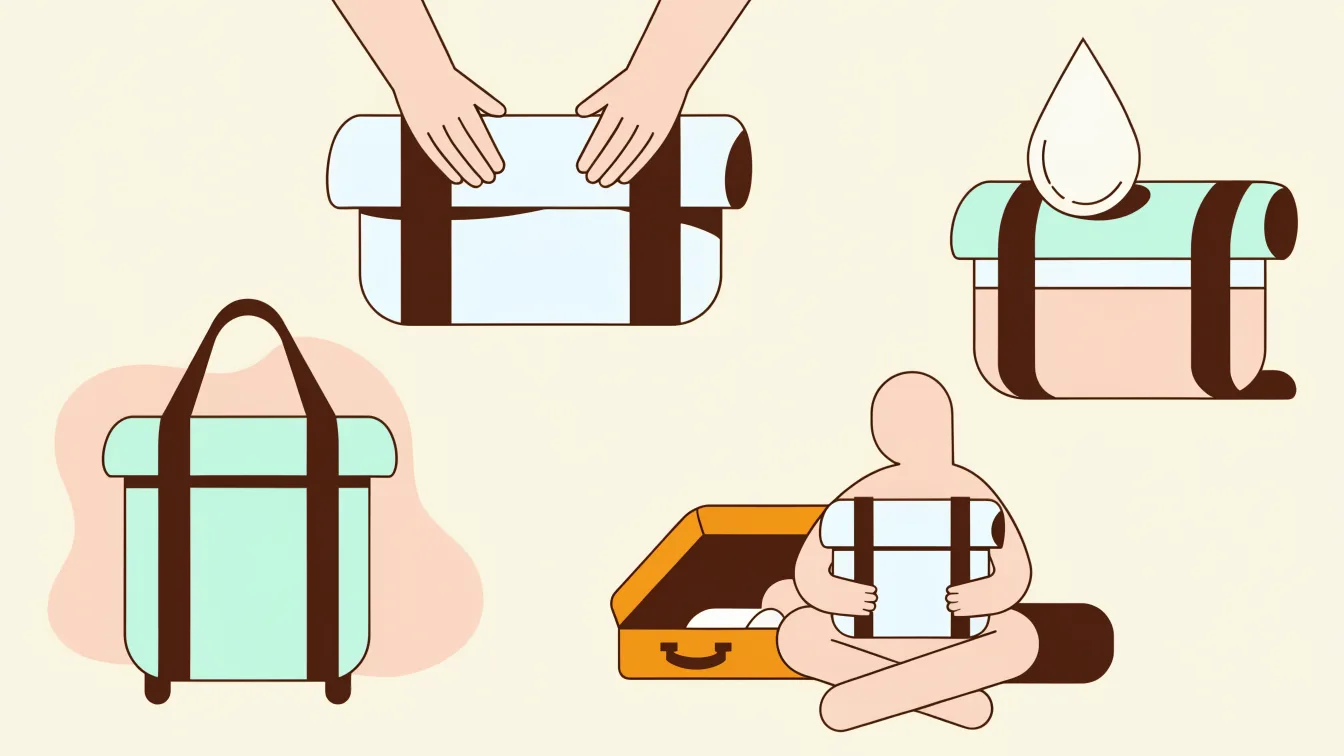
A roll top backpack closes by folding its upper opening down and securing it using the maker's specified method. Choose around the properly closed capacity, weather claim, and retrieval routine. An expandable upper section is useful only when your intended load still permits the required closure.
How does a roll top backpack close?
Follow the exact bag's sequence for bringing the upper edges together, rolling the opening, and securing the supplied fastener. Ask the maker when the correct configuration is unclear.
One published example specifies three to four rolls and downward fastening for its protection claim. Another lists a magnetic top closure within its roll-top design. Specified rolling method Closure example
Do not transfer one model's required number of rolls to every bag in the category.
Main-compartment access means releasing the fastener, unrolling the top, and retrieving the item. Afterward, roll the opening again and secure it as instructed.
The required rolls need space above the contents. Leave that upper section available instead of packing to the edge of the unrolled opening.
Choose this access sequence for items that can stay packed between stops. For frequent retrieval, compare separate pockets in the access section below.
For other opening formats, compare backpacks. Choose the closure around your routine and the documented requirements of the exact design, rather than assuming every rolled opening works the same way.
Compare the different layouts within this category
Separate the upper closure from the rest of the bag's construction. A roll-top opening can appear alongside different pocket systems, laptop arrangements, and weather claims.
Published designs include an IP-rated main compartment, an expandable commuter format, and a model with separate rear laptop access. Rated example Expandable example Rear-access example
Use the following categories as comparison questions rather than fixed industry classifications.
| Layout | Main question | Access question | Packing assessment |
|---|---|---|---|
| Main-compartment-focused | What must fit below the correctly closed opening? | How do you retrieve an item near the base? | Pack the complete daily group |
| Expandable commuter | What capacity is permitted in each configuration? | Which items have separate access? | Assess both everyday and expanded loads |
| Separate laptop access | What device dimensions fit? | Can the computer move independently of the main load? | Keep other equipment packed during retrieval |
| Removable internal sleeve | How does the sleeve attach? | Can you remove it in your normal routine? | Include its loaded exterior in the arrangement |
Identify the layout you need first. Pocket counts and exterior styling can follow once the main carrying routine works.
Use closed capacity rather than the unrolled opening
Read how the manufacturer describes expansion. Keep a stated volume range, a height range, and the closure instructions together in your comparison.
One design publishes 20–25 liters with a 21–24-inch height range. Expandable specification
Another lists up to 31 liters and approximately 16.93–25.98 inches in height. Those inch figures are converted from the maker's metric dimensions. Volume and height
These are examples of different specifications. Do not assume the tallest possible outline describes the same protected carrying configuration for both bags.
Treat expansion as room for a specific occasional group, such as clothing or groceries. Keep its required space separate from the fabric needed for closure.
A taller main compartment does not enlarge a separate laptop sleeve. Compare each compartment independently instead of treating the volume range as a universal fit allowance.
For a hypothetical comparison, a shelf with 22 inches of clearance cannot accommodate a 24-inch packed height in the same upright orientation. Check the actual destination and permitted orientation.
Record the packed height, width, and depth for storage; retain the maker's closure qualification beside any advertised maximum.
Read weather protection at the complete-bag level
The rolling method and weather claim belong together. Ask what conditions the complete bag is designed to meet and which closure configuration the claim requires.
One maker defines IP64 as dust-tight protection with resistance to splashing water from all directions. Maker's rating explanation
A separate commuter model describes a water-resistant finish for light rain. Light-rain claim
Keep those claims distinct. Do not turn a stated splash rating or light-rain description into an immersion promise.
Also read the information for any separate pocket. Establish whether the main compartment and an external zippered section share the same documented protection.
During selection, define the exposure you actually expect. A walk between buildings and a journey requiring a specified protection level call for different evidence.
Request clarification if the maker describes the fabric but provides no complete-bag claim for the conditions you need.
The waterproof versus water-resistant guide explains related terminology. Follow the exact model's closure and care instructions when using the protection it states.
Assess top access against the items you retrieve

Separate pockets can let you retrieve their contents without releasing, unrolling, and refastening the main opening. Choose them around the items needed between stops.
One commuter design includes an external side zippered pocket. Another provides rear laptop access and internal slip pockets. Side-pocket layout Laptop-access layout
Here is one hypothetical commute checklist. Use it once with your normal load, then with any planned additions.
| Task | Proposed location | What to confirm |
|---|---|---|
| Retrieve keys or a ticket | Suitable separate pocket | Contents can leave through that opening |
| Use the computer | Device compartment | Sleeve dimensions and access suit the covered device |
| Remove clothing at arrival | Main compartment | Clothing can leave through the unrolled opening |
| Add groceries on the return trip | Remaining main-compartment space | The full load still permits the instructed rolls and fastening |
In this example, clothing waits until arrival, so repeated top access serves no purpose during the walk. Keys and tickets need a more immediate location.
If your computer shares the main opening, include reopening and refastening in each work stop. Decide whether that sequence suits the actual frequency of use.
Match the laptop sleeve to the actual computer
Record the computer's closed body dimensions, including the cover you intend to keep fitted. Compare those measurements with the usable sleeve and its opening.
One published roll-top sleeve measures 13.5 x 10 x 1 inches. Device-sleeve specification
Another design provides a removable sleeve with its own zippered closure. Removable-sleeve description
Decide whether you want the sleeve to remain inside the backpack or move between bags. Include any additional device case in the measurement process.
During a permitted fit assessment, keep your other daily items packed while inserting and removing the computer. Close every relevant opening normally.
For a hypothetical example, a covered computer measuring 1.2 inches thick exceeds a sleeve's stated 1-inch depth. Similar screen sizes do not resolve that measurement difference.
If the maker lists only a screen-size category, ask about the exact device and carrying configuration. Keep that confirmation with the bag's model information.
Record the sleeve opening as well as its interior dimensions. Both must accommodate the computer in the cover you intend to use.
Distinguish the shell, coatings, and lining
Read the construction as a set of components. A shell fabric, its coatings, and a separate lining describe different parts of the same bag.
One cited design specifies a 500D nylon shell with a PU surface coating and TPU backing. It also lists a separate 150D recycled polyester liner. Construction specification
In that description, nylon names the shell fabric. PU identifies its surface coating, TPU identifies its backing, and polyester names the interior liner.
Do not treat the liner as another name for the shell's backing. Keep each component beside its own material when comparing specifications.
Another cited bag lists TPU-coated polyester, sold under the maker's TIDURA name. That identifies a different fabric-and-coating combination. Material specification
These descriptions do not rank the bags for abrasion, lifespan, or comfort. Avoid turning a denier figure or polymer name into an unsupported performance comparison.
For your shortlist, record shell, coating or backing, and lining separately. Put complete-bag weather claims in a separate column, using the requirements explained above.
Care for the closure and follow storage instructions
Read the care label before choosing a cleaning method. Empty the bag and identify any removable sleeve with separate instructions.
For the cited Velocity model, ORTLIEB permits a damp cloth or warm water with mild soap. It instructs users to dry the bag completely before storage. Care directions
Its storage directions say not to leave the bag rolled or folded, because that may crack the coating. This is model-specific guidance, not a rule for every roll-top. Storage instructions
The cited ROLLTOP 2.0 instead specifies warm water, neutral soap, and a microfiber cloth for light soiling. Its instructions prohibit machine washing. Cleaning restrictions
Keep the directions for your exact model with its product information. Do not transfer a coating treatment or washing method between bags.
Examine the opening and fasteners during normal use. Ask the maker about damaged or missing parts before relying on the closure.
Choose storage space that accommodates the instructed position. A tightly folded cupboard arrangement is unsuitable when your model's directions expressly prohibit folded storage.

FAQ
Is a roll top backpack always waterproof?
Read the exact complete-bag claim. One published commuter design describes a water-resistant finish for light rain, while another states a specific protection rating. The opening style alone does not establish the same performance for every model. Match the documented conditions to your intended journey. Light-rain example
How many times should I roll the opening?
Follow the instructions for the exact model. Leave enough space above the packed contents to complete that sequence and secure the supplied fastening arrangement. If the required method is unclear, ask the maker before relying on its weather claim. Do not use another bag's rolling instructions as a substitute.
Does expanding the top increase the laptop compartment?
Assess the device compartment independently. A larger main-compartment arrangement does not establish a different laptop allowance. Compare your closed computer and fitted cover with the sleeve's usable dimensions and opening. Then repeat insertion and removal with the full daily load present, including any items added during expansion.
Is top access inconvenient for commuting?
Rehearse the items you retrieve during your actual journey. Decide which need separate pockets and which can remain packed until arrival. Compare the steps required to open, retrieve, replace, and close correctly. A separate computer opening or small-item pocket may answer a different need from the main closure.