Saddle bags
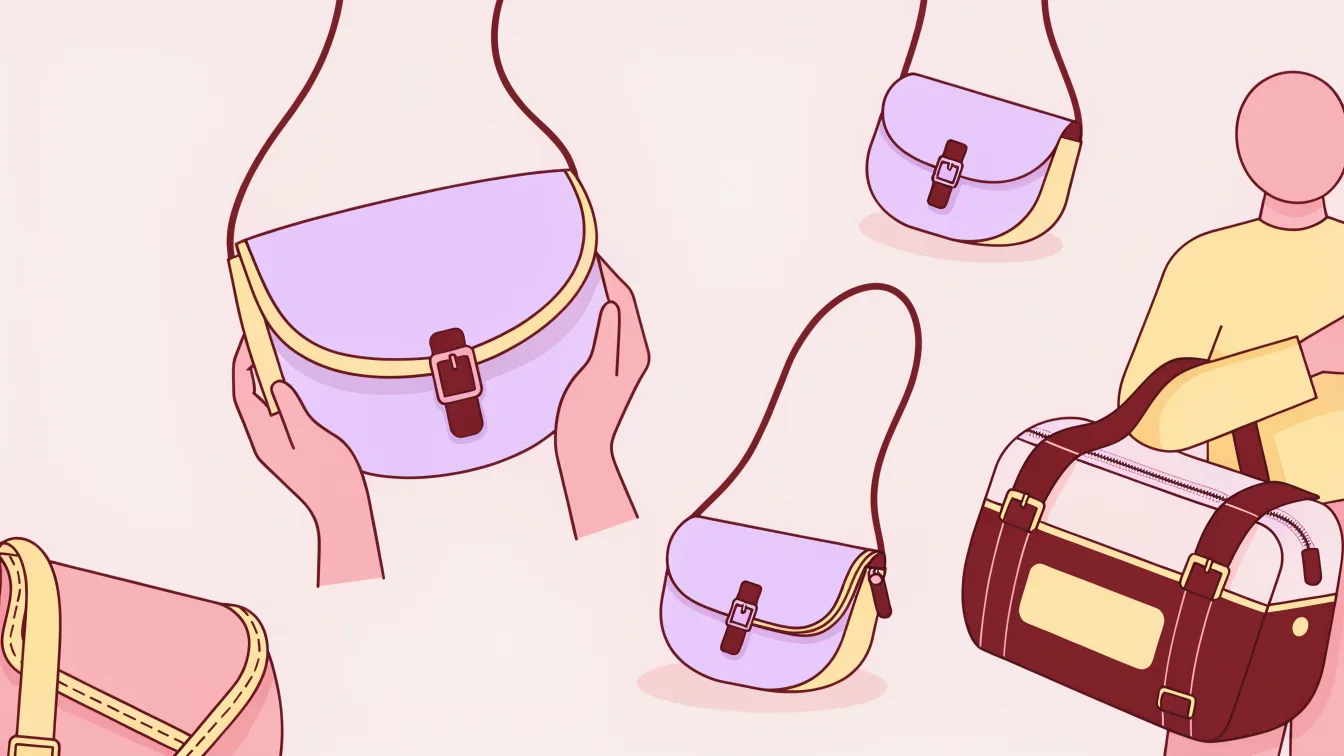
A saddle bag purse is an equestrian-inspired handbag, commonly interpreted as a curved-flap crossbody; one maker documents that design connection and adjustable strap. Choose it by usable interior space, fastening and carry position. The handbag name does not establish suitability as riding luggage.
What makes a saddle bag purse recognizable?
Start with the flap and body outline, then examine the opening underneath. Use the curved profile to identify the shape, rather than to predict its capacity.
Cambridge Satchel describes its version as inspired by traditional equestrian design. That model uses a leather strap-tab closure and an adjustable shoulder strap. Maker's design description.
The design reference leaves several practical questions unanswered. You still need to establish the opening width, interior layout and position of any dividing panel.
| Part to inspect | What to establish | Fit question |
|---|---|---|
| Curved lower body | Where the usable space narrows | Can your rigid belongings sit naturally? |
| Front flap | How far it opens | Can you reach inside at your preferred carry height? |
| Fastening | How it releases and closes | Can you operate it without forcing the flap? |
| Side panels | The available depth | Can essentials fit together rather than individually? |
| Strap attachments | Where the strap meets the body | Does the packed bag hang as intended? |
Choose around those answers before considering decorative details. For other silhouettes, see the parent handbags guide. Keep the appearance you want and the contents you need equally visible in the decision.
Compare exterior measurements with the usable interior
Record width x height x depth consistently. Avoid copying a listing's numbers without checking which measurement each number represents.
The following published examples illustrate size variation. They are individual specifications, rather than universal small, medium or large standards.
| Published example | Exterior width x height x depth | Interior information |
|---|---|---|
| Compact curved-flap version | 7.48 x 7.09 x 2.76 inches | 5.91 x 5.91 x 1.38 inches; source |
| Larger version from the same range | 9.65 x 9.06 x 2.76 inches | 8.27 x 7.48 x 1.97 inches; source |
| Two-compartment leather version | 9.06 x 7.28 x 2.56 inches | Maker describes two compartments; source |
The compact example makes the distinction clear: its exterior and interior widths differ. Use the interior figure when planning the space for a rigid object.
As a hypothetical exercise, a straight 6.5-inch item exceeds a stated 5.91-inch interior width. That rules out a straight horizontal fit; other orientations need a physical fitting exercise.
Do not treat the largest exterior dimension as the width available everywhere inside the bag. Ask for interior photographs and measurements where your belongings will sit.
The handbag size guide helps organize these comparisons without relying on size labels alone.
Choose a closure around how you use the flap
Inspect the actual mechanism beneath any decorative hardware. Identify the fastening before deciding how convenient it will be during your day.
A published strap-tab version requires a different interaction from a slide-tab version. The latter example also uses a two-compartment layout. Strap-tab description; slide-tab description.
Treat closure names as descriptions, rather than a ranking of security. A claim about theft resistance or waterproofing needs evidence beyond the presence of a flap.
| Detail | What to examine | Practical exercise |
|---|---|---|
| Release movement | Direction and clearance | Open it while wearing the bag |
| Flap travel | Space above the mouth | Reach the compartment without holding belongings aside |
| Closing alignment | How the two parts meet | Fasten it with your normal contents inside |
| Internal pocket | Its separate closure, if supplied | Assign small essentials deliberately |
Decide whether you prefer setting the bag down before opening it. Rehearse that routine rather than assuming every fastening supports one-handed use.
If a listing shows only the closed front, request a view of the opening. For a wider comparison of mechanisms, see bag closures explained.
Pack around the curve and any compartment divider
Begin with the least flexible belongings. Place your phone in its normal case, wallet and glasses case into the proposed layout before adding smaller objects.
For a divided interior, assign each object to an actual compartment. Do not combine the widths of separate spaces when deciding whether one large item fits.
One published model explicitly uses two compartments. That construction is worth comparing with a single-cavity layout when organizing everyday essentials. Maker's interior description.
Use this packing worksheet to make the shape question concrete:
| Belonging | Fit detail to record | Retrieval exercise |
|---|---|---|
| Phone | Full case dimensions | Remove it through the open flap |
| Wallet | Width and thickness when filled | Return it without moving other rigid items |
| Glasses case | Its longest and deepest dimensions | Find a position that allows normal closure |
| Keys | Space needed by the complete key ring | Keep them accessible in their assigned pocket |
| Small extras | Combined space after essentials | Add them only if the flap still closes freely |
Try the full combination, not each item separately. Then remove and replace the object you use most often.
If fitting requires a very specific diagonal arrangement, decide whether you want to repeat that arrangement every day. Choose a layout you can maintain without a packing puzzle.
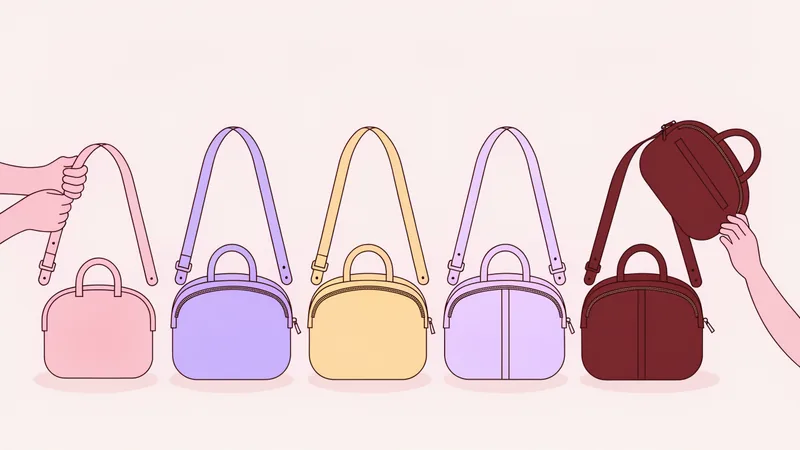
Set the strap for your preferred crossbody position

Compare strap drop with strap drop, and total length with total length. Keep the maker's measurement labels intact in your notes.
The compact example above lists a drop ranging from 18.90 to 24.41 inches. Its larger counterpart lists 18.11 to 25.59 inches. Maker's strap measurements.
Those ranges describe particular bags. They do not guarantee where either model will sit on every wearer.
Fit the packed bag over the clothes you normally wear. Include your usual coat if you expect to use the purse through colder months.
| Adjustment goal | What to observe | Decision to make |
|---|---|---|
| Preferred resting height | Position of the body and flap | Choose an available setting you like |
| Easy access | Your reach to the fastening | Adjust before adding strap accessories |
| Walking clearance | How the packed bag moves | Reconsider position or contents if needed |
| Outerwear compatibility | Space over your coat | Keep enough adjustment for your routine |
Try sitting down and opening the flap, too. A position you like while standing may require a different movement when seated.
Use crossbody strap length guidance to make a personal fit record. Treat it as a preference and access decision, without assigning one correct position to a body type.
Distinguish the handbag from horse and motorcycle luggage
The shared name covers different carrying systems. Read intended use and attachment information before comparing capacities or materials.
| Category | Published function or attachment | What to prioritize |
|---|---|---|
| Fashion purse | Crossbody design with adjustable shoulder strap; maker's example | Personal fit and everyday belongings |
| Equestrian bags | Equipment carried over or behind a horse's saddle; maker's guidance | Compatibility with the saddle and intended riding use |
| Motorcycle saddlebags | Model-specific mounting and docking hardware; manufacturer's installation document | The motorcycle and luggage manufacturer's instructions |
The motorcycle document concerns one particular conversion kit. Use the appropriate manual for your equipment instead of transferring its instructions to another setup.
For horse riding, establish the bag's intended attachment and compatibility with the equipment maker. A shoulder strap on a handbag provides different information from a saddle-attachment specification.
If your task is motorcycle travel, continue with the motorcycle-bags guide. Keep a fashion purse comparison focused on carrying belongings on your person.
The useful distinction is practical: identify what supports the bag, how it attaches and what use the maker specifies. Similar names do not settle those questions.
Match materials and care to the exact construction
Read the exterior and lining specifications separately. One two-compartment example specifies glovetanned leather, while its closure description explains the slide-tab mechanism. Maker's material and construction details.
Avoid inferring weather protection, lifespan or repairability from the material name alone. Look for instructions that apply to the exact finish and complete product.
Cambridge Satchel advises avoiding heavy downpours. For wet leather, its guidance calls for removing excess water and allowing natural drying. Maker's care guidance.
That guidance also recommends trying a care product on an unobtrusive area before broader application. Follow the relevant model's instructions rather than treating this as a universal treatment for leather. Care-product guidance.
Before storage, empty the purse and inspect the flap, strap attachments and interior. Refer any change in closure operation to the maker before attempting adjustment.
For styling, choose the color and finish you enjoy with your own clothes. An equestrian reference does not require a particular outfit or a riding background.
Choose a saddle bag purse whose usable space and fastening suit your day. Preserve that usefulness with a packing layout and care routine matched to its construction.
FAQ
Is a saddle-style purse always a crossbody?
Inspect the strap and its adjustment range on the exact model. A published interpretation uses an adjustable shoulder strap and is described as a crossbody design. That example does not establish the carrying options of every product using the name. Choose around the supplied attachments and your preferred position. Maker's description.
Will a large phone fit in a small curved bag?
Measure the actual phone in its case, then compare the opening and usable compartment. A screen-size label cannot settle the fit. Try inserting, removing and returning the phone with your wallet and other essentials already inside. Include the flap's normal closing movement in the exercise before deciding the layout works.
Can I attach a handbag to a horse saddle or motorcycle?
Choose equipment expressly intended for that setup and follow its attachment instructions. Equestrian and motorcycle bags have their own compatibility requirements. A handbag's shoulder strap does not establish either use. Equestrian maker's guidance; example motorcycle installation document. Consult the manual for your exact equipment before fitting luggage.
Is a flap closure waterproof?
Do not infer a water-protection rating from a flap or fastening. Look for a specific claim covering the product. One leather-bag maker advises avoiding heavy downpours and naturally drying wet leather. Match your weather plans to the exact model's instructions rather than its general shape. Maker's care guidance.
Related guides
- Baguette bags: a longer, lower silhouette for comparing everyday fit.
Sources
- us.cambridgesatchel.com/blogs/journal/the-mini-one-buckle-and-more
- us.cambridgesatchel.com/pages/size-guide
- uk.coach.com/products/saddle/54202.html
- weaverequine.com/collections/saddle-bags
- serviceinfo.harley-davidson.com/sip/service/document/1874972441007122817
- us.cambridgesatchel.com/pages/how-to-care-for-your-bag